Small and medium-sized enterprises rarely fail because they lack effort.
Many SMEs fail to grow because the organization is solving the wrong problem, solving a customer problem inefficiently, failing to communicate its value, or attempting to compete using a strategy that worked in the past but no longer fits the competitive environment.
Growth therefore should not begin with the question:
"How do we sell more?"
It should begin with:
"What is preventing the organization from creating, delivering and communicating greater value to a clearly defined customer?"
Dynamic Competitive Strategy for SME Growth, Value Creation and Strategic Partnership
A Research White Paper for Identifying SME Business Issues, Creating Value, Delivering Value and Communicating Value
The Strategic Role of KeenComputer.com, IAS-Research.com and KeenDirect.com
Executive Summary
Small and medium-sized enterprises rarely fail because they lack effort.
Many SMEs fail to grow because the organization is solving the wrong problem, solving a customer problem inefficiently, failing to communicate its value, or attempting to compete using a strategy that worked in the past but no longer fits the competitive environment.
Growth therefore should not begin with the question:
"How do we sell more?"
It should begin with:
"What is preventing the organization from creating, delivering and communicating greater value to a clearly defined customer?"
This white paper develops a Dynamic SME Competitive Strategy Framework by combining two complementary bodies of strategic thinking:
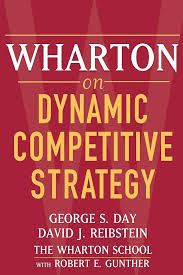
- Wharton on Dynamic Competitive Strategy, edited by George S. Day and David J. Reibstein, which emphasizes that competitive strategy must anticipate competitor responses, customer changes, technology shifts and other environmental changes rather than treating strategy as a one-time search for permanent advantage. Wharton's own description of the work highlights game theory, simulations, scenario planning, market-driven strategy, signaling and competitive response. (Wharton Magazine)
- The U.S. Army War College Strategic Leadership: Primer for Senior Leaders, which defines strategic leadership around aligning people, systems and resources with an enterprise vision while creating an adaptive and innovative culture.
The combination produces an important insight for SMEs:
Competitive strategy is not a document. It is a continuous management system for sensing change, identifying problems, making choices, creating value, delivering value and communicating value.
Wharton describes dynamic strategy as requiring anticipation and preparation because competitive environments change and competitive advantages can be temporary. (Wharton Magazine) The Army War College material similarly describes strategic competition as dynamic, complex and characterized by uncertainty, emphasizing adaptation rather than assuming that a permanent solution exists.
For an SME, this leads to a practical strategic cycle:
SCAN → DIAGNOSE → CHOOSE → CREATE → DELIVER → COMMUNICATE → MEASURE → ADAPT
KeenComputer.com, IAS-Research.com and KeenDirect.com can operate as a complementary strategic-partner ecosystem within this cycle:
- IAS-Research.com — research, strategic analysis, innovation, architecture, feasibility studies and knowledge development.
- KeenComputer.com — technology implementation, digital transformation, software, IT infrastructure, cybersecurity, websites and ecommerce execution.
- KeenDirect.com — technology/product sourcing, hardware, components, ecommerce enablement and operational supply-chain support.
The objective is not simply to become another external IT vendor.
The strategic opportunity is to help an SME move from:
Problem → Understanding → Strategy → Solution → Implementation → Value → Growth
1. The Central SME Growth Problem
SME owners frequently experience several problems simultaneously:
- declining or stagnant sales;
- increasing customer acquisition costs;
- margin pressure;
- competitors offering similar products;
- difficulty differentiating;
- technology becoming outdated;
- fragmented IT systems;
- cybersecurity concerns;
- weak websites;
- poor ecommerce conversion;
- insufficient market intelligence;
- operational inefficiency;
- employee capability gaps;
- supply-chain uncertainty;
- lack of management information;
- difficulty entering new markets;
- inability to scale existing processes;
- poor communication of the company's value proposition.
The difficulty is that these symptoms are interconnected.
A website problem may actually be a positioning problem.
A sales problem may actually be a customer-segmentation problem.
A productivity problem may actually be a process problem.
A technology problem may actually be an organizational-design problem.
A margin problem may actually be a value-proposition problem.
A growth problem may therefore be an enterprise-system problem rather than a single departmental problem.
The SME needs a method for determining:
What is the real constraint on growth?
2. Why Dynamic Competitive Strategy Matters
Wharton's Dynamic Competitive Strategy perspective was developed around the recognition that competition changes rapidly and that strategy must account for the moves and countermoves of competitors, changing customer preferences, technology, regulation and other external forces. The Wharton publication describes dynamic strategy as requiring managers to think through multiple moves rather than treating competition as a linear one-step exercise. (Wharton Magazine)
This is particularly relevant to SMEs.
An SME may launch:
- a lower-priced product;
- a new website;
- a new service;
- a new advertising campaign;
- an ecommerce store;
- an AI solution;
- a new geographic market.
But competitors can respond.
Customers can respond.
Suppliers can respond.
Technology can change.
Regulation can change.
The economics can change.
Consequently:
A successful strategic move today does not automatically remain a competitive advantage tomorrow.
Wharton's current strategy program similarly emphasizes understanding competitors' moves, mapping interconnected organizational choices, connecting strategy to customers and making the difficult choices and tradeoffs required for execution. (Wharton Executive Education)
3. Strategic Leadership: The Army War College Contribution
The uploaded U.S. Army War College Strategic Leadership: Primer for Senior Leaders provides an especially useful framework for SME owners and executives because it distinguishes strategic leadership from simply managing day-to-day operations.
The Primer defines strategic leadership as:
aligning people, systems and resources around an enterprise vision while enabling an adaptive and innovative culture.
The implication for an SME is powerful.
An owner cannot simply ask:
"What should my employees do?"
Strategic leadership asks:
- Where is the organization going?
- What is changing around us?
- What capabilities will we need?
- What customers are changing?
- What competitors are doing?
- Which resources should receive investment?
- Which activities should stop?
- Which partnerships should be created?
- Which technology should be adopted?
- How should the organization learn and adapt?
The Primer emphasizes that strategic leaders must understand the breadth, scope and complexity of their environment, leverage leadership teams and align people, systems and resources.
For SMEs, this translates into:
Owner + management team + employees + customers + strategic partners + technology + market intelligence
forming an interconnected strategic system.
4. From Military Strategic Leadership to SME Strategic Management
The military context and the commercial SME context are obviously different.
However, several management concepts can be transferred:
|
Strategic Leadership Concept |
SME Application |
|---|---|
|
Environmental scanning |
Market and competitor intelligence |
|
Vision |
Growth direction |
|
Alignment |
People, processes, technology and capital |
|
Adaptation |
Continuous business improvement |
|
Innovation |
New products, services and business models |
|
Senior leadership teams |
SME advisory/implementation teams |
|
Resource allocation |
Investment priorities |
|
Strategic communication |
Customer value communication |
|
Competitive environment |
Market ecosystem |
|
Mission execution |
Business execution |
|
Stewardship |
Long-term enterprise sustainability |
The uploaded Primer specifically emphasizes that strategic leaders scan the environment, assess risks and opportunities, communicate recommendations and decisions, and shape organizational direction.
That provides a useful SME management principle:
The owner should spend less time reacting to isolated problems and more time understanding the system that produces those problems.
5. The Dynamic SME Competitive Strategy Framework
This paper proposes an eight-stage framework.
Stage 1 — SCAN
Understand the external and internal environment.
Stage 2 — DIAGNOSE
Identify the real constraints preventing growth.
Stage 3 — CHOOSE
Select strategic priorities and tradeoffs.
Stage 4 — CREATE VALUE
Design products, services and capabilities that solve meaningful customer problems.
Stage 5 — DELIVER VALUE
Build the processes, people, technology and partnerships necessary to deliver the promised value.
Stage 6 — COMMUNICATE VALUE
Make the value understandable to the target customer.
Stage 7 — MEASURE
Measure customer, financial, operational and strategic results.
Stage 8 — ADAPT
Use new information to modify the strategy.
The cycle then returns to SCAN.
This means strategy becomes a continuous feedback loop rather than an annual planning document.
6. Stage 1 — SCAN: Understanding the Competitive Environment
The first question should be:
What is changing?
The SME should examine five environments.
6.1 Customer environment
Determine:
- Who are the best customers?
- What problems are they trying to solve?
- What has changed in their expectations?
- What alternatives do they have?
- What makes them switch suppliers?
- What do they value?
- What do they consider expensive?
- What risks concern them?
6.2 Competitor environment
Study:
- direct competitors;
- indirect competitors;
- substitute products;
- new entrants;
- technology-enabled competitors;
- low-cost providers;
- specialized niche competitors.
The purpose is not merely to copy competitors.
The objective is to understand:
How is the competitive system changing?
Wharton's dynamic strategy approach explicitly emphasizes anticipating competitor responses and considering multiple rounds of competitive interaction. (uat.store.wiley.com)
6.3 Technology environment
Examine:
- AI;
- cloud;
- cybersecurity;
- automation;
- ecommerce;
- analytics;
- mobile applications;
- ERP/CRM;
- IoT;
- digital collaboration;
- software platforms.
The important question is not:
"What technology is available?"
It is:
"Which technology changes the economics or customer experience of our business?"
6.4 Economic environment
Examine:
- inflation;
- interest rates;
- labor costs;
- supply-chain costs;
- exchange rates;
- customer purchasing power;
- financing;
- inventory requirements.
6.5 Regulatory and institutional environment
Examine:
- privacy;
- cybersecurity;
- industry standards;
- tax requirements;
- employment regulations;
- accessibility;
- ecommerce requirements;
- sector-specific regulation.
7. Stage 2 — DIAGNOSE: What Is Really Preventing Growth?
This is the central stage of the framework.
SMEs should construct a Growth Constraint Map.
Growth Constraint Map
Market
- Is the market large enough?
- Is the target segment clearly defined?
- Is demand growing?
- Is the business dependent on too few customers?
Customer
- Are customer needs understood?
- Is customer retention strong?
- Is the company solving an important problem?
- Is the value proposition clear?
Product and Service
- Is the offering differentiated?
- Can competitors easily copy it?
- Does it produce measurable customer value?
- Is the portfolio too broad?
Pricing
- Is the company competing primarily on price?
- Does pricing reflect customer value?
- Are margins sufficient to finance growth?
Sales
- Is there a repeatable sales process?
- Are leads qualified?
- Is the sales pipeline measurable?
- Is customer acquisition dependent on the owner?
Marketing
- Does the website explain the problem being solved?
- Does content answer customer questions?
- Is the company visible when customers search?
- Does marketing communicate outcomes rather than technology lists?
Operations
- Can the organization deliver additional volume?
- Are processes documented?
- Are there bottlenecks?
- Is work excessively manual?
Technology
- Is the technology reliable?
- Is data fragmented?
- Are systems integrated?
- Are cybersecurity and backup adequate?
People
- Does the organization have the required skills?
- Are key activities dependent on one individual?
- Is management capable of scaling?
Finance
- Is growth generating cash?
- Are margins adequate?
- Is working capital limiting expansion?
- Are technology investments producing measurable returns?
Strategy
- Is there a clear strategic direction?
- Are priorities explicit?
- Are tradeoffs being made?
- Does everyone understand the strategy?
8. Technical Problems versus Adaptive Problems
One of the most useful concepts in the Army War College material is the distinction between problems that can be addressed primarily through expertise and management and adaptive challenges that change as the organization interacts with its environment. The Primer discusses this distinction in its treatment of complex competitive environments.
This distinction is extremely useful for SMEs.
Technical problem
Example:
The company's website is slow.
Possible solution:
- optimize images;
- improve hosting;
- configure caching;
- improve database performance.
Adaptive problem
Example:
The company's website generates traffic but very few qualified leads.
This may involve:
- positioning;
- customer segmentation;
- messaging;
- trust;
- pricing;
- product-market fit;
- sales process;
- customer experience.
The first problem is primarily technical.
The second is organizational and strategic.
Treating an adaptive problem as merely a technical problem can waste considerable resources.
9. The SME Growth Issue Matrix
A practical SME diagnostic can classify problems according to four dimensions.
|
Dimension |
Question |
|---|---|
|
Severity |
How seriously does this constrain growth? |
|
Urgency |
How quickly must it be addressed? |
|
Strategic importance |
Does solving it change the competitive position? |
|
Interdependence |
Does it affect multiple parts of the enterprise? |
A problem with high scores across all four dimensions should become a strategic priority.
This avoids the common SME mistake of spending most of management time on the loudest problem rather than the most important problem.
10. Stage 3 — CHOOSE: Strategy Requires Choices
Strategy is not a list of everything an organization would like to do.
It is a system of choices.
Wharton's current strategy teaching explicitly emphasizes interconnected choices, tradeoffs, competitive moves and implementation. (Wharton Executive Education)
An SME therefore needs to decide:
Where will we compete?
- geography;
- industry;
- customer segment;
- niche;
- online/offline;
- B2B/B2C;
- enterprise/SME.
How will we compete?
- low cost;
- differentiation;
- specialization;
- speed;
- reliability;
- expertise;
- customization;
- technology;
- service;
- customer experience.
Wharton identifies differentiation and low-cost leadership as two fundamental competitive approaches, while emphasizing that the broader strategic system and interconnected choices determine how advantage is created. (Wharton Executive Education)
What will we not do?
This question is often more important than what the SME intends to do.
Growth can be damaged by:
- too many products;
- too many customer types;
- excessive customization;
- unprofitable services;
- low-value customers;
- poorly defined projects;
- technology investments without business outcomes.
11. Stage 4 — CREATE VALUE
The strategic purpose of the enterprise is not simply to produce technology.
It is to create value for customers.
A useful value equation is:
Customer Value = Desired Outcome − Total Customer Cost and Risk
Customer cost includes more than purchase price.
It may include:
- implementation effort;
- training;
- downtime;
- integration;
- uncertainty;
- maintenance;
- switching costs;
- cybersecurity exposure;
- operational disruption.
An SME can therefore create value by:
- increasing revenue;
- reducing cost;
- reducing risk;
- improving speed;
- improving quality;
- improving reliability;
- simplifying operations;
- increasing customer satisfaction;
- creating new capabilities.
12. CREATE VALUE: Four Strategic Questions
Every major offering should answer four questions.
1. What problem?
What customer problem is being addressed?
2. For whom?
Which customer segment experiences the problem?
3. What outcome?
What measurable improvement does the customer receive?
4. Why us?
Why should the customer trust this SME rather than an alternative?
This prevents the common technology-company mistake of beginning with:
"Here is our technology."
Instead, the communication begins with:
"Here is the business problem, its impact, and the measurable outcome."
13. Stage 5 — DELIVER VALUE
Creating value and delivering value are different.
An SME may have an excellent product but fail because it cannot consistently deliver it.
Value delivery requires alignment among:
People + Process + Technology + Data + Partners + Capital
The Army War College Primer emphasizes alignment of ends, ways and means and describes the need to align people, systems and resources with the organization's vision.
For an SME:
Ends
What outcome must be achieved?
Ways
How will the organization achieve it?
Means
What resources are required?
This provides a practical architecture for every growth initiative.
14. Stage 6 — COMMUNICATE VALUE
A business can create significant value and still fail commercially if customers cannot understand that value.
Strategic communication therefore becomes part of strategy itself.
The Army War College Primer emphasizes communication, influence, engagement and the importance of communicating organizational values and beliefs so people understand how their efforts align with strategy.
For an SME, value communication should answer:
Why should the customer care?
A strong communication structure is:
Customer Problem → Business Impact → Desired Outcome → Solution → Evidence → Next Step
For example:
Instead of:
"We provide cloud migration, cybersecurity, AI, managed IT and ecommerce services."
Communicate:
"We help growing SMEs modernize their IT, protect business-critical data, improve digital customer acquisition and build scalable systems without having to assemble a large internal engineering team."
The second message communicates an outcome.
15. The Four-Value Model
This white paper proposes that SME growth can be managed through four linked value dimensions.
Value 1 — Create Value
Develop something customers actually value.
Value 2 — Deliver Value
Provide the promised outcome consistently.
Value 3 — Communicate Value
Help customers understand the outcome and evidence.
Value 4 — Capture Value
Convert delivered value into sustainable revenue and margin.
Therefore:
Create → Deliver → Communicate → Capture
If one component fails, growth becomes unstable.
16. Strategic Feedback Loop
Dynamic strategy requires feedback.
The SME should continuously monitor:
Customer signals
- complaints;
- reviews;
- repeat purchases;
- churn;
- support requests;
- feature requests.
Competitive signals
- pricing changes;
- new products;
- acquisitions;
- partnerships;
- technology adoption;
- marketing messages.
Market signals
- search behavior;
- industry trends;
- new regulations;
- customer investment patterns.
Internal signals
- margins;
- project delays;
- utilization;
- support costs;
- defects;
- employee turnover;
- technology incidents.
These signals become strategic intelligence.
17. The Dynamic Competitive Strategy Loop
The complete model is:
1. SCAN
↓
2. IDENTIFY CHANGE
↓
3. DIAGNOSE THE ISSUE
↓
4. DEVELOP OPTIONS
↓
5. ANTICIPATE COMPETITOR/CUSTOMER RESPONSE
↓
6. CHOOSE
↓
7. CREATE VALUE
↓
8. DELIVER VALUE
↓
9. COMMUNICATE VALUE
↓
10. MEASURE RESULTS
↓
11. LEARN
↓
12. ADAPT
↓
SCAN AGAIN
This is the central difference between static and dynamic strategy.
18. Why Competitor Reaction Must Be Considered
A strategic initiative can produce an unintended response.
Suppose an SME reduces prices.
Competitors may reduce theirs.
The result may be:
- lower margins;
- increased sales volume;
- no improvement in competitive position.
Suppose an SME launches a new feature.
Competitors may copy it.
The feature may then become industry standard rather than a durable differentiator.
Suppose an SME invests heavily in advertising.
Competitors may increase advertising.
The cost of acquiring customers may rise for everyone.
Wharton's dynamic strategy framework specifically stresses anticipating competitor responses and considering multiple rounds of competitive interaction. (Wharton Magazine)
Therefore, every strategic initiative should contain a:
Competitive Response Analysis
Ask:
- What will competitors probably do?
- What could customers do?
- What could suppliers do?
- What could technology change?
- What could regulators change?
- What happens if our assumptions are wrong?
- What is our second move?
19. Scenario Planning for SMEs
An SME does not need a 100-page strategic planning exercise.
Three scenarios are often sufficient.
Scenario A — Expected
The environment develops approximately as anticipated.
Scenario B — Adverse
Competitors become more aggressive, customers reduce spending or costs increase.
Scenario C — Disruptive
Technology, regulation, a new competitor or a new business model changes the market structure.
For each scenario identify:
- revenue impact;
- cost impact;
- customer impact;
- technology requirements;
- people requirements;
- strategic response.
The purpose is not to predict the future perfectly.
It is to improve preparedness.
20. Strategic Leadership Teams for SMEs
The Army War College Primer describes several types of senior leadership teams, including informational, consultative, coordinating and decision-making teams.
An SME can adapt this concept.
Informational Team
Provides:
- market intelligence;
- financial data;
- technology information;
- customer feedback.
Consultative Team
Provides:
- specialized expertise;
- strategic alternatives;
- technology evaluation;
- market analysis.
Coordinating Team
Coordinates:
- implementation;
- vendors;
- employees;
- technology;
- projects.
Decision Team
Makes decisions about:
- investment;
- product direction;
- expansion;
- partnerships;
- market entry.
This is where a strategic partnership with KeenComputer and IAS-Research can become particularly valuable.
21. The Strategic Partnership Model
The three organizations can be positioned as complementary components of an SME growth ecosystem.
IAS-Research.com
Strategic Intelligence and Innovation Layer
Primary functions:
- research;
- technology assessment;
- strategic analysis;
- feasibility studies;
- innovation;
- engineering research;
- AI/ML;
- RAG/LLM;
- systems engineering;
- architecture;
- technical white papers;
- technology roadmaps.
IAS-Research therefore helps answer:
What should the SME understand, investigate, develop or change?
22. KeenComputer.com
Execution and Digital Transformation Layer
KeenComputer can translate strategy into operational systems.
Potential capabilities include:
- IT modernization;
- cybersecurity;
- websites;
- ecommerce;
- software engineering;
- cloud;
- infrastructure;
- monitoring;
- backup;
- digital transformation;
- application development;
- CMS;
- Magento;
- Joomla;
- WordPress;
- automation;
- managed IT services.
KeenComputer answers:
How do we implement the strategy?
23. KeenDirect.com
Technology Supply and Commerce Layer
KeenDirect can complement the ecosystem through:
- computer hardware;
- components;
- technology products;
- infrastructure equipment;
- ecommerce;
- sourcing;
- technology procurement;
- product availability.
KeenDirect answers:
What technology products and resources are required to support the solution?
24. The Three-Company Strategic Architecture
The resulting model is:
IAS-Research.com
RESEARCH → ANALYZE → DESIGN → INNOVATE
↓
KeenComputer.com
ENGINEER → IMPLEMENT → INTEGRATE → OPERATE
↓
KeenDirect.com
SOURCE → SUPPLY → COMMERCE → ENABLE
↓
SME CUSTOMER
BUSINESS OUTCOME → VALUE → GROWTH
The relationship can also operate in reverse.
Customer problems generate research questions.
Research produces strategic options.
Engineering converts options into solutions.
Technology supply supports implementation.
Operational results generate new data.
That data returns to research and strategy.
This creates a continuous learning ecosystem.
25. Strategic Partnership Is Not Traditional Outsourcing
Traditional outsourcing often begins with:
"Tell us what you want built."
A strategic partnership begins with:
"What business outcome are you trying to achieve, and what is preventing you from achieving it?"
The difference is substantial.
Traditional vendor model
Customer → specification → vendor → deliverable
Strategic partner model
Customer problem → diagnosis → strategy → architecture → implementation → measurement → adaptation
This is particularly important for SMEs that may not have internal CIO, CTO, enterprise architect, cybersecurity or digital-transformation capabilities.
26. SME Strategic Diagnostic
KeenComputer and IAS-Research can structure an initial engagement around ten questions.
1. Where does revenue come from?
Identify:
- products;
- services;
- customer segments;
- geography;
- recurring revenue.
2. Where is profit generated?
Revenue does not equal value.
Determine contribution margins.
3. Which customers are most valuable?
Analyze:
- lifetime value;
- profitability;
- retention;
- strategic importance.
4. Why do customers choose the company?
Identify actual buying criteria.
5. Why do customers leave?
Identify:
- price;
- service;
- quality;
- technology;
- competition;
- changing requirements.
6. Where does operational friction occur?
Map processes.
7. What technology constrains growth?
Identify legacy systems, integration issues and technical debt.
8. What competitors are changing?
Monitor competitive moves.
9. What opportunities are being ignored?
Identify:
- new segments;
- partnerships;
- digital channels;
- products;
- services.
10. What must change first?
Prioritize.
27. SME Strategic Health Check
A practical diagnostic can score each category from 1 to 5 for internal management use:
|
Dimension |
Diagnostic Question |
|---|---|
|
Market |
Do we understand where demand is moving? |
|
Customer |
Do we understand why customers buy? |
|
Value proposition |
Is our value clearly differentiated? |
|
Product |
Are offerings aligned with customer needs? |
|
Pricing |
Does pricing support sustainable economics? |
|
Sales |
Is customer acquisition repeatable? |
|
Marketing |
Can prospects understand our value? |
|
Operations |
Can we scale delivery? |
|
Technology |
Does technology support growth? |
|
Cybersecurity |
Can critical operations withstand disruption? |
|
Data |
Do managers have reliable information? |
|
People |
Do we have required capabilities? |
|
Finance |
Can we finance growth? |
|
Innovation |
Are we adapting fast enough? |
|
Strategy |
Are choices and priorities clear? |
The resulting profile should not be treated as a simplistic "business score."
Its purpose is to reveal where management should investigate further.
28. From Diagnosis to Strategic Roadmap
After diagnosis, the SME should create three horizons.
Horizon 1 — Stabilize
Address urgent constraints.
Examples:
- cybersecurity;
- backups;
- website failures;
- operational bottlenecks;
- cash-flow issues;
- customer-service problems.
Horizon 2 — Optimize
Improve:
- processes;
- technology;
- marketing;
- sales;
- customer experience;
- margins.
Horizon 3 — Expand
Develop:
- new markets;
- new products;
- ecommerce;
- partnerships;
- AI;
- automation;
- international opportunities;
- new channels.
This prevents the SME from attempting transformation while fundamental operational problems remain unresolved.
29. Digital Transformation as a Competitive Capability
Digital transformation should not be treated as purchasing technology.
Its purpose is to improve the organization's ability to:
- sense;
- decide;
- act;
- learn;
- adapt.
For example:
CRM + analytics
can improve customer understanding.
Website + SEO + content
can improve market visibility.
Ecommerce
can create new distribution channels.
Cloud
can improve scalability.
AI/RAG
can improve access to organizational knowledge.
Automation
can reduce repetitive work.
Cybersecurity
can protect operational continuity.
Monitoring
can detect infrastructure problems before customers experience them.
Technology therefore becomes a strategic capability when connected to a business outcome.
30. AI and the Dynamic SME
AI can strengthen the strategic loop.
An SME can potentially build an AI-assisted intelligence system that monitors:
- competitors;
- industry news;
- customer questions;
- website analytics;
- CRM information;
- support tickets;
- product trends;
- technical documentation;
- regulatory developments.
The system can help management ask:
What changed? Why does it matter? What opportunity does it create? What risk does it create? What should we investigate?
Human leadership remains responsible for strategic judgment.
AI becomes an intelligence and decision-support capability, not a substitute for leadership.
31. Value Communication Architecture
KeenComputer and IAS-Research can help SMEs transform technical capabilities into customer-centered communication.
A useful architecture is:
Problem
What is the customer experiencing?
Consequence
What does the problem cost?
Insight
Why is the problem occurring?
Solution
What can change?
Evidence
Why should the customer believe the claim?
Implementation
How will the solution be delivered?
Outcome
What measurable improvement should result?
Next Step
What should the customer do now?
This structure can be applied to:
- websites;
- landing pages;
- proposals;
- white papers;
- sales presentations;
- case studies;
- ecommerce;
- newsletters;
- technical documentation.
32. Communicating Technical Value
Technical firms often communicate features.
Customers purchase outcomes.
For example:
Feature
"Managed backup infrastructure."
Business value
"Reduce the risk of losing critical business data."
Feature
"Network monitoring."
Business value
"Identify infrastructure problems before they interrupt customer operations."
Feature
"Magento development."
Business value
"Create a scalable ecommerce platform that supports product growth and digital sales."
Feature
"RAG-LLM."
Business value
"Make trusted organizational knowledge easier for employees to find and use."
The strategic partner's job is to connect:
Technology → Capability → Business Outcome
33. Creating a Value Proposition for the SME
A practical formula is:
We help [customer] solve [important problem] by providing [distinctive capability], resulting in [measurable business outcome].
For example:
We help growing SMEs identify technology, operational and digital-growth constraints, then design and implement practical solutions that improve resilience, customer acquisition, productivity and scalability.
This is stronger than a generic technology-services description because it starts with the customer's problem.
34. Strategic Growth Opportunities
After identifying constraints, an SME can consider several growth mechanisms.
Market penetration
Sell more to existing markets.
Market development
Enter new markets.
Product development
Create new offerings.
Digital channels
Add websites, ecommerce or digital sales.
Partnerships
Use complementary organizations.
Automation
Increase output without proportionally increasing administrative effort.
AI
Improve knowledge work and decision support.
Service transformation
Convert one-time projects into recurring services.
Ecosystem development
Create relationships with suppliers, technology firms and complementary service providers.
35. Growth Must Be Economically Sustainable
Growth without economics can destroy an SME.
Every growth initiative should therefore examine:
Revenue
minus
Cost of Goods / Delivery
minus
Customer Acquisition Cost
minus
Support and Maintenance
minus
Technology Investment
equals
Economic Contribution
The objective is not simply maximum sales.
The objective is sustainable value creation.
36. The SME Strategic Portfolio
Rather than making one large strategic bet, SMEs can build a portfolio.
Core business
Protect and improve existing revenue.
Adjacent opportunities
Develop offerings close to existing capabilities.
Emerging opportunities
Experiment with technologies or markets.
Strategic options
Maintain small investments in potentially transformative opportunities.
This reduces dependence on a single forecast of the future.
37. The 90-Day Strategic Partnership Program
A practical engagement between an SME and the KeenComputer–IAS-Research–KeenDirect ecosystem could begin with a 90-day program.
Days 1–15: Discover
- management interviews;
- customer analysis;
- technology inventory;
- financial review;
- competitive scan;
- website review;
- process review.
Deliverable
SME Strategic Diagnostic
Days 16–30: Diagnose
Identify:
- growth constraints;
- technology constraints;
- market opportunities;
- operational bottlenecks;
- customer-value gaps.
Deliverable
SME Growth Constraint Map
Days 31–45: Strategize
Develop:
- strategic alternatives;
- competitive scenarios;
- technology roadmap;
- investment priorities;
- partnership opportunities.
Deliverable
Dynamic Competitive Strategy
Days 46–60: Design
Develop:
- solution architecture;
- website/ecommerce strategy;
- IT roadmap;
- cybersecurity plan;
- automation opportunities;
- AI opportunities.
Deliverable
SME Transformation Blueprint
Days 61–90: Execute
Implement one or more high-priority initiatives.
Examples:
- website modernization;
- ecommerce;
- cybersecurity;
- backup;
- CRM;
- cloud;
- monitoring;
- automation;
- AI knowledge system.
Deliverable
First Measurable Business Improvement
38. Strategic Governance
The SME should establish a recurring strategic review.
Monthly
Review:
- sales;
- cash;
- customers;
- operations;
- technology;
- incidents;
- projects.
Quarterly
Review:
- competitors;
- customer trends;
- market changes;
- strategic initiatives;
- investment priorities.
Annually
Revisit:
- vision;
- strategic positioning;
- business model;
- portfolio;
- technology roadmap;
- partnerships.
This converts strategy from an occasional management exercise into a management discipline.
39. The Strategic Dashboard
A useful dashboard should combine four dimensions.
Customer
- acquisition;
- retention;
- satisfaction;
- lifetime value.
Financial
- revenue;
- margin;
- cash;
- recurring revenue.
Operational
- delivery time;
- productivity;
- defects;
- utilization.
Strategic
- new opportunities;
- innovation;
- competitive changes;
- technology modernization;
- strategic partnerships.
The dashboard should answer:
Are we becoming more capable of creating and delivering value?
40. Competitive Advantage as a Moving Target
The central message of Wharton's dynamic strategy work is that competitive advantage should not be treated as permanently secured. The Wharton source describes strategy as continuous monitoring of the environment, customers and competitors, with competitive advantages potentially undermined by technology, policy or competitor action. (uat.store.wiley.com)
The Army War College material reaches a complementary conclusion from a different context: competitive environments are complex, adaptive and uncertain, and strategic leaders must continuously adapt rather than expect permanent solutions.
For SMEs, this produces a fundamental principle:
Do not ask only, "What is our competitive advantage?" Ask, "What capability allows us to repeatedly create new competitive advantages?"
That capability may be:
- customer intimacy;
- technical expertise;
- innovation;
- speed;
- learning;
- partnerships;
- data;
- engineering capability;
- trusted relationships;
- operational excellence.
41. From Competitive Advantage to Adaptive Advantage
A static advantage can disappear.
An adaptive capability can generate new advantages.
Therefore:
Competitive Advantage
should evolve into:
Adaptive Advantage
Adaptive advantage means that the SME can:
- detect change;
- understand change;
- decide quickly;
- mobilize resources;
- implement;
- measure;
- learn;
- change again.
This is particularly important for technology-intensive SMEs.
42. The KeenComputer–IAS-Research–KeenDirect Adaptive Advantage
The three organizations can collectively support this capability.
IAS-Research
Sense + Research + Think
KeenComputer
Engineer + Implement + Operate
KeenDirect
Source + Supply + Enable
Together:
SENSE → THINK → DESIGN → BUILD → DEPLOY → OPERATE → LEARN → ADAPT
This creates a strategic-partner proposition rather than three disconnected service catalogs.
43. A Strategic SME Operating Model
The recommended operating model is:
Layer 1 — Business Strategy
What business are we in?
Layer 2 — Customer Value
What problem do we solve?
Layer 3 — Competitive Position
Why should customers choose us?
Layer 4 — Operating Model
How do we deliver the value?
Layer 5 — Technology
What systems enable delivery?
Layer 6 — People
What capabilities are required?
Layer 7 — Data
What information supports decisions?
Layer 8 — Communication
How do we make value visible?
Layer 9 — Measurement
How do we know the strategy is working?
Layer 10 — Adaptation
What must change next?
44. The SME Strategic Questions Framework
Every SME leadership team should regularly ask:
Environment
What changed?
Customer
What do customers value now?
Competition
What are competitors changing?
Capability
What can we do better than alternatives?
Constraint
What is preventing growth?
Choice
What should we prioritize?
Value
What value will we create?
Delivery
Can we reliably deliver it?
Communication
Can customers understand it?
Economics
Can we capture sufficient value?
Adaptation
What must we change next?
45. Strategic Partnership Positioning
KeenComputer, IAS-Research and KeenDirect can position their combined proposition around:
Helping SMEs identify the issues limiting growth, develop practical strategies, create and deliver customer value, modernize the technology required to support that value, and continuously adapt as the competitive environment changes.
The proposition is broader than:
- web development;
- IT support;
- consulting;
- hardware;
- software development.
It becomes an integrated SME Growth and Digital Transformation Partnership.
46. Recommended Service Architecture
The ecosystem can organize services into six strategic offerings.
1. SME Strategic Diagnostic
Identify the constraints.
2. SME Digital Transformation Audit
Evaluate:
- website;
- ecommerce;
- IT;
- cloud;
- cybersecurity;
- backup;
- applications;
- data.
3. Growth Strategy and Market Intelligence
Study:
- customers;
- competitors;
- opportunities;
- technology;
- scenarios.
4. Technology and Solution Architecture
Design:
- systems;
- software;
- infrastructure;
- AI;
- automation;
- cloud.
5. Implementation and Operations
KeenComputer executes and supports the transformation.
6. Technology Supply and Ecommerce
KeenDirect supports sourcing, products and technology commerce.
47. Strategic Principle: Diagnose Before Prescribing
A major strategic lesson is:
Do not sell the solution before understanding the problem.
An SME may believe it needs:
- a new website;
- AI;
- cloud;
- CRM;
- ecommerce;
- cybersecurity.
But the real issue may be:
- unclear positioning;
- poor customer segmentation;
- inefficient operations;
- weak sales process;
- inadequate management information;
- lack of differentiation.
IAS-Research and KeenComputer should therefore begin with diagnosis rather than technology selection.
48. Strategic Principle: Technology Follows Strategy
The correct sequence is:
Business Problem
↓
Customer Requirement
↓
Strategic Objective
↓
Business Capability
↓
Process
↓
Technology
This prevents technology from becoming an expensive substitute for strategic thinking.
49. Strategic Principle: Value Must Be Observable
Whenever possible, define value quantitatively.
Examples:
- 20% reduction in processing time;
- reduced downtime;
- lower support costs;
- increased conversion rate;
- higher customer retention;
- faster proposal generation;
- lower infrastructure cost;
- reduced security exposure;
- increased recurring revenue.
Not every benefit can be measured precisely.
Nevertheless, the discipline of defining expected outcomes improves decision quality.
50. Strategic Principle: Strategy Requires Learning
The U.S. Army War College Primer emphasizes lifelong development and adaptation of leadership capabilities as leaders move into increasingly complex environments.
The SME equivalent is organizational learning.
After every major initiative ask:
- What worked?
- What did not?
- What did customers teach us?
- What did competitors do?
- What assumptions were wrong?
- What capability did we gain?
- What should we stop?
- What should we scale?
- What should we investigate next?
The organization becomes stronger because it learns.
51. Final Framework
The entire research framework can be summarized as:
THE DYNAMIC SME VALUE AND GROWTH MODEL
1. SEE
Understand the environment
2. IDENTIFY
Find the growth constraints
3. THINK
Develop strategic alternatives
4. CHOOSE
Make explicit strategic choices
5. CREATE
Create meaningful customer value
6. DELIVER
Align people, processes, technology and resources
7. COMMUNICATE
Make the value understandable and credible
8. CAPTURE
Generate sustainable revenue and margin
9. MEASURE
Monitor outcomes
10. ADAPT
Change the strategy as the environment changes
Then return to:
SEE AGAIN.
52. Conclusion
SME growth should not be treated simply as a sales problem.
It is an interconnected strategic problem involving:
Market + Customers + Competition + Value + People + Processes + Technology + Finance + Communication + Adaptation
Wharton's dynamic competitive strategy perspective demonstrates why strategy must anticipate competitor responses, changing customer expectations and environmental changes rather than assuming that a single strategic move will produce a permanent advantage. (Wharton Magazine)
The U.S. Army War College Strategic Leadership Primer provides a complementary leadership perspective: strategic leadership requires environmental understanding, alignment of people, systems and resources, use of leadership teams, innovation and adaptive management.
For SMEs, these ideas can be transformed into a practical business discipline:
Identify the issue.
Understand the environment.
Choose where to compete.
Create customer value.
Deliver that value reliably.
Communicate the value clearly.
Capture sustainable economic value.
Measure the results.
Adapt continuously.
This is where the strategic partnership of IAS-Research.com, KeenComputer.com and KeenDirect.com can create a distinctive operating model.
IAS-Research.com provides research, strategic thinking, innovation and technical intelligence.
KeenComputer.com provides engineering, software, IT, digital transformation and implementation.
KeenDirect.com provides technology sourcing, products, ecommerce and supply enablement.
The combined proposition is therefore:
From Business Issue to Business Value — Research, Strategy, Engineering, Technology, Delivery and Continuous Adaptation.
The ultimate objective is not to promise an SME a permanent position in a changing market.
It is to help build an organization capable of repeatedly recognizing change, creating value, delivering value, communicating value and adapting faster than its internal constraints prevent it from doing so.
References
Primary Sources
1. Day, George S., and David J. Reibstein, editors.
Wharton on Dynamic Competitive Strategy. John Wiley & Sons, 1997.
The book integrates competitive strategy with game theory, competitive simulations, scenario planning, market-driven strategy, signaling, public policy and other perspectives. Wharton describes its central concern as developing strategy in rapidly changing competitive environments where competitor responses can undermine existing advantages. (Wharton Magazine)
2. Galvin, Tom, Dale Watson, et al.
Strategic Leadership: Primer for Senior Leaders, 4th Edition. U.S. Army War College, Department of Command, Leadership, and Management.
The uploaded edition addresses strategic leadership, competitive environments, internal organizational environments, competitive strategy, senior leader roles, competencies, character and development.
3. U.S. Army War College — Strategic Leadership Primer
The Primer defines strategic leadership around aligning people, systems and resources to achieve an enterprise vision while enabling adaptive and innovative culture.
4. Wharton Executive Education
Strategy and Management for Competitive Advantage.
The current Wharton program emphasizes assessing competitors' moves, mapping interconnected choices, coordinating strategy, connecting strategy to customers and making tradeoffs required for execution. (Wharton Executive Education)
5. Dynamic Competitive Strategy Research
Research on dynamic competitive strategy emphasizes combining multiple strategic-analysis perspectives rather than relying on one strategic model in isolation. (ScienceDirect)
Suggested Further Research
The framework can be expanded using:
- competitive strategy;
- market-driven strategy;
- scenario planning;
- game theory;
- systems thinking;
- complexity theory;
- strategic leadership;
- innovation management;
- customer-value analysis;
- digital transformation;
- business-model innovation;
- AI-enabled decision support;
- SME strategic management.
The central research proposition is:
SME competitive advantage should be understood not as a static position, but as an organizational capability to continuously sense, decide, create, deliver, communicate and capture value in a changing competitive environment.
This framework can also become the foundation for a KeenComputer/IAS-Research strategic SME consulting offering: SME Growth & Competitive Strategy Diagnostic → Growth Constraint Map → Value Creation Roadmap → Digital Transformation Blueprint → Implementation → Continuous Strategic Review.