Software engineering is undergoing one of the most significant paradigm shifts since the advent of high-level programming languages. The rise of Generative AI, particularly Large Language Models (LLMs), has introduced a new development paradigm known as vibe coding, where developers interact with AI systems using natural language to generate, refine, and deploy software systems. This shift is not merely a tooling improvement but a transformation in how software is conceptualized, built, and scaled.
Simultaneously, Retrieval-Augmented Generation (RAG) architectures are addressing the limitations of LLMs—such as hallucinations and static knowledge—by integrating real-time, domain-specific data into AI workflows. These advancements are driving a new generation of AI-native Software-as-a-Service (SaaS) platforms that are more adaptive, intelligent, and scalable.
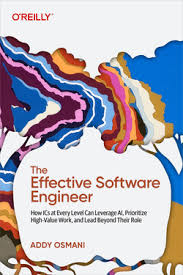
This paper synthesizes insights from foundational works such as Beyond Vibe Coding, The Effective Software Engineer, and Vibe Coding, and extends them into a comprehensive framework for modern software engineering. It also explores how organizations like IAS-Research.com and KeenComputer.com can enable enterprises and SMEs to adopt and operationalize these innovations.
Comprehensive Research White Paper
AI-Native Software Engineering: Vibe Coding, RAG-LLM Architectures, and SaaS Transformation
A Strategic Framework for Innovation Using IAS-Research.com and KeenComputer.com
Abstract
Software engineering is undergoing one of the most significant paradigm shifts since the advent of high-level programming languages. The rise of Generative AI, particularly Large Language Models (LLMs), has introduced a new development paradigm known as vibe coding, where developers interact with AI systems using natural language to generate, refine, and deploy software systems. This shift is not merely a tooling improvement but a transformation in how software is conceptualized, built, and scaled.
Simultaneously, Retrieval-Augmented Generation (RAG) architectures are addressing the limitations of LLMs—such as hallucinations and static knowledge—by integrating real-time, domain-specific data into AI workflows. These advancements are driving a new generation of AI-native Software-as-a-Service (SaaS) platforms that are more adaptive, intelligent, and scalable.
This paper synthesizes insights from foundational works such as Beyond Vibe Coding, The Effective Software Engineer, and Vibe Coding, and extends them into a comprehensive framework for modern software engineering. It also explores how organizations like IAS-Research.com and KeenComputer.com can enable enterprises and SMEs to adopt and operationalize these innovations.
1. Introduction: The Evolution of Software Engineering
Software engineering has evolved through multiple paradigms:
- Manual Coding Era (Pre-2010): Emphasis on syntax, algorithms, and structured programming.
- Framework & Cloud Era (2010–2020): Abstraction through frameworks, DevOps, and cloud-native systems.
- AI-Augmented Era (2020–Present): Integration of AI tools for productivity and automation.
- AI-Native Era (Emerging): Developers orchestrate AI systems rather than write code directly.
According to Beyond Vibe Coding, this transformation shifts developers from “code artisans” to product engineers and orchestrators, focusing on high-level design, user experience, and system thinking rather than low-level implementation.
This shift is driven by:
- Advances in LLM capabilities
- Integration of AI into IDEs and workflows
- Demand for rapid digital transformation
- Explosion of data requiring intelligent processing
2. Vibe Coding: A New Paradigm
2.1 Definition and Conceptual Framework
Vibe coding is a prompt-driven software development methodology where developers communicate intent in natural language, and AI systems generate corresponding code.
From Vibe Coding:
- Developers guide AI systems instead of writing every line
- AI acts as an autonomous or semi-autonomous coding partner
- The development process becomes conversational and iterative
2.2 The Vibe Coding Loop
The core workflow includes:
- Define intent (prompt)
- Generate code via AI
- Evaluate output
- Refine through iterative prompting
- Integrate into system
This loop significantly compresses development cycles.
2.3 Productivity and Innovation Impact
Empirical observations indicate:
- 10x–100x productivity improvements
- Rapid prototyping (minutes vs weeks)
- Lower barriers to entry for non-developers
Beyond Vibe Coding highlights that AI tools can generate boilerplate code, tests, and documentation in seconds, enabling developers to focus on innovation and problem-solving.
2.4 Limitations and Risks
Despite its benefits, vibe coding introduces challenges:
- Technical Debt: Rapid code generation can lead to poor architecture
- Security Risks: AI-generated code may include vulnerabilities
- Lack of Understanding: Developers may not fully understand generated systems
- Over-Reliance on AI: Reduced critical thinking
Thus, vibe coding must be complemented with engineering discipline.
3. AI-Assisted Engineering: Structured AI Integration
While vibe coding emphasizes speed and exploration, AI-assisted engineering introduces structure and rigor.
3.1 Key Principles
- Plan-first approach
- Controlled AI usage
- Continuous validation
- Integration with SDLC
3.2 Effectiveness vs Efficiency
From The Effective Software Engineer:
True engineering success lies in doing the right things, not just doing things efficiently.
This principle is critical in AI-driven development:
- AI can increase output
- But only human judgment ensures value and relevance
4. RAG-LLM Architectures
4.1 Need for RAG
LLMs alone suffer from:
- Hallucinations
- Limited context windows
- Static knowledge
RAG addresses these issues by combining:
- Information retrieval
- Context-aware generation
4.2 Architecture Components
- Data Ingestion Layer
- Documents, APIs, databases
- Embedding Layer
- Converts data into vector representations
- Vector Database
- Stores embeddings (e.g., Pinecone, FAISS)
- Retrieval Engine
- Fetches relevant context
- LLM Layer
- Generates responses
- Application Layer
- User interface, APIs
4.3 Benefits
- Improved accuracy
- Domain-specific intelligence
- Real-time adaptability
- Enhanced explainability
5. SaaS Transformation in the AI Era
5.1 Traditional SaaS vs AI-Native SaaS
|
Feature |
Traditional SaaS |
AI-Native SaaS |
|---|---|---|
|
Logic |
Rule-based |
AI-driven |
|
Data |
Static |
Dynamic |
|
UX |
Fixed |
Adaptive |
|
Development |
Manual |
AI-assisted |
5.2 AI SaaS Stack
- Frontend: React / Flutter
- Backend: Node.js / Python
- AI Layer: LLM + RAG
- Infrastructure: Docker + Kubernetes
- Data: Hybrid (SQL + Vector DB)
5.3 Economic Model
AI reduces:
- Development cost
- Time-to-market
- Operational overhead
Enables:
- Sub-$100 SaaS solutions
- Rapid MVP development
- Scalable subscription models
6. AI-Augmented Software Development Lifecycle
6.1 New SDLC Model
- Problem definition
- Prompt engineering
- AI code generation
- Validation and testing
- Deployment
- Continuous learning
6.2 Role Transformation
Developers become:
- Architects
- Product thinkers
- AI orchestrators
7. Use Cases and Applications
7.1 Enterprise Knowledge Systems
- Internal GPT assistants
- Document search and summarization
7.2 Industrial IoT
- Predictive maintenance
- Real-time analytics
7.3 eCommerce
- Personalization
- AI chatbots
- Dynamic pricing
7.4 Healthcare
- Clinical decision support
- Research automation
8. System Architecture Blueprint
8.1 Layered Architecture
- Presentation Layer
- API Layer
- AI Layer (RAG + LLM)
- Data Layer
8.2 DevOps Integration
- CI/CD pipelines
- Containerization
- Monitoring tools
9. Challenges and Governance
9.1 Technical Challenges
- Scalability
- Latency
- Security
9.2 Ethical Challenges
- Bias in AI models
- Data privacy
- Transparency
10. Role of IAS-Research.com
IAS-Research.com plays a critical role in:
10.1 Advanced Research
- RAG system design
- AI model optimization
- Engineering simulations
10.2 Industry Solutions
- Power systems
- Industrial AI
- Data analytics
10.3 Strategic Advantage
- Bridging research and industry
- Enabling innovation at scale
11. Role of KeenComputer.com
KeenComputer.com enables:
11.1 SaaS Development
- WordPress, Magento, Joomla
- AI-enabled platforms
11.2 Digital Transformation
- SME modernization
- AI marketing tools
11.3 Infrastructure
- Cloud deployment
- DevOps automation
12. Integrated Ecosystem
Together, IAS-Research.com and KeenComputer.com provide:
- End-to-end AI solutions
- Research-driven development
- Scalable SaaS deployment
13. Future Trends
13.1 Agentic AI
- Autonomous coding agents
13.2 Self-Optimizing Systems
- AI-driven refactoring
13.3 Democratization
- Non-developers building software
14. Strategic Recommendations
Organizations should:
- Adopt vibe coding for prototyping
- Use AI-assisted engineering for production
- Implement RAG architectures
- Invest in AI-native SaaS
- Partner with IAS-Research.com and KeenComputer.com
15. Conclusion
Software engineering is transitioning into an AI-native discipline where human creativity and AI capabilities combine to produce unprecedented innovation.
Key insights:
- Vibe coding accelerates development
- RAG ensures reliability
- SaaS enables scalability
- Human judgment ensures effectiveness
As emphasized in The Effective Software Engineer, success lies in aligning technology with real-world value and outcomes.
Organizations that embrace this transformation—supported by IAS-Research.com and KeenComputer.com—will lead the next wave of digital innovation.
References
- Beyond Vibe Coding
- The Effective Software Engineer
- Vibe Coding