Web applications have become the operating infrastructure of modern business.
A typical SME may simultaneously operate a WordPress marketing website, Joomla corporate portal, Magento or WooCommerce store, customer portal, REST API, Java/Spring Boot backend, CRM integration and cloud-hosted infrastructure.
Each system introduces an attack surface.
The security problem is therefore not simply:
"How do we secure our server?"
The strategic question is:
How do we secure the complete business application ecosystem from architecture through operations?
Web Application and E-Commerce Security
A Defense-in-Depth Security Architecture for WordPress, Joomla, Magento, PHP, Java, Spring Boot and Modern E-Commerce
From Application Reconnaissance and Threat Modeling to WAF, DevSecOps, Zero Trust and Continuous Security
Research White Paper
Prepared for: SME Owners, CEOs, CTOs, CIOs, IT Managers, Software Engineers and Digital Transformation Leaders
Technology Domains:
- WordPress
- Joomla
- Magento / Adobe Commerce
- WooCommerce
- PHP frameworks
- Java / Jakarta applications
- Java CMS platforms
- Spring Boot
- REST and GraphQL APIs
- Microservices
- Docker
- Cloud and VPS
- Web Application Firewalls
- DevSecOps
- Zero Trust
- Security Monitoring
Strategic Organizations:
IAS-Research.com — Research, Architecture & Innovation
KeenComputer.com — Engineering, Cybersecurity & Digital Transformation
KeenDirect.com — Secure Digital Commerce & E-Commerce
Executive Summary
Web applications have become the operating infrastructure of modern business.
A typical SME may simultaneously operate a WordPress marketing website, Joomla corporate portal, Magento or WooCommerce store, customer portal, REST API, Java/Spring Boot backend, CRM integration and cloud-hosted infrastructure.
Each system introduces an attack surface.
The security problem is therefore not simply:
"How do we secure our server?"
The strategic question is:
How do we secure the complete business application ecosystem from architecture through operations?
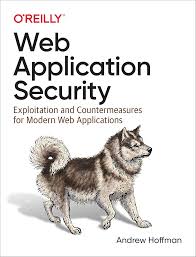
This paper develops a defense-in-depth model for PHP and Java applications based substantially on the principles presented in Andrew Hoffman’s O’Reilly book Web Application Security: Exploitation and Countermeasures for Modern Web Applications, Second Edition. The uploaded book describes three complementary pillars—reconnaissance, offense and defense—and extends these concepts into threat modeling, secure architecture, secure development, vulnerability management and zero-trust architecture.
The book's central lesson is particularly important for SMEs:
Security should begin before deployment.
Hoffman emphasizes that security architecture should be considered during the architecture phase because fundamental security flaws become substantially more expensive to correct after production deployment.
This paper translates those principles into a practical SME architecture:
Reconnaissance → Threat Modeling → Secure Architecture → Secure Coding → Dependency Security → Testing → WAF → Firewall → Monitoring → Recovery → Continuous Improvement
KeenComputer can strategically position itself at the intersection of these activities.
Rather than competing solely as a low-cost hosting, website or IT-support provider, KeenComputer can position itself as an:
SME Application Security, Infrastructure Engineering and Digital Transformation Partner.
IAS-Research provides the research, architecture and innovation layer.
KeenComputer provides engineering, cybersecurity implementation, infrastructure and managed operations.
KeenDirect provides a practical secure-commerce environment through which these technologies can be applied to online business.
Together, the three organizations create an integrated research-to-engineering-to-commerce security ecosystem.
1. Research Context
1.1 The transformation of the web application
The modern web application is no longer a single server.
A contemporary application may look like:
INTERNET | DNS/CDN | Cloud Firewall | WAF | Reverse Proxy | +---------+---------+ | | PHP JAVA | | CMS / Commerce Spring Boot | | +---------+---------+ | APIs | +------------+------------+ | | | Database Redis Search | ERP | CRM
Every layer creates security dependencies.
Hoffman describes modern web applications as increasingly complex and distributed, resulting in a larger attack surface than older, more monolithic systems.
This has direct implications for WordPress, Joomla, Magento, Java CMS platforms and Spring Boot applications.
2. The Hoffman Security Model
The uploaded O'Reilly book provides a particularly useful framework for this paper.
Pillar 1 — Reconnaissance
Understand the application.
Questions include:
- What applications are exposed?
- What domains and subdomains exist?
- What technologies are being used?
- Which APIs exist?
- Which services are externally accessible?
- What dependencies are present?
- What authentication mechanisms exist?
- Where does sensitive data flow?
The objective is not merely offensive reconnaissance.
For a defender, reconnaissance means understanding the organization's own attack surface.
3. Pillar 2 — Offense
Security engineering benefits from understanding how applications can be attacked.
The book discusses vulnerabilities involving:
- XSS
- injection
- CSRF
- XXE
- denial of service
- insecure object handling
- dependency vulnerabilities
- client-side attacks
- business-logic vulnerabilities
The purpose of studying these attacks is defensive:
Understand the attack path so that the architecture can interrupt it.
The uploaded book specifically emphasizes that understanding attacker techniques helps security engineers prioritize defenses and understand potential damage.
4. Pillar 3 — Defense
Defense converts knowledge of the attack surface into engineering controls.
The book's defense model includes:
- secure architecture
- secure configuration
- threat modeling
- secure code review
- vulnerability discovery
- vulnerability management
- secure user experience
- dependency security
- defense in depth
These topics are explicitly summarized in the uploaded book's conclusion.
This paper adopts the same philosophy but applies it specifically to SME PHP, CMS, e-commerce and Java/Spring environments.
5. Security Must Begin With Architecture
One of the strongest conclusions from the uploaded book is that application security should begin at the architecture stage.
Hoffman describes architecture as the point at which organizations should analyze:
- data flows
- dependencies
- application modules
- communication paths
- storage
- third-party services
- authentication
- authorization
The reason is straightforward.
Changing an application's architecture after customers depend on it can be expensive and disruptive.
Therefore:
Security architecture is business architecture.
6. Threat Modeling
Threat modeling should be performed before major application changes.
A simplified model is:
Asset ↓ Threat ↓ Attack Surface ↓ Attack Path ↓ Impact ↓ Control ↓ Residual Risk
For an e-commerce application:
Customer Account | v Authentication | v Order API | v Order Database | v ERP
Each transition should be evaluated.
Questions include:
- Can an unauthorized user access another customer's order?
- Can an API manipulate inventory?
- Can an administrator account be compromised?
- Can a third-party integration access excessive data?
- Can malicious input reach a database or operating-system command?
7. WordPress Security
WordPress is fundamentally a PHP application ecosystem consisting of:
- Core
- Plugins
- Themes
- Database
- REST API
- Administrative interface
- JavaScript
- Third-party integrations
The primary challenge is ecosystem complexity.
Security controls
A mature WordPress deployment should include:
- supported WordPress release
- current plugins
- current themes
- removal of abandoned components
- MFA
- administrator protection
- secure file permissions
- PHP hardening
- database isolation
- WAF
- rate limiting
- monitoring
- malware detection
- tested backups
A WAF should be viewed as an additional protection layer, not as permission to operate vulnerable software.
8. Joomla Security
Joomla has a similar layered architecture:
Joomla Core | Components | Plugins | Templates | Database | Filesystem
Security assessment should therefore examine the entire ecosystem.
Joomla security program
Application
- Core updates
- Extension updates
- MFA
- Administrator controls
Infrastructure
- Linux hardening
- Nginx/Apache
- PHP-FPM
- UFW
- Cloud firewall
Application layer
- WAF
- request filtering
- rate limiting
- upload controls
Operations
- integrity monitoring
- logs
- malware scanning
- backup
9. Magento and Adobe Commerce Security
E-commerce requires a higher level of security attention because the application may handle:
- customer accounts
- orders
- addresses
- pricing
- inventory
- business data
- payment integrations
- API credentials
A typical architecture is:
Internet | WAF | Cloud Firewall | Reverse Proxy | Nginx | PHP-FPM | Magento / | \ Redis DB OpenSearch | External APIs
Database, Redis and search services should generally remain behind controlled internal network boundaries.
10. PHP Framework Security
The same principles apply to:
- Laravel
- Symfony
- Laminas
- CodeIgniter
- Slim
- custom PHP applications
Security controls include:
Input validation
Treat all external data as untrusted.
Output encoding
Protect against cross-site scripting and injection.
Database security
Use parameterized queries and appropriately restricted database accounts.
Authentication
Implement strong authentication and session controls.
Authorization
Authentication does not automatically establish permission.
Secrets
Keep:
- database credentials
- API keys
- encryption keys
- SMTP credentials
- cloud credentials
outside source code and version control.
11. Java CMS Security
Java CMS platforms introduce a JVM-based architecture.
A typical model is:
Internet | WAF | Reverse Proxy | Java Application Server | CMS | Database
Security considerations include:
- authentication
- authorization
- dependency vulnerabilities
- insecure configuration
- API security
- session management
- deserialization risks
- injection
- SSRF
- administrative interfaces
- logging
The underlying security principles remain similar to PHP applications.
12. Spring Boot Security
Spring Boot is increasingly important for:
- enterprise applications
- REST APIs
- microservices
- B2B portals
- mobile backends
- integration platforms
A typical architecture is:
User | HTTPS | WAF | API Gateway | Spring Boot | Service Layer | Database
Spring Security provides mechanisms for authentication and authorization.
However, the application developer remains responsible for correctly implementing:
- business authorization
- object ownership
- role boundaries
- data validation
- API policies
- business rules
13. Spring Boot and Zero Trust
The uploaded book discusses zero-trust authorization as a mechanism for avoiding excessive implicit trust in authorization decisions.
This leads to a useful principle:
Every sensitive request should be authorized based on current context, not merely on possession of an old credential.
For example:
Request ↓ Identity ↓ Role ↓ Resource Ownership ↓ Business Rule ↓ Context ↓ Authorization
This is particularly important for:
- financial systems
- B2B portals
- e-commerce
- employee systems
- administrative APIs
14. REST API Security
Consider:
GET /api/products GET /api/orders/123 POST /api/orders PUT /api/orders/123 DELETE /api/orders/123
Every endpoint should be evaluated for:
- authentication
- authorization
- object ownership
- input validation
- rate limiting
- logging
- business logic
An authenticated user should not automatically gain access to every object.
15. CSRF and Secure Request Design
The uploaded book provides a useful architectural lesson regarding CSRF.
State-changing operations should not be unnecessarily implemented as HTTP GET requests. The book recommends separating retrieval operations from state-changing operations and applying application-wide CSRF defenses.
For example:
BAD DESIGN GET /user?id=123&update=email
versus:
GET /user?id=123 POST /user/update
The broader lesson is:
Security controls should be architectural and application-wide, not isolated patches.
16. XSS Security
Cross-site scripting requires multiple defensive layers.
Controls can include:
- input validation
- output encoding
- safe DOM practices
- Content Security Policy
- secure cookies
- framework security mechanisms
The uploaded book emphasizes that XSS mitigation can occur at several layers and that client-side protections are especially important because XSS ultimately targets the browser.
17. Injection Security
Injection is not limited to SQL.
Potential targets include:
- SQL
- operating-system commands
- search engines
- interpreters
- template engines
- parsers
- external utilities
The uploaded book notes that injection can affect command-line utilities invoked by an application, not just SQL databases.
Therefore:
Input validation + parameterization + least privilege + application testing
should be implemented together.
18. Third-Party Dependency Security
Modern applications are dependency ecosystems.
Magento:
Magento + Composer + Extensions + Theme + JavaScript
Spring Boot:
Spring Boot + Maven / Gradle + Spring libraries + Third-party Java libraries + Container image
The uploaded book highlights third-party dependencies as a significant attack vector because dependencies may not receive the same scrutiny as first-party code.
Therefore, dependency management becomes a core security activity.
19. Business Logic Security
Automated vulnerability scanners are valuable but incomplete.
Consider:
Customer ↓ Add product ↓ Apply coupon ↓ Change quantity ↓ Submit order ↓ Payment
An application could pass many automated security tests while still allowing an attacker to manipulate business logic.
The uploaded book specifically identifies business-logic vulnerabilities as difficult for SAST, DAST and SCA tools to detect.
Therefore:
Security testing must include business-process analysis.
20. Web Application Firewall
A WAF provides an important application-edge security layer.
Architecture:
Internet | CDN | Cloud Firewall | WAF | Reverse Proxy | Application
Potential WAF capabilities include:
- malicious-request detection
- protocol validation
- injection signatures
- XSS signatures
- rate limiting
- bot controls
- IP reputation
- request filtering
- logging
- virtual patching
However:
A WAF should complement secure coding, not replace it.
21. WAF and the Hoffman Security Model
The relationship can be represented as:
RECON | v Attack Surface | v Threat Modeling | v Secure Architecture | v Secure Development | v Application | v WAF | v Network Firewall | v Monitoring | v Incident Response
The WAF therefore becomes one component of a larger security system.
22. Cloud Firewall + UFW + WAF
For an SME VPS:
Internet | Cloud Firewall | UFW | WAF | Nginx | Application
These controls serve different purposes.
Cloud firewall
Filters traffic before it reaches the server.
UFW
Provides host-level network filtering.
WAF
Understands HTTP/application requests.
Application
Enforces authentication, authorization and business rules.
This is defense in depth.
23. Docker Security
A modern application may be deployed using Docker:
Docker Host | +-- Nginx +-- PHP-FPM +-- WordPress +-- Joomla +-- Magento +-- MariaDB +-- Redis +-- OpenSearch +-- Spring Boot
Containerization does not automatically make the application secure.
Controls should include:
- trusted images
- image scanning
- minimal images
- restricted networking
- secret management
- volume security
- container privilege reduction
- patching
- resource limits
- centralized logging
24. DevSecOps
Security must be integrated into the software lifecycle.
Recommended pipeline:
Requirements | Threat Modeling | Architecture Review | Development | Code Review | SAST | Dependency Scan | Unit Tests | Integration Tests | DAST | WAF Validation | Deployment | Monitoring | Continuous Improvement
The uploaded book specifically recommends security evaluation during architecture, code review, vulnerability discovery and vulnerability management.
25. Security Testing Matrix
|
Layer |
WordPress |
Joomla |
Magento |
PHP |
Spring Boot |
|---|---|---|---|---|---|
|
Architecture |
✓ |
✓ |
✓ |
✓ |
✓ |
|
Threat modeling |
✓ |
✓ |
✓ |
✓ |
✓ |
|
SAST |
✓ |
✓ |
✓ |
✓ |
✓ |
|
Dependency scan |
✓ |
✓ |
✓ |
✓ |
✓ |
|
DAST |
✓ |
✓ |
✓ |
✓ |
✓ |
|
WAF |
✓ |
✓ |
✓ |
✓ |
✓ |
|
API testing |
✓ |
✓ |
✓ |
✓ |
✓ |
|
Business logic |
✓ |
✓ |
✓ |
✓ |
✓ |
|
Authentication |
✓ |
✓ |
✓ |
✓ |
✓ |
|
Authorization |
✓ |
✓ |
✓ |
✓ |
✓ |
|
Monitoring |
✓ |
✓ |
✓ |
✓ |
✓ |
26. Incident Response
A compromised website should not simply be "cleaned."
A mature response is:
Detect ↓ Contain ↓ Preserve Evidence ↓ Investigate ↓ Identify Initial Access ↓ Remove Persistence ↓ Patch ↓ Rotate Credentials ↓ Rebuild if Necessary ↓ Restore ↓ Validate ↓ Monitor
This is particularly important for:
- SEO spam
- malicious redirects
- administrator compromise
- web shells
- payment skimming
- injected JavaScript
- database manipulation
27. Backup as a Security Control
Backup is not simply a disaster-recovery feature.
It is part of cybersecurity.
Recommended model:
Production | +---- Local Backup | +---- Off-Site Backup | +---- Immutable/Protected Backup | +---- Recovery Test
The organization should periodically demonstrate that it can actually restore:
- database
- application files
- configuration
- media
- deployment artifacts
28. Strategic Positioning of KeenComputer
From IT Provider to Application Security Engineering Partner
KeenComputer should not position itself solely around:
- website hosting
- server administration
- computer support
- network support
- WordPress maintenance
Those services remain valuable, but they are increasingly commoditized.
The stronger strategic position is:
KeenComputer helps SMEs engineer, secure, modernize, deploy and operate business-critical web applications.
This positions the company closer to the customer's business risk.
29. KeenComputer Strategic Value Proposition
The strategic value proposition can be expressed as:
Assess → Architect → Secure → Modernize → Deploy → Monitor → Improve
Instead of selling an isolated firewall, KeenComputer sells a security lifecycle.
Assess
Understand:
- infrastructure
- applications
- CMS
- APIs
- dependencies
- vulnerabilities
Architect
Design:
- network segmentation
- WAF
- firewall
- application architecture
- identity
- backup
Secure
Implement:
- hardening
- MFA
- patching
- access control
- secure configuration
- WAF
Modernize
Upgrade:
- legacy CMS
- PHP
- Java
- Spring Boot
- Docker
- cloud infrastructure
Deploy
Build secure production environments.
Monitor
Provide:
- logs
- alerts
- Nagios
- security monitoring
Improve
Perform recurring security reviews.
30. KeenComputer as the SME "Security Engineering Layer"
The strategic market gap is significant.
Large enterprises may have:
CISO Security Architects SOC DevSecOps Team Network Engineers Application Security Engineers Cloud Engineers
Many SMEs have:
Owner + IT Manager + External IT Provider
KeenComputer can bridge that gap.
The proposition becomes:
Enterprise security engineering principles delivered at SME scale.
This is a much stronger strategic position than simply selling individual technical services.
31. KeenComputer Security Assessment
A productized offering can be:
SME Web & Application Security Assessment
Scope
Infrastructure
- VPS
- cloud
- firewall
- SSH
- Docker
Web
- Nginx
- Apache
- TLS
- HTTP headers
Applications
- WordPress
- Joomla
- Magento
- PHP
- Java
- Spring Boot
API
- REST
- GraphQL
- authentication
- authorization
Security
- WAF
- vulnerability management
- monitoring
Recovery
- backup
- restore
- incident response
32. Security Modernization Assessment
A second strategic service can be:
Legacy-to-Secure Web Modernization
Example:
Legacy Joomla | v Security Assessment | v Content/Data Extraction | v Clean Environment | v Joomla Modernization | v WAF + Firewall | v Monitoring
The same model can be applied to WordPress and Magento.
33. Secure E-Commerce Engineering
KeenComputer can differentiate itself by combining:
IT Infrastructure + Cybersecurity + Software Engineering + E-Commerce
Example:
KEENCOMPUTER | +-------------+-------------+ | | | Infrastructure Security Software | | | Linux WAF PHP/Java Docker IAM Spring VPS Backup APIs | | | +-------------+-------------+ | E-Commerce | KeenDirect
This creates a coherent business ecosystem.
34. IAS-Research Strategic Role
IAS-Research should occupy the upstream research and architecture position.
Its responsibilities can include:
- application-security research
- threat modeling
- architecture research
- AI-assisted cybersecurity
- secure software engineering
- DevSecOps research
- WAF evaluation
- emerging technology assessment
- technical white papers
- proof-of-concept development
The relationship becomes:
Research ↓ Architecture ↓ Engineering ↓ Implementation ↓ Commercialization
35. KeenDirect Strategic Role
KeenDirect provides the commercial application layer.
Its role can include:
- secure e-commerce
- Magento
- WooCommerce
- OpenCart
- computer products
- B2B commerce
- product catalogs
- inventory
- customer accounts
- AI commerce
KeenDirect can become a practical demonstration environment for the security architecture developed through IAS-Research and implemented through KeenComputer.
36. Three-Layer Strategic Model
The organizations can therefore be positioned as:
IAS-RESEARCH Research & Innovation | v KEENCOMPUTER Engineering & Security | v KEENDIRECT Commerce & Applications
This is strategically powerful because each organization reinforces the others.
37. Research-to-Revenue Flywheel
The model can become a continuous innovation cycle:
Research ↓ White Paper ↓ Architecture ↓ Prototype ↓ KeenComputer Implementation ↓ KeenDirect Commercial Application ↓ Real-World Data ↓ Research
This creates an innovation flywheel.
Instead of publishing research disconnected from business, research becomes a mechanism for developing services and products.
38. Strategic Differentiation
KeenComputer's differentiation should be based on integration, not on attempting to compete with every security vendor.
The company does not need to build every security product.
Instead, it can integrate:
- cloud security
- WAF
- Linux
- Nginx
- PHP
- Java
- Spring Boot
- CMS
- e-commerce
- Docker
- monitoring
- backup
- AI
into a coherent SME architecture.
39. Security as Digital Transformation
Security should not be presented as an obstacle to modernization.
Instead:
Security is an enabling component of digital transformation.
A secure modernization project can simultaneously deliver:
- faster infrastructure
- better performance
- improved availability
- stronger security
- better monitoring
- lower technical debt
- improved customer confidence
40. AI-Assisted Application Security
A future KeenComputer/IAS-Research platform could correlate:
WAF Logs + Nginx Logs + PHP Logs + Magento Logs + Joomla Logs + Spring Logs + Firewall Logs + Nagios Alerts
An AI/RAG system could assist engineers in:
- identifying recurring attack patterns
- correlating events
- explaining alerts
- searching security documentation
- generating incident reports
- recommending remediation
- creating security knowledge bases
Human security engineers should remain responsible for high-impact decisions.
41. Security Operations Architecture
A practical SME architecture could be:
Internet | CDN/WAF | Cloud Firewall | UFW | Reverse Proxy | +-----------------+----------------+ | | PHP Java | | WordPress/Joomla/Magento Spring Boot/CMS | | +----------------+-----------------+ | Database Layer | Monitoring / Logging | Nagios / SIEM | Backup
42. 90-Day KeenComputer Security Program
Phase 1 — Discover
Weeks 1–2:
- application inventory
- server inventory
- domain inventory
- API inventory
- dependency inventory
Phase 2 — Assess
Weeks 2–4:
- vulnerability assessment
- architecture review
- configuration review
- access-control review
Phase 3 — Protect
Weeks 4–8:
- firewall
- WAF
- MFA
- patching
- application hardening
- backup
Phase 4 — Validate
Weeks 8–10:
- SAST
- DAST
- penetration testing
- configuration validation
Phase 5 — Operate
Weeks 10–12:
- monitoring
- alerting
- incident-response plan
- recovery testing
43. SME Security Maturity Model
Level 1 — Reactive
- Security incidents discovered after compromise
- Manual backups
- Minimal monitoring
Level 2 — Protected
- Firewall
- HTTPS
- Patching
- Backup
- Basic WAF
Level 3 — Managed
- MFA
- vulnerability management
- centralized logging
- recurring assessments
Level 4 — DevSecOps
- threat modeling
- SAST
- DAST
- SCA
- CI/CD security
Level 5 — Adaptive
- continuous monitoring
- AI-assisted analysis
- zero-trust authorization
- automated security intelligence
KeenComputer can help SMEs move progressively through these levels rather than attempting a costly enterprise transformation immediately.
44. Strategic Business Outcomes
A mature application-security program can improve:
Risk
Reduced probability and impact of compromise.
Availability
Reduced downtime.
Compliance
Better evidence and security processes.
Customer trust
Greater confidence in online transactions.
Engineering efficiency
Security defects discovered earlier.
Business continuity
Faster recovery after incidents.
Digital transformation
Safer modernization of legacy systems.
45. The KeenComputer Strategic Position
The recommended positioning statement is:
KeenComputer is an SME technology engineering and cybersecurity partner that helps organizations secure, modernize, deploy and operate business-critical applications across PHP, WordPress, Joomla, Magento, Java, Spring Boot, APIs, cloud infrastructure and e-commerce.
This is supported by three capabilities:
1. Infrastructure Engineering
Linux, VPS, cloud, networking, Docker, Nginx and databases.
2. Application Engineering
PHP, CMS, Magento, Java, Spring Boot, APIs and e-commerce.
3. Cybersecurity Engineering
WAF, firewalls, vulnerability management, secure architecture, monitoring, backup and incident response.
This combination creates a differentiated market position.
46. Recommended Customer Journey
KeenComputer can create a simple customer journey:
Security Concern ↓ Free / Low-Cost Initial Review ↓ Security Assessment ↓ Risk Report ↓ Prioritized Action Plan ↓ Architecture ↓ Implementation ↓ Monitoring ↓ Managed Security
The important commercial principle is to begin with the customer's problem rather than the technology.
47. Example SME Engagement
A company has:
- Joomla website
- WordPress marketing site
- Magento store
- Spring Boot customer API
- Contabo VPS
- Docker
- MariaDB
- Redis
- OpenSearch
KeenComputer can assess the entire environment instead of selling five disconnected services.
The deliverable becomes:
One application-security architecture
covering:
- network
- infrastructure
- CMS
- e-commerce
- APIs
- Java
- PHP
- WAF
- monitoring
- backup
This is the essence of strategic positioning.
48. Final Integrated Architecture
INTERNET | v DNS / CDN / DDoS | v +---------------+ | Cloud Firewall| +---------------+ | v +---------------+ | WAF | +---------------+ | v +---------------+ | Reverse Proxy | +---------------+ / \ / \ v v PHP JAVA | | +---------+---------+ | | | | | WordPress Joomla Magento Spring Boot | | | | +---------+---------+-------+ | v APIs | +--------------+--------------+ | | | Database Redis OpenSearch | v Backup / Recovery | v Monitoring / SIEM | v Security Operations
49. Principal Research Findings
Finding 1 — Security is architectural
The uploaded O'Reilly book strongly supports the principle that security should begin during architecture rather than being added after deployment.
Finding 2 — Attack-surface knowledge improves defense
Understanding reconnaissance and offensive techniques enables defenders to prioritize controls.
Finding 3 — WAF is one layer
A WAF should operate alongside secure architecture, secure coding, authentication, authorization, network security and monitoring.
Finding 4 — Dependencies are part of the attack surface
Plugins, extensions, Composer packages, Maven dependencies and container images must be managed as security assets.
Finding 5 — Business logic requires human analysis
Automated scanners cannot reliably identify every business-logic vulnerability.
Finding 6 — Zero Trust improves authorization
Sensitive authorization decisions should not rely solely on implicit trust in existing credentials.
50. Conclusion
The security of a modern web business cannot be reduced to a firewall, antivirus product or WAF.
WordPress, Joomla, Magento, PHP applications, Java CMS systems and Spring Boot applications are different technologies operating within fundamentally similar security environments.
All require:
Secure Architecture
Threat Modeling
Secure Development
Dependency Security
Authentication
Authorization
WAF
Network Security
Monitoring
Backup
Incident Response
The uploaded O'Reilly book provides a useful intellectual foundation by connecting reconnaissance, offense and defense with secure architecture, code review, vulnerability discovery, vulnerability management and zero-trust concepts.
The resulting model is:
Understand the attack surface → understand the attack → design the defense → implement the controls → continuously validate the result.
For KeenComputer, this creates a significant strategic opportunity.
The company can move beyond commodity website hosting and IT support toward a higher-value position as an:
SME Application Security & Digital Transformation Engineering Partner
with capabilities spanning:
Infrastructure + Cybersecurity + PHP + CMS + Magento + Java + Spring Boot + APIs + Cloud + Docker + Monitoring + E-Commerce
IAS-Research provides the research and architecture engine.
KeenComputer provides the engineering, cybersecurity and operational execution.
KeenDirect provides the commercial e-commerce implementation and demonstration environment.
Together:
IAS-RESEARCH Research & Innovation | v KEENCOMPUTER Engineering & Security | v KEENDIRECT Secure E-Commerce | v Market Feedback | +--------------------+ | v IAS-RESEARCH
This creates a sustainable research → engineering → commercialization → learning → research cycle.
The ultimate objective is not simply to prevent hacking.
It is to enable SMEs to modernize confidently, operate securely, recover rapidly and grow digitally.
References
Primary Uploaded Reference
Hoffman, Andrew. Web Application Security: Exploitation and Countermeasures for Modern Web Applications, Second Edition. O'Reilly Media, 2024. ISBN 978-1-098-14393-0. The uploaded edition identifies Hoffman as the author and presents the book's three-pillar reconnaissance, offense and defense structure.
Selected Concepts Applied From the Uploaded Book
- Reconnaissance and attack-surface analysis
- Defensive software architecture
- Secure application architecture
- Secure code review
- Threat modeling and vulnerability management
- CSRF-resistant application architecture
- Zero-trust authorization
- Dependency and business-logic security
Additional Standards and References
- OWASP Top 10
- OWASP Application Security Verification Standard
- OWASP API Security
- NIST Cybersecurity Framework
- NIST Zero Trust Architecture
- CWE
- CVE / CVSS
- PCI DSS
- Spring Security Documentation
- Magento / Adobe Commerce Security Documentation
- WordPress Security Documentation
- Joomla Security Documentation
About IAS-Research, KeenComputer and KeenDirect
IAS-Research.com
Research • Architecture • Innovation
IAS-Research focuses on advanced technology research, software engineering, AI/ML, cybersecurity, embedded systems, electrical engineering, digital transformation and commercialization-oriented research.
KeenComputer.com
Engineered IT Solutions
KeenComputer provides SME-focused infrastructure engineering, cybersecurity, software engineering, cloud/VPS, CMS, e-commerce, networking and digital-transformation implementation.
KeenDirect.com
Secure Digital Commerce
KeenDirect provides an applied environment for secure e-commerce, digital commerce, computer products, B2B commerce and AI-enabled commerce.
Strategic Takeaway
The opportunity for KeenComputer is not to become another generic cybersecurity company.
The stronger position is:
Become the engineering bridge between SME business strategy and secure digital execution.
That means helping an SME answer four questions:
What do we have?
→ Asset and application discovery
What can go wrong?
→ Threat modeling and security assessment
How do we fix it?
→ Architecture and engineering
How do we keep it secure?
→ WAF + firewall + monitoring + backup + continuous improvement
This creates a recurring relationship rather than a one-time security project.
KeenComputer therefore becomes the customer's long-term application-security and digital-transformation engineering partner.