Internet-facing websites have evolved into critical business infrastructure. For small and medium-sized enterprises (SMEs), a Joomla website, WordPress portal, WooCommerce store, Magento installation or custom web application may represent the organization's primary digital presence, customer interface and revenue channel.
At the same time, these systems are continuously exposed to automated traffic.
Automated systems can perform reconnaissance, vulnerability scanning, credential stuffing, brute-force authentication, content scraping, fake-account creation, API abuse, inventory hoarding, card testing and other forms of application abuse.
The resulting risk extends beyond traditional cybersecurity.
Automated attacks can consume infrastructure resources, reduce availability, distort analytics, increase operating costs, compromise customer accounts, create fraudulent orders and damage business reputation.
This paper develops a multi-layer security engineering model for protecting Joomla, WordPress and e-commerce platforms.
DEFENDING JOOMLA, WORDPRESS AND E-COMMERCE PLATFORMS AGAINST AUTOMATED BOT ATTACKS-A Multi-Layer Security Engineering, Operations and Business Resilience Framework for SMEs-Professional Research White Paper 2026 Edition
Joomla • WordPress • WooCommerce • Magento • VPS • Cloud • WAF • DevSecOps • AI-Assisted Security
Abstract
Internet-facing websites have evolved into critical business infrastructure. For small and medium-sized enterprises (SMEs), a Joomla website, WordPress portal, WooCommerce store, Magento installation or custom web application may represent the organization's primary digital presence, customer interface and revenue channel.
At the same time, these systems are continuously exposed to automated traffic.
Automated systems can perform reconnaissance, vulnerability scanning, credential stuffing, brute-force authentication, content scraping, fake-account creation, API abuse, inventory hoarding, card testing and other forms of application abuse.
The resulting risk extends beyond traditional cybersecurity.
Automated attacks can consume infrastructure resources, reduce availability, distort analytics, increase operating costs, compromise customer accounts, create fraudulent orders and damage business reputation.
This paper develops a multi-layer security engineering model for protecting Joomla, WordPress and e-commerce platforms.
The proposed architecture combines:
CDN + DDoS Protection + WAF + Bot Management + Rate Limiting + Cloud Firewall + Host Firewall + Web-Server Hardening + CMS Security + Identity Security + API Protection + Transaction Security + Monitoring + Malware Detection + Backup + Incident Response + DevSecOps
The paper also introduces a practical 90-day SME Security Action Plan, security maturity model, operational metrics and strategic service model involving:
KeenComputer.com + IAS-Research.com + KeenDirect.com
The central conclusion is that security should not be treated as a product.
It should be engineered as a continuously operating business capability.
1. Introduction
The modern web application is simultaneously:
- an information system;
- a communication platform;
- a customer portal;
- a data-processing system;
- an e-commerce transaction engine;
- and a revenue-generating business asset.
Consequently, an attack against the website can become an attack against the business.
Traditional security approaches often concentrate on vulnerabilities:
Find vulnerability → install patch → continue operations.
This is necessary but insufficient.
An attacker does not necessarily need to exploit a zero-day vulnerability.
They may simply:
- repeatedly attempt administrator logins;
- enumerate users;
- scrape products;
- attack search;
- create thousands of accounts;
- abuse APIs;
- test stolen passwords;
- test payment cards;
- exhaust server resources.
The challenge is therefore broader:
How can an SME engineer a web environment that remains secure, available and economically viable under continuous automated attack?
2. Research Perspective
This paper combines several disciplines:
Cybersecurity
Protection against unauthorized access, exploitation and abuse.
Security Engineering
Designing systems so that security properties are embedded into architecture and operations.
DevOps
Automating reliable software delivery and infrastructure management.
Site Reliability Engineering
Maintaining availability, observability and predictable operational behavior.
E-Commerce Engineering
Protecting the business logic that generates revenue.
Artificial Intelligence
Using AI-assisted analysis and automation to improve detection, investigation and operational efficiency.
This interdisciplinary perspective is important because modern attacks cross traditional technology boundaries.
3. Security Engineering Principles
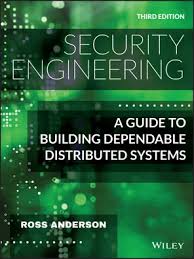
Ross Anderson's Security Engineering provides an important conceptual foundation for this paper.
A key lesson is that security architecture involves tradeoffs involving:
- simplicity;
- usability;
- maintainability;
- underblocking;
- overblocking;
- architecture;
- incentives.
The uploaded material explicitly discusses these considerations in the context of network-security architecture and firewall design.
This leads to a fundamental design principle:
The most secure system is not necessarily the system with the most security controls. It is the system in which the controls are appropriate, understandable, maintainable and aligned with the threat model.
For SMEs, this is particularly important.
An excessively complicated security architecture can itself become a source of operational failure.
4. The Threat Landscape
A modern Internet-facing application may encounter:
4.1 Reconnaissance Bots
These search for:
- CMS versions;
- plugins;
- extensions;
- themes;
- exposed files;
- administrator interfaces;
- APIs;
- server technologies.
4.2 Credential Attacks
These include:
- brute force;
- password spraying;
- credential stuffing;
- account enumeration.
4.3 Vulnerability Scanning
Automated systems search for known vulnerabilities in:
- Joomla;
- WordPress;
- Magento;
- plugins;
- extensions;
- PHP;
- web servers.
4.4 Scraping
Bots may extract:
- products;
- prices;
- descriptions;
- customer-facing content;
- inventory information.
4.5 Business-Logic Abuse
Examples include:
- fake accounts;
- coupon abuse;
- inventory hoarding;
- card testing;
- fraudulent orders;
- API abuse.
5. Why E-Commerce Is Different
A conventional website primarily protects:
content + users + application functionality
An e-commerce application must additionally protect:
money + inventory + customer accounts + pricing + transactions
Therefore, e-commerce security requires controls beyond conventional CMS security.
The attack chain may be:
Account Creation → Login → Search → Product → Cart → Checkout → Payment → Order
Every stage can become an automation target.
6. The Defense-in-Depth Architecture
The recommended architecture is:
INTERNET | +----------------+ | CDN / DDoS | | Protection | +----------------+ | +----------------+ | WAF / Bot | | Management | +----------------+ | +----------------+ | Rate Limiting | +----------------+ | +----------------+ | Cloud Firewall | +----------------+ | +----------------+ | UFW / nftables | +----------------+ | +----------------+ | Nginx / Apache | +----------------+ | +----------------+ | PHP-FPM | +----------------+ | +--------------+--------------+ | | CMS / E-Commerce API Layer | | Joomla / WordPress Services WooCommerce / Magento | +------+------+ | | Redis MariaDB
The architecture deliberately distributes security across multiple layers.
A firewall alone is insufficient.
A WAF alone is insufficient.
A security plugin alone is insufficient.
The objective is defense in depth.
7. Internet Edge Protection
The first security principle is:
Do not allow every Internet request to reach the application server.
Edge protection may include:
- CDN;
- DDoS mitigation;
- IP reputation;
- ASN reputation;
- bot classification;
- geographic policies;
- request filtering;
- TLS termination.
This reduces the attack volume reaching the VPS.
8. Web Application Firewall
A WAF provides application-layer filtering.
It can detect or block:
- SQL injection;
- cross-site scripting;
- path traversal;
- malicious request patterns;
- exploit signatures;
- abnormal request methods;
- suspicious traffic.
However:
A WAF is a compensating control, not a substitute for secure software.
Applications must remain patched.
9. Rate Limiting
Rate limiting is particularly effective against automation.
However, one global limit is rarely sufficient.
Different endpoints have different risk profiles.
|
Endpoint |
Security Policy |
|---|---|
|
Homepage |
Permissive |
|
Content |
Moderate |
|
Search |
Restricted |
|
Login |
Strict |
|
Registration |
Strict |
|
Password Reset |
Very Strict |
|
API |
Identity/Key-based quota |
|
Cart |
Session-aware |
|
Checkout |
Very Strict |
|
Administration |
Extremely Strict |
Rate limiting should consider:
IP + account + session + API key + behavioral signals
because distributed botnets can bypass simplistic IP-only controls.
10. Authentication Security
Authentication is a critical control.
The uploaded Security Engineering material discusses password attacks, retry counters, identity management, intrusion detection, recovery and operational failure as interconnected security concerns.
An SME should therefore implement:
- strong passwords;
- MFA;
- account lockout or throttling;
- suspicious-login detection;
- administrator-account review;
- password-reset protection;
- session management.
MFA should be prioritized for:
- CMS administrators;
- hosting accounts;
- SSH;
- database administrators;
- e-commerce administrators;
- payment-provider accounts.
11. WordPress Security
WordPress security should address:
- core;
- plugins;
- themes;
- administrator accounts;
- REST APIs;
- XML-RPC;
- file uploads;
- permissions;
- PHP;
- database access.
Unused plugins and themes should be removed.
Security plugins can provide valuable capabilities, but infrastructure controls remain necessary.
12. Joomla Security
Joomla security requires:
- current Joomla core;
- current extensions;
- administrator MFA;
- ACL management;
- secure configuration;
- filesystem permissions;
- upload controls;
- administrator monitoring;
- server hardening.
Changing the administrator URL may reduce opportunistic scanning but should not be considered a primary authentication defense.
The security model should prioritize:
authentication + authorization + rate limiting + monitoring + patching
over obscurity.
13. Magento and WooCommerce Security
E-commerce platforms require additional protection.
Important controls include:
- administrator MFA;
- secure APIs;
- checkout protection;
- payment fraud controls;
- transaction velocity;
- inventory controls;
- account takeover protection;
- coupon abuse protection.
For Magento, the production architecture should also carefully control:
- Redis;
- Elasticsearch/OpenSearch;
- MariaDB;
- cron;
- PHP-FPM;
- Admin;
- APIs.
Internal services should not normally be directly exposed to the Internet.
14. Inventory Hoarding
Inventory hoarding bots attempt to reserve scarce products.
Potential controls include:
- purchase limits;
- account velocity limits;
- cart timeouts;
- queue mechanisms;
- behavioral analysis;
- identity-aware controls.
The goal is not necessarily to block every unusual customer.
It is to identify unreasonable automated behavior.
15. Card Testing
Card-testing bots can generate large numbers of payment attempts.
The defensive architecture should involve:
- payment-provider fraud controls;
- velocity detection;
- account reputation;
- transaction monitoring;
- suspicious-IP detection;
- 3-D Secure where appropriate;
- repeated-failure controls.
This is an example of why application security and business operations cannot be separated.
16. Scraping and Competitive Intelligence
Scraping requires a nuanced strategy.
Some automated access is legitimate.
Examples:
- search engines;
- price comparison;
- accessibility;
- monitoring;
- approved APIs.
Therefore:
The goal is not "block bots." The goal is "control unauthorized automation."
Organizations should consider:
- APIs;
- authentication;
- quotas;
- rate limiting;
- bot classification;
- caching;
- contractual access.
17. VPS Security
A secure application requires a secure host.
The VPS should implement:
- cloud/provider firewall;
- UFW/nftables;
- SSH hardening;
- key authentication;
- least privilege;
- service isolation;
- patch management;
- logging;
- malware detection.
The firewall architecture should remain simple enough to maintain.
The Security Engineering material specifically identifies simplicity, usability and maintainability as important firewall-architecture considerations.
18. Network Segmentation
Security architecture should limit the scope of compromise.
For example:
PUBLIC | +-- CDN/WAF | +-- Web Server | +-- Application | +-- Redis | +-- Database
The database should not be directly reachable from the public Internet.
Neither should:
- Redis;
- internal Docker services;
- Elasticsearch;
- management interfaces.
Segmentation reduces the blast radius of compromise.
The uploaded security-engineering material similarly discusses separating networks to limit compromise scope.
19. File and Application Integrity
A compromised CMS may contain:
- malicious PHP;
- web shells;
- modified JavaScript;
- rogue administrator accounts;
- malicious cron jobs;
- injected database content.
Monitoring should therefore include:
- file-integrity checks;
- malware scanning;
- rootkit detection;
- cron auditing;
- administrator-account monitoring;
- configuration comparison.
20. Malware Detection
Possible tools include:
- ClamAV;
- file-integrity monitoring;
- rootkit detection;
- server log analysis;
- CMS-specific security scanners.
Scanning should be automated.
However:
A clean malware scan does not prove that a system is uncompromised.
Detection must be combined with configuration review and forensic analysis when necessary.
21. Logging and Observability
Security requires visibility.
Monitor:
Web
- requests;
- status codes;
- response time;
- user agents;
- IPs.
Authentication
- login failures;
- successful logins;
- password resets;
- MFA events.
Infrastructure
- SSH;
- firewall;
- CPU;
- memory;
- disk;
- network.
Application
- PHP errors;
- database errors;
- API errors.
E-Commerce
- failed payments;
- suspicious orders;
- checkout velocity;
- account creation.
22. Detection Engineering
The SME should establish behavioral baselines.
For example:
Normal login failures: 5–20/hour Observed: 1,500/hour Action: Security alert + rate-limit + investigate
Another example:
Normal checkout attempts: 10/minute Observed: 400/minute Action: transaction-abuse detection + rate limiting + payment-provider controls
The important concept is:
Security monitoring should identify deviation from expected behavior.
23. Backup and Recovery
Security engineering must include recovery.
Backups should include:
- database;
- application;
- configuration;
- media;
- deployment configuration.
Maintain:
- local backup;
- off-site backup;
- retention policy;
- restore testing.
The uploaded security-engineering material discusses recovery and operational issues around authentication and system protection, reinforcing the principle that recovery is part of security rather than an afterthought.
24. Incident Response
The SME should have a written procedure.
Detect
Identify abnormal behavior.
Contain
Restrict attacker access.
Investigate
Determine:
- entry point;
- compromised accounts;
- modified files;
- affected databases;
- persistence mechanisms.
Eradicate
Remove malicious components.
Recover
Restore trusted systems.
Improve
Modify controls based on lessons learned.
25. DevSecOps
Security should become part of software delivery.
Recommended pipeline:
Developer | Git | Unit Tests | Dependency Scan | SAST | Build | Container Scan | Integration Tests | Security Tests | Staging | Approval | Production | Monitoring
This reduces the probability that vulnerable code reaches production.
26. Docker Security
For Docker-based Joomla, WordPress or Magento development:
Review:
- container privileges;
- exposed ports;
- image vulnerabilities;
- secrets;
- mounted volumes;
- network configuration;
- filesystem permissions;
- image provenance.
Development and production environments should be separated.
27. AI-Assisted Security Operations
AI can improve SME security operations by assisting with:
- log summarization;
- anomaly analysis;
- security-report generation;
- vulnerability classification;
- incident timelines;
- documentation;
- security knowledge retrieval.
A RAG-based security assistant can connect:
security policies + server documentation + incident history + application architecture + logs
to provide context-aware analysis.
However:
AI agents must operate under least privilege and human oversight.
Destructive actions should require explicit authorization.
28. SME 90-Day Action Plan
Days 1–15 — Discover
- Inventory assets.
- Identify public services.
- Inventory plugins/extensions.
- Identify administrators.
- Identify APIs.
- Identify payment systems.
- Establish traffic baseline.
Deliverable
Security Baseline Report
Days 16–30 — Protect
Implement:
- CDN;
- WAF;
- DDoS protection;
- cloud firewall;
- MFA;
- HTTPS;
- rate limiting.
Deliverable
Protected Internet Edge
Days 31–45 — Harden
Implement:
- UFW/nftables;
- SSH hardening;
- Nginx/Apache hardening;
- PHP hardening;
- filesystem permissions;
- internal-service isolation.
Deliverable
Hardened VPS
Days 46–60 — Secure Applications
Review:
- Joomla;
- WordPress;
- WooCommerce;
- Magento;
- plugins;
- extensions;
- APIs;
- administrator accounts.
Deliverable
CMS/E-Commerce Security Report
Days 61–70 — Anti-Bot
Protect:
- login;
- registration;
- search;
- API;
- cart;
- checkout.
Deliverable
Bot Management Policy
Days 71–75 — Detection
Deploy:
- malware scanning;
- file-integrity monitoring;
- rootkit detection;
- log monitoring.
Deliverable
Security Monitoring Baseline
Days 76–80 — Recovery
Implement:
- database backups;
- application backups;
- off-site backups;
- restore testing.
Deliverable
Recovery Plan
Days 81–85 — Monitoring
Establish:
- dashboards;
- alerts;
- KPIs;
- incident escalation.
Deliverable
Security Operations Dashboard
Days 86–90 — Test
Conduct:
- vulnerability assessment;
- configuration review;
- security testing;
- backup restoration;
- incident simulation.
Deliverable
90-Day Security Improvement Report
29. SME Security Maturity Model
Level 1 — Reactive
Incident-driven security.
Level 2 — Basic
Firewall + updates + backup.
Level 3 — Layered
WAF + MFA + rate limiting + monitoring.
Level 4 — Managed
Continuous monitoring and security operations.
Level 5 — Security Engineering
Security integrated into:
- architecture;
- DevOps;
- CI/CD;
- AI;
- operations;
- business processes.
The recommended SME target is:
Level 3 → Level 4
30. Security KPIs
Measure:
Infrastructure
- uptime;
- CPU;
- memory;
- database connections.
Security
- WAF blocks;
- failed logins;
- vulnerabilities;
- compromised accounts.
E-Commerce
- fraudulent orders;
- payment failures;
- suspicious accounts;
- cart abuse.
Recovery
- backup success;
- restoration success;
- recovery time.
Operations
- mean time to detect;
- mean time to contain;
- mean time to recover.
31. Strategic SME Technology Model
The security program should connect:
BUSINESS | +----------+----------+ | | DIGITAL PLATFORM SECURITY | | Joomla / WordPress WAF / MFA WooCommerce / Magento Firewall / Monitoring | | +----------+----------+ | OPERATIONS | DevOps / Backup Incident Response | ENGINEERING | AI / RAG / IoT / Research
This is more sustainable than treating security as a separate project.
32. How KeenComputer Helps
SME IT Infrastructure and Cybersecurity
KeenComputer can provide practical implementation across:
VPS
- Ubuntu;
- Linux;
- cloud firewall;
- UFW;
- SSH;
- Nginx;
- Docker.
CMS
- Joomla;
- WordPress;
- WooCommerce;
- security hardening;
- malware remediation.
Cybersecurity
- WAF;
- bot mitigation;
- rate limiting;
- monitoring;
- backup;
- incident response.
Operations
- patch management;
- performance;
- production support;
- disaster recovery.
Strategic Value
KeenComputer converts security architecture into an operational SME IT environment.
33. How IAS-Research Helps
Advanced Engineering and Research
IAS-Research can extend conventional IT security into:
- cybersecurity research;
- AI;
- RAG/LLM;
- IoT;
- embedded systems;
- industrial systems;
- security analytics.
Potential applications include:
AI Security Assistant
Logs + Security Documentation + Architecture + Incident History | RAG | LLM | Security Analysis
IAS-Research can also support organizations requiring security engineering beyond conventional CMS administration.
Strategic Value
IAS-Research connects cybersecurity with advanced engineering, AI, IoT and research.
34. How KeenDirect Helps
E-Commerce Engineering and Security
KeenDirect focuses on revenue-critical digital commerce.
Capabilities include:
- Magento;
- WooCommerce;
- e-commerce architecture;
- performance;
- checkout;
- APIs;
- payment workflows;
- bot mitigation.
Magento Production Architecture
CDN | WAF | Nginx | PHP-FPM | Magento | Redis | MariaDB
The objective is to protect both:
the technology
and
the revenue generated by the technology.
Strategic Value
KeenDirect connects e-commerce engineering, performance and security.
35. The Integrated KeenComputer–IAS-Research–KeenDirect Model
The three capabilities form a complementary architecture.
|
Organization |
Primary Role |
|---|---|
|
KeenComputer |
IT infrastructure + cybersecurity + VPS + CMS |
|
IAS-Research |
Engineering research + AI + RAG + IoT + advanced security |
|
KeenDirect |
Magento/e-commerce + performance + revenue protection |
Together:
KeenComputer secures the infrastructure. KeenDirect secures and optimizes the commerce platform. IAS-Research extends the capability into advanced engineering and AI-driven security.
36. SME Engagement Model
Step 1 — Security Assessment
Identify:
- assets;
- risks;
- vulnerabilities;
- attack surface.
Step 2 — Architecture
Design:
- network;
- firewall;
- WAF;
- CMS;
- application;
- monitoring.
Step 3 — Implementation
Deploy:
- controls;
- hardening;
- monitoring;
- backups.
Step 4 — Managed Operations
Maintain:
- updates;
- monitoring;
- backups;
- security reviews.
Step 5 — Advanced Engineering
Introduce:
- AI;
- RAG;
- DevSecOps;
- automation;
- advanced analytics.
37. Recommended Books and Research References
37.1 Security Engineering
Ross Anderson
Security Engineering: A Guide to Building Dependable Distributed Systems
This is one of the foundational references for this paper.
It provides a systems-oriented view of security involving architecture, usability, economics, authentication, networks, recovery and operational realities.
Particularly relevant concepts include:
- defense in depth;
- network security;
- firewall architecture;
- password security;
- authentication;
- intrusion detection;
- patching;
- recovery;
- security economics.
The uploaded material demonstrates the importance Anderson places on simplicity, usability, maintainability and appropriate network architecture.
It also covers authentication and password-system issues including retry mechanisms, password storage, identity management, intrusion detection, recovery and operational failure.
38. Web Application Security
Dafydd Stuttard and Marcus Pinto
The Web Application Hacker's Handbook
Recommended for understanding:
- web application attacks;
- authentication;
- session management;
- input validation;
- application testing;
- attack methodology.
This book provides the offensive-security perspective necessary for designing effective defensive controls.
39. Web Security Architecture
Michal Zalewski
The Tangled Web
Useful for understanding:
- browser security;
- HTTP;
- JavaScript;
- web protocols;
- browser attack surfaces.
40. DevOps and Software Delivery
Nicole Forsgren, Jez Humble and Gene Kim
Accelerate
Relevant to:
- DevOps;
- software delivery;
- automation;
- reliability;
- organizational performance.
Security becomes more effective when it is integrated into delivery pipelines rather than treated as a final inspection.
41. Project Execution
Scott Berkun
Making Things Happen
Relevant to the implementation problem.
Security programs frequently fail not because the organization lacks security technology but because:
- responsibilities are unclear;
- projects are poorly managed;
- implementation is delayed;
- operational ownership is missing.
Security must therefore be translated into completed engineering work.
42. Engineering Design
Scott Berkun
Why Design Is Hard
Security architecture is a design problem.
The engineer must balance:
Security + Usability + Performance + Cost + Reliability + Maintainability
A technically secure system that customers cannot use is not a successful business system.
43. DevOps Operations
Gene Kim, Kevin Behr and George Spafford
The Phoenix Project
Useful for understanding:
- IT operations;
- bottlenecks;
- workflow;
- deployment;
- organizational change.
Security operations should become part of the normal flow of technology operations.
44. Site Reliability Engineering
Betsy Beyer, Jennifer Petoff, Chris Jones and Niall Richard Murphy
Site Reliability Engineering
Relevant concepts include:
- reliability;
- monitoring;
- service-level objectives;
- incident response;
- automation;
- operational engineering.
A secure website that repeatedly becomes unavailable is still a business failure.
45. Penetration Testing
Peter Kim
The Hacker Playbook
Useful for understanding offensive-security thinking and authorized penetration-testing methodology.
The defensive objective is to identify weaknesses before malicious actors exploit them.
46. Security Standards
The books should be complemented by continuously updated technical standards.
Important references include:
- OWASP Top 10;
- OWASP ASVS;
- OWASP Web Security Testing Guide;
- OWASP Automated Threats to Web Applications;
- OWASP Bot Management and Anti-Automation guidance;
- NIST Cybersecurity Framework 2.0;
- NIST SMB Quick-Start Guide;
- Joomla Security Documentation;
- Adobe Commerce Security Documentation.
47. Research Synthesis
The books and technical references collectively support several major conclusions.
Conclusion 1
Security is a systems problem.
Conclusion 2
Security controls must be layered.
Conclusion 3
Simplicity and maintainability are security properties.
Conclusion 4
Authentication is a major attack surface.
Conclusion 5
Detection is as important as prevention.
Conclusion 6
Recovery is part of security.
Conclusion 7
Security must be integrated into software delivery.
Conclusion 8
E-commerce requires business-logic security.
Conclusion 9
SMEs require practical security engineering rather than enterprise complexity.
Conclusion 10
Security should continuously improve based on operational evidence.
48. Final Action Plan for an SME
An SME should begin with five questions:
1. What do we have?
Create the asset inventory.
2. What is exposed?
Identify the attack surface.
3. What matters most?
Identify revenue-critical systems.
4. What can go wrong?
Create the threat model.
5. What should we fix first?
Prioritize by business risk.
Then execute:
Assess → Harden → Monitor → Test → Recover → Improve
49. Final Conclusion
The security challenge facing Joomla, WordPress and e-commerce platforms is not simply the existence of malicious bots.
The deeper problem is the increasing automation of attacks against systems that businesses depend upon.
The appropriate response is therefore an equally systematic engineering approach.
A modern SME security architecture should combine:
Edge Security
CDN + DDoS + WAF
Network Security
Cloud Firewall + UFW/nftables + segmentation
Application Security
CMS hardening + secure configuration + patching
Identity Security
MFA + rate limiting + account protection
Bot Security
Behavior analysis + endpoint-specific controls
E-Commerce Security
Transaction velocity + fraud controls + inventory protection
Operational Security
Logging + monitoring + malware detection
Recovery
Backup + restoration + incident response
Engineering
DevOps + CI/CD + security testing
Advanced Technology
AI + RAG + automation + security analytics
The security-engineering perspective adds another essential lesson:
Security must be usable, maintainable and operationally sustainable.
An SME cannot afford a security architecture that nobody understands or maintains.
The objective is therefore not maximum complexity.
The objective is maximum practical resilience.
50. Strategic SME Proposition
KeenComputer, IAS-Research and KeenDirect can collectively support this transformation.
KeenComputer
Infrastructure and cybersecurity
KeenDirect
E-commerce engineering and revenue protection
IAS-Research
Advanced engineering, AI, RAG, IoT and security research
The resulting model is:
SME BUSINESS | DIGITAL REVENUE | E-COMMERCE / CMS | KEENDIRECT.COM | +-----------+-----------+ | | KEENCOMPUTER.COM IAS-RESEARCH.COM | | Infrastructure Engineering Cybersecurity AI / RAG VPS / Linux IoT DevOps Security Research | | +-----------+-----------+ | RESILIENT DIGITAL INFRASTRUCTURE
The strategic goal is simple:
Help SMEs build digital systems that are secure enough to trust, resilient enough to operate, and engineered well enough to grow.
Selected Bibliography
Anderson, R. Security Engineering: A Guide to Building Dependable Distributed Systems. Wiley.
Stuttard, D., & Pinto, M. The Web Application Hacker's Handbook: Finding and Exploiting Security Flaws. Wiley.
Zalewski, M. The Tangled Web: A Guide to Securing Modern Web Applications. No Starch Press.
Forsgren, N., Humble, J., & Kim, G. Accelerate: The Science of Lean Software and DevOps. IT Revolution.
Kim, G., Behr, K., & Spafford, G. The Phoenix Project. IT Revolution.
Beyer, B., Jones, C., Petoff, J., & Murphy, N. R. Site Reliability Engineering. O'Reilly.
Berkun, S. Making Things Happen: Mastering Project Management. O'Reilly.
Berkun, S. Why Design Is Hard. O'Reilly.
Kim, P. The Hacker Playbook. Secure Planet.
OWASP Foundation. OWASP Web Security Testing Guide.
OWASP Foundation. OWASP Application Security Verification Standard.
OWASP Foundation. OWASP Automated Threats to Web Applications.
OWASP Foundation. Bot Management and Anti-Automation Cheat Sheet.
National Institute of Standards and Technology. Cybersecurity Framework 2.0.
National Institute of Standards and Technology. Cybersecurity Framework 2.0 Small Business Quick-Start Guide.
Joomla Project. Joomla Security and Documentation.
Adobe. Adobe Commerce Security Documentation.
Executive Takeaway
For the SME owner:
Your website is business infrastructure.
For the CTO:
Security is an architecture problem.
For the system administrator:
Defense in depth is more resilient than a single security control.
For the developer:
Security belongs in the application lifecycle.
For the e-commerce manager:
Bots can attack revenue processes, not merely websites.
For the engineering organization:
AI, automation, DevSecOps and observability can transform security operations.
For the SME:
Do not wait for a breach to discover whether your security architecture works. Assess it, engineer it, test it and continuously improve it.
This version now treats Security Engineering as a foundational book for the paper, while also incorporating The Web Application Hacker's Handbook, Accelerate, Making Things Happen, Why Design Is Hard, The Phoenix Project, Site Reliability Engineering, The Tangled Web, and The Hacker Playbook into the research framework rather than leaving them as an isolated bibliography.