Modern strategic management increasingly depends on the ability to collect, synthesize, analyze, and operationalize large volumes of information across rapidly changing technological, economic, and regulatory environments. Traditional workflows based on disconnected spreadsheets, slide decks, email threads, and fragmented cloud documents often fail to provide traceability, organizational memory, and execution continuity. This white paper proposes a lightweight but rigorous “Personal Strategy Operating System” (PSOS) built around four complementary tools: Zotero for evidence management, Obsidian for synthesis and knowledge structuring, NotebookLM for source-grounded AI-assisted analysis, and Mindwtr for execution and task management.
The paper integrates concepts from strategic management, knowledge management (KM), personal knowledge management (PKM), AI-assisted decision support systems, and Getting Things Done (GTD)-style productivity methodologies. The proposed framework is designed for consultants, researchers, startup founders, engineering strategists, digital transformation leaders, and small strategic planning teams seeking enterprise-grade strategic thinking capabilities without enterprise software complexity.
The white paper presents theoretical foundations, workflow architecture, implementation blueprints, governance recommendations, and detailed case-study scenarios. It also evaluates the strengths, risks, scalability limitations, and future evolution of AI-enhanced strategic operating environments.
Building a Personal Strategy Operating System with Zotero, Obsidian, NotebookLM, and Mindwtr
A Research White Paper Blueprint for a 10,000+ Word Strategic Management Framework
Abstract
Modern strategic management increasingly depends on the ability to collect, synthesize, analyze, and operationalize large volumes of information across rapidly changing technological, economic, and regulatory environments. Traditional workflows based on disconnected spreadsheets, slide decks, email threads, and fragmented cloud documents often fail to provide traceability, organizational memory, and execution continuity. This white paper proposes a lightweight but rigorous “Personal Strategy Operating System” (PSOS) built around four complementary tools: Zotero for evidence management, Obsidian for synthesis and knowledge structuring, NotebookLM for source-grounded AI-assisted analysis, and Mindwtr for execution and task management.
The paper integrates concepts from strategic management, knowledge management (KM), personal knowledge management (PKM), AI-assisted decision support systems, and Getting Things Done (GTD)-style productivity methodologies. The proposed framework is designed for consultants, researchers, startup founders, engineering strategists, digital transformation leaders, and small strategic planning teams seeking enterprise-grade strategic thinking capabilities without enterprise software complexity.
The white paper presents theoretical foundations, workflow architecture, implementation blueprints, governance recommendations, and detailed case-study scenarios. It also evaluates the strengths, risks, scalability limitations, and future evolution of AI-enhanced strategic operating environments.
Table of Contents
- Introduction
- Literature Review and Theoretical Foundations
- Strategic Management and the AFI Framework
- The Personal Strategy Operating System Concept
- Zotero as the Evidence Layer
- Obsidian as the Knowledge Synthesis Layer
- NotebookLM as the AI Analysis Layer
- Mindwtr as the Execution Layer
- Integrated Workflow Architecture
- Strategic Use Cases and Applied Scenarios
- Benefits and Strategic Advantages
- Limitations, Risks, and Governance
- Design Guidelines and Implementation Blueprint
- Case Study: Small-Team Strategy Practice
- Future Directions and AI-Augmented Strategic Intelligence
- Conclusion
- References
- Appendices
Chapter 1: Introduction
1.1 The Evolution of Strategic Management Work
Strategic management has historically been associated with executive leadership, long-term planning departments, management consulting firms, and enterprise governance structures. Traditional strategy work involved relatively stable industry structures, slower market cycles, and centralized organizational decision-making. However, the modern digital economy has fundamentally transformed the nature of strategic work.
Today’s organizations operate in highly dynamic and interconnected environments characterized by:
- Rapid technological disruption.
- AI-driven automation.
- Globalized competition.
- Regulatory uncertainty.
- Continuous digital transformation.
- Information overload.
- Distributed collaboration.
- Shorter innovation cycles.
- Data-intensive operations.
As a result, strategy is no longer confined to executive boardrooms. Strategic thinking increasingly occurs across engineering teams, product groups, research organizations, startups, SMEs, and digital transformation initiatives.
This shift creates a major operational challenge: individuals and small teams are now expected to perform enterprise-grade strategic analysis without access to large enterprise strategy platforms.
1.2 The Strategic Management Gap
A growing gap exists between:
- The complexity of modern strategic decision-making.
- The tooling available to individuals and small organizations.
Many strategic workflows remain fragmented across:
- PowerPoint presentations.
- Email chains.
- Spreadsheets.
- Shared drives.
- Browser bookmarks.
- PDFs.
- CRM systems.
- Project management applications.
- Personal notebooks.
This fragmentation creates several systemic problems:
Loss of Organizational Memory
Important strategic reasoning becomes buried inside presentations or emails.
Weak Evidence Traceability
Decision rationales are disconnected from original evidence sources.
Repetitive Research
Teams repeatedly rediscover information already collected.
Poor Knowledge Reuse
Insights are not systematically linked across projects.
Execution Disconnect
Strategic planning often fails to translate into actionable task systems.
AI Fragmentation
AI-generated summaries are disconnected from structured knowledge repositories.
The result is a breakdown between:
- Evidence.
- Thinking.
- Decisions.
- Execution.
- Organizational learning.
1.3 Emergence of Personal Strategy Systems
The rise of open-source software, local-first applications, Markdown-based knowledge systems, and AI-assisted analysis tools has enabled a new category of strategic workflow environments.
These environments combine:
- Reference management.
- Knowledge synthesis.
- AI-assisted reasoning.
- Task execution.
- Decision journaling.
- Cross-document analysis.
into cohesive personal-scale strategy systems.
This paper proposes one such framework:
|
Function |
Tool |
|---|---|
|
Evidence Management |
Zotero |
|
Knowledge Synthesis |
Obsidian |
|
AI-Assisted Analysis |
NotebookLM |
|
Execution Management |
Mindwtr |
Together, these tools form a lightweight but powerful strategic operating environment.
1.4 Objectives of This Paper
This white paper has five primary objectives:
- To establish the theoretical foundation for integrated strategic knowledge systems.
- To define the functional role of each tool in the proposed stack.
- To describe integrated workflows for strategic analysis and execution.
- To evaluate strengths, risks, and governance considerations.
- To provide practical implementation guidance for researchers, consultants, SMEs, and engineering organizations.
1.5 Scope of the Paper
This paper focuses on:
- Strategic management workflows.
- Research-intensive decision environments.
- AI-assisted strategic analysis.
- Small-team and individual strategy practices.
- Local-first and privacy-aware tooling.
- Knowledge-centric organizational processes.
The paper does not attempt to replace enterprise ERP, CRM, or large-scale BI systems. Instead, it focuses on augmenting strategic thinking and decision execution.
Chapter 2: Literature Review and Theoretical Foundations
Expanded Academic Context
The emergence of AI-assisted strategic knowledge systems must be understood within the broader evolution of management science, organizational theory, information systems, and digital transformation. During the twentieth century, organizations relied heavily on hierarchical information flows, centralized planning offices, and relatively static strategic planning cycles. However, digital transformation, globalization, and the exponential growth of information ecosystems fundamentally altered how organizations create, process, and operationalize knowledge.
The contemporary organization now functions as a continuously adaptive knowledge-processing system. Strategic advantage increasingly depends on the speed, quality, and integration of organizational learning processes. Firms that can efficiently acquire information, synthesize insights, coordinate decisions, and execute strategic responses often outperform competitors operating with fragmented knowledge systems.
This shift has accelerated the importance of:
- Knowledge management.
- Organizational learning.
- AI-assisted analytics.
- Personal knowledge systems.
- Strategic intelligence platforms.
- Collaborative decision environments.
- Digital execution systems.
The proposed Personal Strategy Operating System (PSOS) aligns with these developments by combining multiple disciplines into a cohesive strategic workflow environment.
2.1 Knowledge Management Foundations
Knowledge management (KM) emerged as a major field of study during the 1990s as organizations increasingly recognized that intangible assets—rather than physical assets alone—were becoming central drivers of competitive advantage.
Researchers such as Nonaka, Takeuchi, Davenport, and Prusak emphasized that organizational performance increasingly depends on how effectively firms:
- Create knowledge.
- Capture knowledge.
- Share knowledge.
- Operationalize knowledge.
- Preserve institutional memory.
Explicit Knowledge
Explicit knowledge includes:
- Reports.
- Documentation.
- Technical specifications.
- Research papers.
- Policies.
- Strategic plans.
Explicit knowledge can be stored digitally and indexed for retrieval.
Zotero primarily supports explicit knowledge management.
Tacit Knowledge
Tacit knowledge refers to:
- Experience.
- Judgment.
- Intuition.
- Contextual understanding.
- Strategic insight.
Tacit knowledge is difficult to formalize.
Obsidian partially supports tacit knowledge externalization by enabling users to convert evolving insights into linked notes and strategic narratives.
Organizational Learning
Organizational learning theory argues that firms gain competitive advantage through continuous adaptation.
Learning occurs through:
- Reflection.
- Experimentation.
- Failure analysis.
- Cross-functional synthesis.
- Knowledge reuse.
The proposed PSOS supports continuous learning loops through:
- Evidence repositories.
- Decision journals.
- Assumption tracking.
- AI-assisted synthesis.
- Strategic review workflows.
Knowledge Codification vs. Personalization
Two major KM strategies dominate the literature:
Codification Strategy
Knowledge is stored in reusable repositories.
Advantages:
- Scalability.
- Searchability.
- Long-term retention.
- Reusability.
Personalization Strategy
Knowledge transfer occurs through dialogue, collaboration, and expert interpretation.
Advantages:
- Nuanced understanding.
- Contextual interpretation.
- Adaptive reasoning.
The proposed framework combines both approaches.
Zotero emphasizes codification.
NotebookLM and Obsidian partially support personalization through interactive synthesis and narrative reasoning.
2.2 Strategic Management Theory
Strategic management research evolved significantly from classical industrial-era planning systems toward dynamic capability theory, resource-based views, platform economics, and ecosystem strategy.
Classical Strategic Planning
Early strategic planning emphasized:
- Long-term forecasting.
- Market positioning.
- Resource allocation.
- Competitive analysis.
These methods worked relatively well in slower-moving industrial markets.
However, modern digital environments require more adaptive systems.
Resource-Based View (RBV)
The RBV argues that sustainable competitive advantage arises from valuable, rare, inimitable, and organizationally embedded resources.
In knowledge-intensive industries, knowledge systems themselves become strategic assets.
The PSOS can therefore be interpreted as a strategic capability infrastructure.
Dynamic Capabilities
Dynamic capability theory emphasizes:
- Sensing opportunities.
- Seizing opportunities.
- Reconfiguring resources.
The proposed framework strongly supports all three functions.
AFI Framework
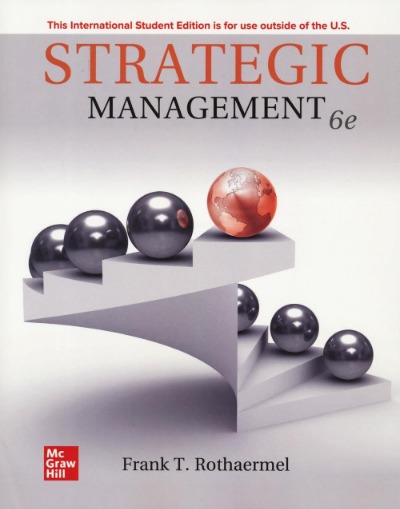
Rothaermel’s Analysis–Formulation–Implementation (AFI) framework provides a particularly relevant structure for integrating strategic workflows. fileciteturn0file0L72-L74
The AFI framework emphasizes:
- Strategic analysis.
- Strategy formulation.
- Strategy implementation.
The PSOS directly operationalizes these stages.
Stakeholder Strategy
Modern strategy increasingly recognizes stakeholder ecosystems rather than shareholder-only optimization.
Strategic decisions must now account for:
- Customers.
- Employees.
- Regulators.
- Communities.
- Technology partners.
- Investors.
- Environmental systems.
The proposed framework supports stakeholder-oriented analysis through structured evidence management and cross-domain synthesis.
2.3 Personal Knowledge Management (PKM)
PKM systems emerged partly in response to information overload.
Modern professionals face:
- Massive digital content volumes.
- Constant notifications.
- Fragmented workflows.
- Rapid context switching.
- Cognitive overload.
PKM systems aim to externalize memory and improve thinking quality.
Zettelkasten Principles
The Zettelkasten method emphasizes:
- Atomic notes.
- Permanent notes.
- Linked thinking.
- Emergent idea generation.
Obsidian operationalizes these concepts effectively.
Building a Second Brain
The “Second Brain” concept emphasizes creating external cognitive systems capable of:
- Capturing ideas.
- Organizing knowledge.
- Retrieving insights.
- Supporting creative synthesis.
The PSOS extends this idea into strategic management.
Networked Thought Systems
Modern PKM increasingly resembles graph-based cognition.
Linked notes create knowledge networks capable of revealing:
- Hidden relationships.
- Strategic patterns.
- Cross-domain opportunities.
- Reusable strategic insights.
2.4 AI-Assisted Research and Analysis Systems
AI-assisted research tools represent one of the most important developments in modern knowledge work.
Large Language Models (LLMs)
LLMs can:
- Summarize.
- Compare.
- Classify.
- Draft.
- Explain.
- Extract patterns.
However, unrestricted LLMs also introduce risks:
- Hallucinations.
- False confidence.
- Fabricated citations.
- Inconsistent reasoning.
Source-Grounded AI
NotebookLM introduces a source-grounded paradigm.
Rather than relying entirely on general model training, the AI operates over curated document sets.
Advantages include:
- Reduced hallucination risk.
- Better traceability.
- More focused analytical scope.
- Improved contextual consistency.
Retrieval-Augmented Generation (RAG)
NotebookLM partially resembles RAG architectures.
RAG systems combine:
- Retrieval systems.
- Vector search.
- LLM reasoning.
- Context injection.
The future evolution of PSOS environments may incorporate:
- Vector databases.
- Semantic embeddings.
- Local LLM deployment.
- Private AI infrastructure.
2.5 GTD and Execution Methodologies
Strategic planning frequently fails due to poor execution discipline.
The GTD methodology developed by David Allen emphasizes trusted systems for managing commitments.
Core GTD principles include:
- Capture everything.
- Clarify actionable meaning.
- Define next actions.
- Conduct regular reviews.
- Reduce cognitive burden.
Mindwtr aligns closely with these principles.
Strategic Importance of Execution Systems
Execution systems are strategically critical because:
- Ideas without execution produce no value.
- Research without operationalization becomes organizational waste.
- Decisions without follow-through degrade strategic momentum.
The integration of GTD methodologies into the PSOS helps close the strategy-execution gap.
2.6 Digital Transformation and Knowledge Work
Digital transformation fundamentally changes how organizations:
- Coordinate work.
- Share knowledge.
- Execute decisions.
- Measure outcomes.
- Manage innovation.
The COVID-19 era accelerated:
- Remote collaboration.
- Distributed teams.
- Asynchronous workflows.
- Digital-first operations.
This increased demand for:
- Structured digital knowledge systems.
- AI-assisted workflows.
- Persistent organizational memory.
2.7 Gaps in Existing Literature
Most current research treats:
- Strategic management.
- AI-assisted analysis.
- PKM systems.
- GTD workflows.
- Research repositories.
- Knowledge graphs.
as separate disciplines.
Very few frameworks integrate them into a unified operational strategy environment.
This paper contributes by:
- Defining a modular strategy operating system.
- Mapping workflows across tools.
- Providing governance guidelines.
- Integrating AI into strategic decision cycles.
- Connecting evidence management to execution systems.
The proposed PSOS therefore represents not merely a productivity stack, but an emerging model of AI-augmented strategic cognition.
Chapter 3: Strategic Management and the AFI Framework
2.1 Knowledge Management Foundations
Knowledge management (KM) refers to the systematic creation, organization, storage, retrieval, and application of organizational knowledge. KM emerged as a major discipline during the 1990s in response to the increasing importance of intangible assets and intellectual capital.
Key concepts include:
Explicit vs. Tacit Knowledge
Explicit knowledge can be documented and transferred through structured media such as documents, databases, and reports.
Tacit knowledge refers to experiential understanding embedded within individuals.
Strategic management relies heavily on both forms.
Codification Strategy
Codification emphasizes:
- Databases.
- Repositories.
- Structured documentation.
- Searchability.
Zotero and Obsidian strongly support codification-oriented workflows.
Personalization Strategy
Personalization emphasizes:
- Human interpretation.
- Dialogue.
- Collaborative sense-making.
- Narrative reasoning.
NotebookLM partially augments personalization through conversational AI-assisted reasoning.
2.2 Strategic Management Theory
Frank T. Rothaermel’s AFI Framework divides strategic management into:
- Analysis.
- Formulation.
- Implementation.
The AFI framework provides a highly relevant structure for the proposed strategy operating system. fileciteturn0file0L73-L73
The framework recognizes that strategy requires:
- Environmental analysis.
- Internal capability assessment.
- Strategic choice.
- Organizational execution.
The proposed tool stack maps naturally onto the AFI process:
|
AFI Stage |
Tool Support |
|---|---|
|
Analysis |
Zotero + NotebookLM |
|
Formulation |
Obsidian |
|
Implementation |
Mindwtr |
2.3 Personal Knowledge Management (PKM)
PKM systems emphasize:
- Networked note-taking.
- Long-term learning.
- Idea linking.
- Knowledge graphs.
- Incremental synthesis.
The Zettelkasten methodology heavily influences modern PKM practices.
Core PKM principles include:
- Atomic notes.
- Linked thinking.
- Progressive summarization.
- Retrieval over storage.
- Continuous synthesis.
Obsidian operationalizes many of these concepts through Markdown-based linked notes.
2.4 AI-Assisted Research Systems
Modern AI-assisted systems increasingly support:
- Cross-document summarization.
- Semantic retrieval.
- Citation grounding.
- Comparative analysis.
- Conversational querying.
NotebookLM represents an important evolution because it operates primarily on user-provided sources.
This “source-grounded AI” approach differs from general-purpose LLM chat systems by:
- Reducing hallucination risk.
- Maintaining evidence traceability.
- Supporting focused analytical workflows.
- Enabling controlled knowledge boundaries.
2.5 GTD and Execution Systems
David Allen’s Getting Things Done (GTD) framework emphasizes:
- Capturing commitments.
- Clarifying actions.
- Defining next actions.
- Conducting weekly reviews.
- Maintaining trusted systems.
Mindwtr aligns with GTD-oriented execution management.
This is strategically important because many organizations fail not during analysis but during execution.
Execution systems close the gap between:
- Strategic thinking.
- Operational implementation.
2.6 Gaps in Existing Literature
Most existing literature treats:
- Knowledge management.
- AI-assisted research.
- PKM systems.
- Task management.
- Strategic execution.
as separate domains.
Few frameworks integrate them into a unified strategic workflow architecture.
This paper attempts to bridge that gap.
Chapter 3: Strategic Management and the AFI Framework
3.1 Understanding Strategy
Strategy refers to the integrated set of actions designed to achieve competitive advantage and long-term organizational objectives. According to Rothaermel, strategy concerns how organizations gain and sustain competitive advantage. fileciteturn0file0L75-L75
Modern strategy increasingly involves:
- Technological positioning.
- Platform ecosystems.
- Digital transformation.
- Innovation management.
- Stakeholder coordination.
- Knowledge-driven decision systems.
3.2 The AFI Strategy Framework
The AFI Framework includes:
Analysis
Understanding:
- Industry forces.
- Competitors.
- Internal capabilities.
- Stakeholders.
- Opportunities.
- Risks.
Formulation
Developing strategic alternatives and selecting courses of action.
Implementation
Executing strategy through:
- Organizational structures.
- Processes.
- Governance.
- Metrics.
- Task systems.
3.3 Relevance to AI-Augmented Strategy Systems
The proposed strategy operating system supports all AFI stages:
|
AFI Function |
Supporting Tools |
|---|---|
|
External Analysis |
Zotero, NotebookLM |
|
Internal Analysis |
Obsidian |
|
Strategic Formulation |
Obsidian |
|
Strategic Communication |
Obsidian |
|
Execution Planning |
Mindwtr |
|
Feedback Loops |
All Tools |
3.4 Strategy as a Continuous Knowledge Cycle
Traditional strategy models often imply periodic planning cycles.
Modern digital environments require:
- Continuous sensing.
- Continuous adaptation.
- Continuous learning.
- Continuous execution.
The proposed toolset supports persistent strategic awareness.
Chapter 4: The Personal Strategy Operating System Concept
4.1 Defining the Personal Strategy Operating System
A Personal Strategy Operating System (PSOS) refers to a modular workflow environment that integrates:
- Knowledge acquisition.
- Evidence management.
- Strategic reasoning.
- AI-assisted analysis.
- Decision journaling.
- Execution management.
into a coherent workflow.
The PSOS acts as:
- A strategic memory system.
- A research environment.
- A synthesis platform.
- An execution coordination framework.
4.2 Architectural Principles
Local-First Architecture
Critical strategic information often contains:
- Competitive intelligence.
- Regulatory analysis.
- Financial assumptions.
- Customer information.
- Engineering research.
Local-first systems reduce dependence on centralized cloud infrastructure.
Markdown-Based Interoperability
Markdown provides:
- Portability.
- Longevity.
- Human readability.
- Vendor independence.
Modular Tool Design
Each tool performs a specialized role.
This avoids “all-in-one platform” complexity.
AI-Augmented but Human-Led
AI supports:
- Synthesis.
- Summarization.
- Retrieval.
- Comparative analysis.
Humans remain responsible for:
- Judgment.
- Governance.
- Strategic interpretation.
- Ethical reasoning.
Chapter 5: Zotero as the Evidence Layer
5.1 Overview
Zotero is an open-source reference management platform originally designed for academic research.
However, its capabilities make it highly suitable for strategic management workflows.
5.2 Strategic Functions of Zotero
Evidence Repository
Zotero centralizes:
- Reports.
- PDFs.
- White papers.
- Technical documentation.
- Regulatory filings.
- Research articles.
- Internal memos.
Metadata Management
Metadata fields enable:
- Categorization.
- Filtering.
- Retrieval.
- Cross-referencing.
Annotation Layer
Users can:
- Highlight passages.
- Add comments.
- Attach notes.
- Link concepts.
5.3 Designing a Strategic Taxonomy
Recommended collections:
- Competitors.
- Markets.
- Technology Trends.
- Regulatory Intelligence.
- Internal Research.
- Customer Analysis.
- Digital Transformation.
Recommended tags:
- Risk.
- Opportunity.
- Assumption.
- Financial.
- Operational.
- Strategic.
- Regulatory.
- AI.
- Cybersecurity.
5.4 Zotero and Engineering Research
Engineering organizations can use Zotero for:
- Standards tracking.
- IEEE papers.
- Technical specifications.
- Product architecture documentation.
- Power systems research.
- AI/ML literature.
- Embedded systems references.
5.5 Strategic Advantages of Zotero
Key benefits include:
- Traceable evidence.
- Long-term archival.
- Structured retrieval.
- Reduced information fragmentation.
Chapter 6: Obsidian as the Knowledge Synthesis Layer
6.1 Obsidian Architecture
Obsidian is a Markdown-based knowledge management platform built around:
- Linked notes.
- Graph relationships.
- Local storage.
- Plugin extensibility.
6.2 Strategic Note Types
Strategy Memo
Purpose:
- Document strategic recommendations.
- Track alternatives.
- Capture rationale.
Assumption Log
Purpose:
- Track uncertain assumptions.
- Monitor validation status.
Competitor Profile
Purpose:
- Store intelligence about competitors.
- Track market behavior.
Decision Journal
Purpose:
- Record strategic decisions.
- Preserve historical reasoning.
6.3 Example Strategy Memo Template
--- title: EV Market Entry Strategy status: Draft project: EV Expansion Initiative zotero_keys: - smith2025 - doe2024 --- # Executive Summary # Market Conditions # Key Risks # Strategic Recommendation # Supporting Evidence # Next Actions
6.4 Graph-Based Strategic Thinking
Obsidian’s graph model enables:
- Relationship mapping.
- Cross-project linking.
- Emergent insight discovery.
- Long-term institutional memory.
6.5 Strategic Benefits
Obsidian supports:
- Incremental synthesis.
- Long-term learning.
- Strategic continuity.
- Organizational memory.
Chapter 7: NotebookLM as the AI Analysis Layer
7.1 Source-Grounded AI
NotebookLM differs from generic chat systems because it operates on curated source material.
This creates a controlled analytical environment.
7.2 Strategic Applications
Cross-Document Comparison
NotebookLM can compare:
- Market forecasts.
- Competitor reports.
- Financial assumptions.
- Technical architectures.
Rapid Summarization
Useful for:
- Executive briefings.
- Research overviews.
- Trend analysis.
Question-Driven Exploration
Example prompts:
- “Summarize key regulatory risks.”
- “Compare AI adoption strategies across these firms.”
- “Identify contradictions between these reports.”
7.3 Risks and Limitations
NotebookLM may:
- Oversimplify nuance.
- Miss contextual assumptions.
- Produce incomplete interpretations.
Therefore:
- Human verification remains mandatory.
- Source validation is essential.
7.4 Best Practices
Recommended practices include:
- Small focused notebooks.
- Clearly defined analytical questions.
- Frequent notebook refresh cycles.
- Verification against original documents.
Chapter 8: Mindwtr as the Execution Layer
8.1 Strategy-to-Execution Gap
Many organizations fail because strategy remains disconnected from execution.
Mindwtr helps operationalize:
- Strategic initiatives.
- Projects.
- Tasks.
- Reviews.
8.2 GTD-Oriented Strategic Execution
Core workflow:
- Capture.
- Clarify.
- Organize.
- Review.
- Execute.
8.3 Strategic Project Structures
Example project:
Project: EV Market Entry Initiative
Subprojects:
- Regulatory Assessment.
- Financial Modeling.
- Partner Analysis.
- Supply Chain Review.
- Technology Roadmap.
8.4 Weekly Review Process
Weekly reviews should include:
- Rechecking assumptions.
- Updating strategy memos.
- Reviewing open risks.
- Refreshing NotebookLM notebooks.
- Closing obsolete tasks.
8.5 Execution Benefits
Mindwtr supports:
- Accountability.
- Momentum.
- Strategic continuity.
- Reduced execution drift.
Chapter 9: Integrated Workflow Architecture
9.1 Four-Phase Strategic Cycle
|
Phase |
Primary Activity |
Main Tool |
|---|---|---|
|
Scanning |
Evidence collection |
Zotero |
|
Sense-Making |
Knowledge synthesis |
Obsidian |
|
Analysis |
AI-assisted reasoning |
NotebookLM |
|
Execution |
Task management |
Mindwtr |
9.2 Market Entry Example
Phase 1: Evidence Collection
Documents gathered:
- Industry reports.
- Competitor analyses.
- Regulatory filings.
- Internal engineering studies.
Stored in Zotero collections.
Phase 2: Synthesis
Obsidian notes created:
- Market sizing.
- Competitor mapping.
- SWOT analysis.
- Assumption tracking.
Phase 3: AI-Assisted Analysis
NotebookLM prompts:
- “Compare cost structures.”
- “Identify emerging risks.”
- “Summarize common assumptions.”
Phase 4: Execution
Mindwtr tasks:
- Update forecasts.
- Schedule stakeholder meetings.
- Draft board presentation.
- Validate supply-chain risks.
Chapter 10: Strategic Use Cases and Applied Scenarios
10.1 Competitive Intelligence
The stack can support:
- Earnings-call analysis.
- Market monitoring.
- Competitor profiling.
- Technology tracking.
10.2 Engineering Consulting
Potential applications include:
- HVDC system research.
- Embedded systems strategy.
- AI-driven diagnostics.
- Power electronics analysis.
10.3 Digital Transformation Strategy
The stack supports:
- Change management.
- Technology evaluation.
- Vendor analysis.
- AI adoption planning.
10.4 Regulatory Compliance Analysis
Useful for:
- Regulatory tracking.
- Gap assessments.
- Compliance planning.
10.5 Innovation Portfolio Management
Supports:
- Idea tracking.
- Experiment documentation.
- Research continuity.
- Cross-functional learning.
Chapter 11: Benefits and Strategic Advantages
11.1 Evidence Traceability
Every strategic claim can link directly to supporting evidence.
11.2 Cognitive Augmentation
NotebookLM accelerates:
- Comparison.
- Summarization.
- Pattern recognition.
11.3 Knowledge Reuse
Obsidian enables long-term strategic memory.
11.4 Local-First Privacy
Local-first architectures reduce exposure risks.
11.5 Reduced Tool Fragmentation
The proposed framework creates clearer workflow boundaries.
Chapter 12: Limitations, Risks, and Governance
12.1 Tool Overlap
Zotero and Obsidian both support note-taking.
Clear governance is required.
12.2 AI Reliability Risks
AI-generated outputs must be validated.
12.3 Scalability Challenges
The stack is optimized primarily for:
- Individuals.
- Consultants.
- Small strategic teams.
12.4 Learning Curve
Users require:
- PKM training.
- Workflow discipline.
- Template standardization.
12.5 Governance Recommendations
Suggested policies:
- Naming conventions.
- Tag standards.
- Weekly reviews.
- Notebook refresh policies.
- Decision-journal retention.
Chapter 13: Design Guidelines and Implementation Blueprint
13.1 Role Clarity Rules
|
Tool |
Role |
|---|---|
|
Zotero |
Evidence |
|
Obsidian |
Thinking |
|
NotebookLM |
Analysis |
|
Mindwtr |
Execution |
13.2 Suggested Folder Structures
Zotero Collections
- Market Research
- Competitors
- AI Technologies
- Regulatory
- Internal Research
Obsidian Vault Structure
- Strategy Memos
- Decision Journals
- Assumptions
- Meeting Notes
- Research Maps
13.3 Naming Conventions
Recommended:
YYYY-MM-DD Topic Status
Example:
2026-05-22 EV Market Entry Draft
13.4 NotebookLM Governance
Rules:
- Small notebooks.
- Defined scope.
- Monthly cleanup.
- Verified sources only.
13.5 Weekly Strategic Review Template
Questions:
- What assumptions changed?
- What evidence became obsolete?
- Which strategic risks increased?
- Which decisions require revision?
- Which projects lost alignment?
Chapter 14: Case Study – Small-Team Strategy Practice
14.1 Organizational Context
A fictional 50-person engineering consulting firm faces:
- Rapid AI disruption.
- Regulatory complexity.
- Growing client expectations.
- Fragmented knowledge systems.
14.2 Initial Problems
Prior workflow issues included:
- Duplicate research.
- Lost reports.
- Weak execution tracking.
- Poor strategic continuity.
14.3 Adoption Process
Phase 1
Deploy Zotero.
Phase 2
Build Obsidian templates.
Phase 3
Introduce NotebookLM workflows.
Phase 4
Standardize execution through Mindwtr.
14.4 Outcomes
Observed benefits:
- Faster strategy memo creation.
- Improved evidence traceability.
- Better meeting quality.
- Reduced duplicate work.
- Stronger strategic continuity.
Chapter 15: Future Directions and AI-Augmented Strategic Intelligence
Future developments may include:
- Private LLM deployment.
- RAG-enhanced strategic memory systems.
- Vector database integration.
- Semantic strategy dashboards.
- AI-generated competitor intelligence.
- Graph-based strategic knowledge systems.
- Autonomous strategic monitoring agents.
The evolution of AI-assisted strategic systems may eventually produce continuously adaptive strategic operating environments.
Chapter 16: Conclusion
This paper proposed a lightweight but rigorous Personal Strategy Operating System built around Zotero, Obsidian, NotebookLM, and Mindwtr.
The framework addresses critical modern challenges:
- Information overload.
- Fragmented workflows.
- Weak evidence traceability.
- AI integration gaps.
- Strategy-to-execution disconnects.
By integrating:
- Evidence management.
- Knowledge synthesis.
- AI-assisted reasoning.
- Execution discipline.
organizations and individuals can build highly capable strategic environments without depending entirely on large enterprise systems.
The proposed framework is especially valuable for:
- Researchers.
- Consultants.
- SMEs.
- Engineering firms.
- Digital transformation teams.
- Innovation-focused organizations.
The future of strategic management will increasingly depend on the ability to integrate human judgment, structured knowledge systems, and AI-assisted analysis into coherent operational workflows.
The Personal Strategy Operating System represents one practical step toward that future.
References
- Rothaermel, F. T. Strategic Management, 6th Edition.
- Allen, D. Getting Things Done.
- Nonaka, I., & Takeuchi, H. The Knowledge-Creating Company.
- Tiago Forte. Building a Second Brain.
- Davenport, T., & Prusak, L. Working Knowledge.
- McElroy, M. The New Knowledge Management.
- Medina, J. Brain Rules.
- Obsidian Documentation.
- Zotero Documentation.
- NotebookLM Documentation.
- GTD Workflow Literature.