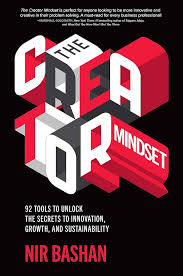
Digital transformation has emerged as a critical driver of business growth, competitiveness, and long-term sustainability. However, a significant proportion of transformation initiatives fail to deliver expected outcomes. The primary reason is not technological limitation but the absence of an innovation-centric mindset.
This paper integrates insights from The Creator Mindset by Nir Bashan with modern digital transformation practices, emphasizing:
- The role of Creator Mindset in innovation
- The structured application of 92 creativity tools
- The integration of web platforms, eCommerce systems, and AI technologies
- Practical frameworks for SMEs and enterprise-scale adoption
The research concludes that sustainable growth is achieved when technology adoption is aligned with creative thinking, experimentation, and customer-centric innovation.
Research White Paper-Digital Transformation and Business Growth Through the Creator Mindset
A Strategic Framework Integrating Innovation, Websites, eCommerce, and AI-Driven Systems
Executive Summary
Digital transformation has emerged as a critical driver of business growth, competitiveness, and long-term sustainability. However, a significant proportion of transformation initiatives fail to deliver expected outcomes. The primary reason is not technological limitation but the absence of an innovation-centric mindset.
This paper integrates insights from The Creator Mindset by Nir Bashan with modern digital transformation practices, emphasizing:
- The role of Creator Mindset in innovation
- The structured application of 92 creativity tools
- The integration of web platforms, eCommerce systems, and AI technologies
- Practical frameworks for SMEs and enterprise-scale adoption
The research concludes that sustainable growth is achieved when technology adoption is aligned with creative thinking, experimentation, and customer-centric innovation.
1. Introduction
1.1 The Digital Imperative
Organizations today operate in an environment defined by:
- Rapid technological evolution
- Global competition
- Changing customer expectations
- Data-driven decision-making
Digital transformation encompasses:
- Cloud computing
- Artificial intelligence (AI)
- Big data analytics
- Internet of Things (IoT)
- Web and eCommerce platforms
Despite heavy investment, studies indicate that nearly 70% of digital transformation initiatives underperform. This gap highlights a fundamental issue: technology without innovation culture is insufficient.
1.2 The Missing Link: Creative Intelligence
Creative intelligence is the ability to:
- Generate novel ideas
- Adapt to change
- Solve complex problems
- Identify new opportunities
Nir Bashan argues that creativity is not an innate trait but a structured skillset that can be learned through disciplined application of tools.
1.3 Purpose of This Paper
This white paper aims to:
- Explain the Creator Mindset framework
- Systematically organize the 92 tools into actionable categories
- Link these tools to digital transformation and business growth
- Demonstrate implementation through website and eCommerce solutions
- Provide a scalable framework for SMEs and enterprises
2. The Creator Mindset Framework
2.1 Creator vs Performer Paradigm
Creator Mindset
- Opportunity-driven
- Curious and exploratory
- Accepts uncertainty
- Focuses on innovation
Performer Mindset
- Risk-averse
- Efficiency-driven
- Focused on short-term outcomes
- Resistant to change
2.2 Strategic Implications
|
Dimension |
Performer Organization |
Creator Organization |
|---|---|---|
|
Innovation |
Incremental |
Transformational |
|
Technology Use |
Automation |
Reinvention |
|
Customer Focus |
Reactive |
Proactive |
|
Risk |
Avoidance |
Managed experimentation |
2.3 Role in Digital Transformation
A Creator-driven organization:
- Designs new business models
- Builds customer-centric platforms
- Experiments with AI and automation
- Continuously evolves through feedback loops
3. The 92 Tools: A Structured Innovation System
The 92 tools from The Creator Mindset can be grouped into seven strategic domains, forming a complete innovation lifecycle.
4. Domain 1: Mindset & Awareness Tools
4.1 Key Concepts
- Reframing problems
- Challenging assumptions
- Cognitive flexibility
- Awareness expansion
4.2 Application in Digital Transformation
Website Strategy
- Reimagining user journeys
- Moving from static websites to interactive digital experiences
eCommerce Impact
- Identifying hidden customer needs
- Redesigning checkout flows
5. Domain 2: Curiosity & Exploration Tools
5.1 Key Tools
- Question-driven thinking
- Cross-domain exploration
- Observational analysis
5.2 Application
Digital Marketing
- Testing new content formats
- Exploring SEO opportunities
AI Systems
- Discovering new data patterns
- Identifying automation opportunities
6. Domain 3: Ideation & Creativity Tools
6.1 Techniques
- Brainstorming
- Divergent thinking
- Concept synthesis
6.2 Application
Website Development
- UX/UI innovation
- Content personalization
eCommerce
- Subscription models
- Product bundling strategies
7. Domain 4: Risk & Execution Tools
7.1 Key Principles
- Rapid prototyping
- Iterative development
- MVP strategy
7.2 Application
Web Platforms
- Agile website deployment
- Continuous updates
eCommerce
- A/B testing
- Conversion optimization
8. Domain 5: Collaboration & Culture Tools
8.1 Core Elements
- Psychological safety
- Open communication
- Cross-functional collaboration
8.2 Application
- Integration of marketing, IT, and analytics teams
- Collaborative content creation
9. Domain 6: Resilience & Adaptability Tools
9.1 Key Tools
- Learning from failure
- Persistence
- Adaptation loops
9.2 Application
- Handling market disruption
- Adapting digital strategies
10. Domain 7: Impact & Value Creation Tools
10.1 Focus Areas
- Customer-centric innovation
- Value mapping
- Strategic alignment
10.2 Application
- Revenue growth
- Customer retention
- Brand differentiation
11. Digital Transformation Architecture
11.1 Layered Model
|
Layer |
Description |
|---|---|
|
Infrastructure |
Cloud, DevOps |
|
Data |
Analytics, ML |
|
Application |
Websites, eCommerce |
|
Experience |
UX/UI |
|
Mindset |
Creator Layer |
12. Website Solutions for Digital Growth
12.1 Role of Websites
Modern websites are:
- Customer acquisition engines
- Data collection platforms
- Brand communication tools
12.2 Key Features of High-Performance Websites
1. Responsive Design
- Mobile-first approach
2. SEO Optimization
- Keyword strategy
- Technical SEO
3. Content Strategy
- Blogs
- Case studies
- White papers
4. Analytics Integration
- Google Analytics
- Heatmaps
12.3 Creator Mindset in Website Design
- Experiment with layouts
- Test user behavior
- Optimize continuously
13. eCommerce Transformation
13.1 Key Components
- Product management systems
- Payment gateways
- Logistics integration
- Customer experience design
13.2 Advanced eCommerce Strategies**
Personalization
- AI-driven recommendations
Automation
- Chatbots
- Email marketing
Data Analytics
- Customer segmentation
- Predictive analytics
13.3 Creator Tools in eCommerce
- Experimentation (A/B testing)
- Curiosity (customer behavior analysis)
- Resilience (iteration cycles)
14. Integration with AI and RAG Systems
14.1 AI in Digital Transformation
Applications include:
- Customer support automation
- Fraud detection
- Recommendation systems
14.2 RAG-LLM Systems
- Knowledge retrieval
- Intelligent search
- Decision support systems
14.3 Creator Mindset Role
- Continuous experimentation
- Model refinement
- Ethical AI design
15. SME Growth Strategy
15.1 Challenges
- Limited resources
- Lack of expertise
- Technology barriers
15.2 Solutions
SaaS Platforms
- Low-cost entry
Digital Marketing
- SEO
- Social media
eCommerce Platforms
- Shopify
- WooCommerce
15.3 Growth Model
- Build website
- Add eCommerce
- Implement marketing
- Use analytics
- Scale with AI
16. Case Study Examples
16.1 SME eCommerce Growth
- Initial website launch
- SEO optimization
- Paid marketing campaigns
- AI-based recommendations
Result: Increased revenue and customer engagement
16.2 AI-Driven Website Optimization
- Data collection
- User behavior analysis
- Continuous improvement
17. Role of KeenComputer.com
17.1 Services
- Website development
- eCommerce solutions
- Cloud deployment
- SEO and digital marketing
17.2 Value Proposition
- Scalable solutions
- Cost-effective implementation
- SME-focused strategies
18. Role of IAS-Research.com
18.1 Services
- AI/ML development
- RAG-LLM systems
- Engineering analytics
18.2 Integration Value
- Advanced analytics
- AI-powered decision systems
- Research-driven innovation
19. Implementation Framework
Phase 1: Strategy
- Define goals
- Assess capabilities
Phase 2: Design
- Website architecture
- eCommerce model
Phase 3: Development
- Build platforms
- Integrate systems
Phase 4: Deployment
- Launch solutions
Phase 5: Optimization
- Continuous improvement
20. Key Success Factors
- Leadership commitment
- Innovation culture
- Customer focus
- Technology alignment
21. Challenges and Mitigation
|
Challenge |
Solution |
|---|---|
|
Resistance to change |
Training |
|
Skill gaps |
Upskilling |
|
Budget constraints |
SaaS solutions |
|
Data issues |
Governance |
22. Future Trends
- AI-driven automation
- Hyper-personalization
- Voice commerce
- Metaverse commerce
23. Conclusion
Digital transformation is a holistic process combining:
- Technology
- Strategy
- Culture
The framework from The Creator Mindset provides a structured approach to:
- Innovation
- Growth
- Sustainability
Organizations adopting this approach will:
- Lead digital markets
- Innovate continuously
- Achieve long-term success
24. References
- The Creator Mindset
- Porter, M. – Competitive Strategy
- Christensen, C. – The Innovator’s Dilemma
- Ries, E. – The Lean Startup
- Davenport, T. – AI Analytics
- Brynjolfsson, E. – Digital Economy
- Kotler, P. – Marketing Management
Call to Action
To achieve sustainable business growth:
- Adopt the Creator Mindset
- Build modern websites and eCommerce platforms
- Leverage AI and analytics
- Partner with technology and research organizations