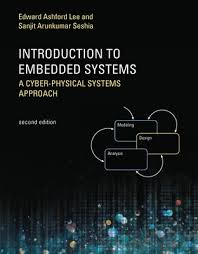
The convergence of the Internet of Things (IoT), Digital Twin technologies, Artificial Intelligence (AI), and TinyML-enabled embedded systems is transforming how cyber-physical systems are designed, prototyped, deployed, and operated. This white paper presents a comprehensive, end-to-end framework for IoT and Digital Twin system design with AI-embedded development workflows and edge intelligence (TinyML). It integrates Model-Based Systems Engineering (MBSE), virtual prototyping, MLOps for edge devices, and governance frameworks for security, privacy, and responsible AI.
The paper contextualizes current technology trajectories with insights from contemporary AI discussions (including the “State of AI in 2026”), highlighting the growing role of AI tooling and agents in software engineering, simulation, testing, and system optimization. Practical guidance is provided for Small and Medium Enterprises (SMEs) across Canada, India, the USA, and the UK, focusing on cost-effective adoption, phased deployment, and measurable ROI. Finally, the roles of KeenComputer.com and IAS-Research.com are outlined as implementation partners delivering architecture design, prototyping, cybersecurity, and operational excellence.
IoT and Digital Twin System Design with AI-Embedded and TinyML-Enabled Prototyping
A Comprehensive Research White Paper for SMEs, Engineers, and Technology Leaders
Abstract
The convergence of the Internet of Things (IoT), Digital Twin technologies, Artificial Intelligence (AI), and TinyML-enabled embedded systems is transforming how cyber-physical systems are designed, prototyped, deployed, and operated. This white paper presents a comprehensive, end-to-end framework for IoT and Digital Twin system design with AI-embedded development workflows and edge intelligence (TinyML). It integrates Model-Based Systems Engineering (MBSE), virtual prototyping, MLOps for edge devices, and governance frameworks for security, privacy, and responsible AI.
The paper contextualizes current technology trajectories with insights from contemporary AI discussions (including the “State of AI in 2026”), highlighting the growing role of AI tooling and agents in software engineering, simulation, testing, and system optimization. Practical guidance is provided for Small and Medium Enterprises (SMEs) across Canada, India, the USA, and the UK, focusing on cost-effective adoption, phased deployment, and measurable ROI. Finally, the roles of KeenComputer.com and IAS-Research.com are outlined as implementation partners delivering architecture design, prototyping, cybersecurity, and operational excellence.
1. Introduction
Digital transformation has shifted from experimentation to operational necessity. SMEs face increasing pressure to modernize operations, improve resilience, and compete with digitally native enterprises. IoT enables real-time visibility into physical processes; Digital Twins create virtual representations for simulation and optimization; AI enables predictive, adaptive, and autonomous decision-making; and TinyML brings intelligence directly to constrained edge devices.
Historically, embedded systems were designed with static control logic and limited analytics. Today’s cyber-physical systems require continuous learning, secure connectivity, and lifecycle traceability. AI-assisted development tools increasingly augment engineering productivity by automating code generation, test creation, data analysis, and documentation—shortening iteration cycles and enabling rapid prototyping. The strategic opportunity for SMEs lies in integrating these technologies into a coherent system architecture that balances innovation with security, governance, and cost control.
Objectives of this paper:
- Present a reference architecture for IoT + Digital Twin systems.
- Define AI-embedded design and prototyping workflows.
- Explain TinyML for edge intelligence.
- Provide governance, security, and compliance frameworks.
- Offer an SME adoption roadmap with real-world constraints.
- Describe how KeenComputer.com and IAS-Research.com enable delivery.
2. IoT System Design Architecture
2.1 Layered Reference Architecture
A robust IoT system is best designed using a layered model:
- Device Layer: Sensors, actuators, microcontrollers (e.g., ESP32, STM32), single-board computers.
- Edge/Gateway Layer: Local aggregation, protocol translation, buffering, and edge AI inference.
- Network Layer: Secure connectivity via Ethernet, Wi-Fi, 5G/LTE, LPWAN (LoRaWAN/NB-IoT).
- Platform Layer: Device management, telemetry ingestion, data lakes, stream processing.
- Application Layer: Dashboards, alerts, workflow automation, APIs, and integrations.
2.2 Design Principles
- Scalability: Support fleet growth and multi-site deployments.
- Interoperability: Open protocols (MQTT, CoAP, OPC UA).
- Security-by-Design: Secure boot, identity, encryption, OTA updates.
- Edge Intelligence: Reduce latency and bandwidth costs.
- Resilience: Fault tolerance, offline operation, graceful degradation.
3. Digital Twin System Design
3.1 Digital Twin Architecture
A Digital Twin comprises:
- Physical Asset: Machines, devices, processes.
- Digital Model: Physics-based and data-driven representations.
- Synchronization Layer: Real-time telemetry and state updates.
- Analytics & Simulation: What-if scenarios, predictive models.
- Control Feedback: Optimized actions applied to the physical system.
3.2 Engineering vs Operational Twins
- Engineering Twin: Used during design to validate architecture and control logic.
- Operational Twin: Used in production for predictive maintenance, capacity planning, and optimization.
3.3 Use Cases
- Manufacturing process optimization
- Energy systems and smart grids
- Smart buildings and facilities management
- Logistics and fleet management
- Healthcare device monitoring
4. AI in IoT and Embedded System Design
4.1 AI-Embedded Design Pipeline
- Data Strategy: Sensor data collection, labeling, governance.
- Model Development: Training in cloud or hybrid environments.
- Model Optimization: Quantization, pruning, compression.
- Deployment: Edge inference (TinyML) and cloud inference.
- Monitoring: Drift detection, performance metrics.
- Lifecycle Management: MLOps for IoT (model updates, rollback).
4.2 AI-Assisted Engineering
AI tools increasingly assist engineers with:
- Architecture recommendations
- Code scaffolding and refactoring
- Test generation and log analysis
- Simulation result interpretation
- Documentation and knowledge retrieval
These capabilities reduce development friction and enable faster iteration—particularly valuable for SMEs with limited engineering capacity.
5. TinyML: Intelligence at the Edge
5.1 What is TinyML?
TinyML enables machine learning inference on microcontrollers with severe resource constraints (often <1MB flash, <256KB RAM). It brings intelligence to the edge for:
- Low-latency decisions
- Offline operation
- Energy efficiency
- Privacy preservation
5.2 Toolchains and Frameworks
- TensorFlow Lite for Microcontrollers
- CMSIS-NN and microTVM
- Edge Impulse
- Vendor SDKs (ARM, Espressif)
5.3 SME Use Cases
- Predictive maintenance via vibration analysis
- Anomaly detection in power usage
- Acoustic event detection
- On-device quality inspection (simple vision/audio models)
6. Model-Based Systems Engineering (MBSE) and Prototyping
MBSE integrates requirements, architecture, simulation, and verification using formal models (e.g., SysML). Benefits include:
- Early validation of design assumptions
- Reduced integration risk
- Traceability from requirements to implementation
- Support for Digital Twin alignment
Prototyping Workflow:
- Requirements modeling (MBSE)
- Virtual prototyping (simulation)
- AI model integration
- Edge deployment (TinyML)
- Pilot rollout
- Continuous improvement
7. Security, Privacy, and Governance
7.1 Threat Landscape
- Device tampering and firmware compromise
- Network attacks (MITM, DDoS)
- Data leakage and privacy breaches
- AI model poisoning and drift
7.2 Governance Framework
- Zero Trust Architecture
- Secure Device Identity and certificate management
- OTA Update Governance with signing and rollback
- AI Governance: Explainability, bias assessment, audit trails
- Compliance: ISO/IEC 27001, NIST, GDPR/DPDP (India), sectoral regulations
8. SME Adoption Roadmap (Canada, India, USA, UK)
Phase 1: Foundations
- Connectivity, device inventory, security baseline
Phase 2: Visibility
- Telemetry, dashboards, basic analytics
Phase 3: Digital Twin
- Virtual modeling of critical assets
Phase 4: AI & TinyML
- Predictive models and edge inference
Phase 5: Scale & Optimize
- Fleet management, automation, continuous improvement
KPIs: Downtime reduction, energy savings, defect rates, OPEX reduction, time-to-market.
9. Role of KeenComputer.com and IAS-Research.com
KeenComputer.com
- IoT architecture and deployment
- Managed networks, security, cloud/edge platforms
- SME digital transformation consulting
- Ongoing operations and support
IAS-Research.com
- Digital Twin modeling and simulation
- AI/ML and TinyML R&D
- MBSE frameworks and prototyping labs
- Academic-industry collaboration and training
Together, they provide strategy, design, implementation, and lifecycle support.
10. Economic Impact and ROI
- Operational Efficiency: Predictive maintenance reduces downtime.
- Cost Reduction: Edge AI reduces cloud bandwidth and compute costs.
- Quality Improvement: Early anomaly detection lowers defect rates.
- Innovation Velocity: Faster prototyping shortens time-to-market.
11. Future Trends
- Autonomous Digital Twins
- Federated learning for IoT
- Self-healing cyber-physical systems
- Sustainability-driven digital twins
- Increased use of AI agents in engineering workflows
Conclusion
IoT and Digital Twin system design, when combined with AI-embedded workflows and TinyML, enables SMEs to build resilient, intelligent, and scalable cyber-physical systems. By adopting MBSE, edge AI, and strong governance, organizations can realize measurable operational and financial benefits. KeenComputer.com and IAS-Research.com provide the practical pathways to achieve this transformation.
References
- Tao, F., et al., “Digital Twins and Cyber-Physical Systems,” IEEE Access.
- Gubbi, J., et al., “Internet of Things (IoT): A Vision,” FGCS.
- Grieves, M., “Digital Twin: Manufacturing Excellence,” 2014.
- INCOSE, MBSE Handbook.
- Rajkumar, R., et al., “Cyber-Physical Systems,” IEEE Computer.
- Banbury, C., et al., “TinyML: ML with Limited Resources,” NeurIPS Workshop.
- TensorFlow Lite for Microcontrollers – Documentation.
- Edge Impulse – Developer Documentation.
- NIST SP 800-53 – Security Controls.
- ISO/IEC 27001 – Information Security Management.
- OpenFog Consortium – Edge Computing Architecture.
- Linux Foundation LF Edge – Reference Architectures.
- Kagermann, H., et al., “Industry 4.0,” acatech.
- European Commission – AI Ethics Guidelines.
- Lex Fridman Podcast – “State of AI in 2026” (transcript).