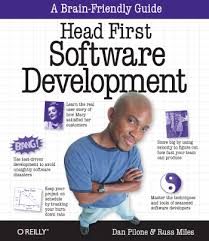
Software development has undergone a profound transformation over the last two decades. Organizations now operate in environments defined by rapid technological change, uncertain requirements, global competition, and heightened customer expectations. In this context, traditional linear development models have repeatedly failed to deliver sustainable value. Head First Software Development by Dan Pilone and Russ Miles introduced a practitioner-focused, cognitively engaging perspective on agile and iterative development that emphasizes mindset, discipline, and continuous learning rather than rigid process compliance.
This research white paper presents a comprehensive synthesis of the core principles articulated in Head First Software Development and situates them within modern software engineering practice, including agile delivery, DevOps, cloud-native architectures, and continuous improvement cultures. The paper further demonstrates how IAS-Research.com and KeenComputer.com together provide an end-to-end capability—spanning research, architecture, engineering, implementation, and operations—to help organizations institutionalize these principles and achieve measurable digital transformation outcomes.
Research White Paper -Applying Head First Software Development Principles to Modern Software Engineering and Digital Transformation
Integrating Research, Engineering, and Delivery with IAS-Research.com and KeenComputer.com
Abstract
Software development has undergone a profound transformation over the last two decades. Organizations now operate in environments defined by rapid technological change, uncertain requirements, global competition, and heightened customer expectations. In this context, traditional linear development models have repeatedly failed to deliver sustainable value. Head First Software Development by Dan Pilone and Russ Miles introduced a practitioner-focused, cognitively engaging perspective on agile and iterative development that emphasizes mindset, discipline, and continuous learning rather than rigid process compliance.
This research white paper presents a comprehensive synthesis of the core principles articulated in Head First Software Development and situates them within modern software engineering practice, including agile delivery, DevOps, cloud-native architectures, and continuous improvement cultures. The paper further demonstrates how IAS-Research.com and KeenComputer.com together provide an end-to-end capability—spanning research, architecture, engineering, implementation, and operations—to help organizations institutionalize these principles and achieve measurable digital transformation outcomes.
1. Introduction
Software systems today are central to economic growth, innovation, and organizational competitiveness. Whether in SMEs, research institutions, or large enterprises, software increasingly mediates customer engagement, operational efficiency, and strategic decision-making. Despite advances in tools and platforms, many projects still fail due to misaligned requirements, poor communication, brittle architectures, and inadequate feedback mechanisms.
Head First Software Development addresses these challenges by focusing on how developers, managers, and stakeholders think about software creation. Rather than prescribing a single methodology, the book promotes adaptable practices grounded in agile values: customer collaboration, iterative delivery, technical excellence, and responsiveness to change.
This white paper explores these ideas as a coherent system of practice and explains how IAS-Research.com and KeenComputer.com help organizations move from conceptual understanding to sustained execution.
2. Foundations of Head First Software Development
2.1 Customer Value as the Primary Measure of Success
A central premise of Head First Software Development is that successful software is defined by customer satisfaction rather than adherence to initial plans. Requirements are treated as evolving knowledge rather than fixed specifications.
Key implications include:
- Continuous customer involvement throughout the development lifecycle
- Prioritization of features based on business value
- Early validation through working software
This approach aligns strongly with lean product development and modern product management practices.
2.2 Iterative and Incremental Delivery
The book advocates short, time-boxed iterations that produce potentially shippable software. Each iteration incorporates planning, development, testing, and review, enabling rapid feedback and course correction.
Iteration reduces risk by:
- Exposing misunderstandings early
- Limiting the cost of change
- Creating predictable delivery rhythms
2.3 Change as a Competitive Advantage
Rather than resisting change, Head First Software Development treats adaptability as a core capability. Teams that respond effectively to evolving requirements gain strategic advantage in dynamic markets.
3. Requirements Engineering with User Stories
3.1 User Stories as Shared Understanding
User stories replace exhaustive requirement documents with concise, customer-focused narratives. They emphasize intent and value rather than implementation detail.
A typical user story captures:
- The user role
- The desired capability
- The business benefit
3.2 Estimation and Collaborative Planning
Estimation techniques such as Planning Poker are used not to predict the future precisely, but to foster shared understanding and expose assumptions. Estimation becomes a learning activity rather than a contractual obligation.
3.3 Role of IAS-Research.com
IAS-Research.com supports organizations in:
- Structuring effective user story backlogs
- Translating strategic objectives into executable requirements
- Applying estimation techniques in complex engineering domains
4. Agile Planning, Tracking, and Velocity
4.1 Adaptive Planning
Planning in Head First Software Development is continuous and iterative. Long-term plans provide direction, while short-term plans drive execution.
4.2 Velocity as an Empirical Metric
Velocity measures how much work a team completes per iteration, enabling realistic forecasting based on observed performance rather than speculation.
4.3 Research and Practice Integration
IAS-Research.com applies empirical planning models, while KeenComputer.com operationalizes them within real delivery environments.
5. Good-Enough Design and Sustainable Architecture
5.1 Balancing Design and Agility
The book introduces the concept of “good-enough design,” advocating architectures that support current requirements while remaining adaptable to future change.
Core principles include:
- High cohesion and low coupling
- Clear responsibility boundaries
- Incremental refinement
5.2 Refactoring as a Continuous Discipline
Refactoring is treated as an ongoing investment in code quality, enabling systems to evolve without accumulating excessive technical debt.
5.3 Architectural Support from IAS-Research.com
IAS-Research.com provides architecture assessment, refactoring strategies, and research-backed design guidance for complex systems.
6. Version Control and Professional Development Practices
Version control is positioned as a foundational professional practice. Effective use of version control systems enables collaboration, traceability, and recovery from failure.
Modern workflows include:
- Distributed version control systems (e.g., Git)
- Branching and merging strategies
- Code review and peer feedback
KeenComputer.com implements these workflows within production-grade development environments.
7. Testing, TDD, and Continuous Integration
7.1 Testing as Risk Management
Testing reduces uncertainty by validating assumptions at multiple levels, from unit tests to system tests.
7.2 Test-Driven Development
TDD improves design quality by forcing developers to clarify intent before implementation. It supports maintainability and long-term system health.
7.3 Continuous Integration and DevOps
Continuous integration ensures that code is built and tested frequently, reducing integration risk and enabling rapid delivery.
IAS-Research.com designs testing and CI strategies, while KeenComputer.com implements and operates CI/CD pipelines.
8. Defect Management and Iteration Closure
Bugs are treated as feedback about both product and process. Structured defect management improves reliability, transparency, and customer trust.
Practices include:
- Clear bug reporting
- Prioritization and root cause analysis
- Integration of fixes into regular iterations
9. Applying Head First Software Development in Real Organizations
No single process fits all contexts. Head First Software Development emphasizes tailoring practices to organizational size, domain complexity, and regulatory requirements.
High-performing organizations view software development as a learning system that continuously evolves.
10. Joint Role of IAS-Research.com and KeenComputer.com
10.1 Complementary Strengths
IAS-Research.com focuses on research-driven software engineering, architecture, methodology, and capability building.
KeenComputer.com specializes in full-stack development, DevOps implementation, cloud infrastructure, system integration, and managed services.
10.2 End-to-End Value Delivery
Together, IAS-Research.com and KeenComputer.com provide:
- Strategy-to-execution alignment
- Research-informed architecture and design
- High-quality software implementation
- Ongoing operations and continuous improvement
This partnership enables organizations to translate Head First Software Development principles into sustainable, production-ready systems.
11. Conclusion
Head First Software Development remains highly relevant because it addresses the human, technical, and organizational dimensions of software creation. Its emphasis on customer value, iteration, technical discipline, and adaptability aligns closely with modern digital transformation initiatives.
By combining the research and architectural expertise of IAS-Research.com with the delivery and operational capabilities of KeenComputer.com, organizations can achieve consistent, high-quality software outcomes while building long-term engineering maturity.
References
- Pilone, D., & Miles, R. Head First Software Development. O’Reilly Media.
- Beck, K. Test-Driven Development: By Example. Addison-Wesley.
- Fowler, M. Refactoring: Improving the Design of Existing Code. Addison-Wesley.
- Humble, J., & Farley, D. Continuous Delivery. Addison-Wesley.
- Schwaber, K., & Sutherland, J. The Scrum Guide.