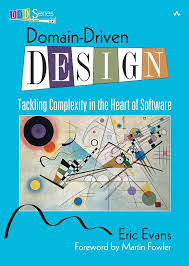
Software engineering is a complex field that requires strategic approaches to create robust, scalable, and maintainable systems. Two methodologies that have gained significant traction in recent years are Domain-Driven Design (DDD) and Top-Down Design. This white paper explores these approaches in detail, their applications, benefits, and how Keen Computer and IAS Research can assist in implementing them effectively.
Domain-Driven Design (DDD) and Top-Down Design in Software Engineering
Software engineering is a complex field that requires strategic approaches to create robust, scalable, and maintainable systems. Two methodologies that have gained significant traction in recent years are Domain-Driven Design (DDD) and Top-Down Design. This white paper explores these approaches in detail, their applications, benefits, and how Keen Computer and IAS Research can assist in implementing them effectively.
Understanding Domain-Driven Design (DDD)
Domain-Driven Design (DDD) is a software development approach that emphasizes understanding and modeling the business domain. It focuses on creating a shared language between developers and domain experts, ensuring that the software accurately reflects the complexities of the business it serves.
Key Concepts of DDD
- Ubiquitous Language
- A common vocabulary shared by all team members, including developers, designers, and business stakeholders.
- Helps in avoiding miscommunication and ensures clarity in software design.
- Bounded Contexts
- Dividing a large system into smaller, more manageable sub-systems.
- Each context operates independently, reducing dependencies and improving maintainability.
- Domain Model
- A system of abstractions that describes selected aspects of a domain.
- Helps in structuring business logic and mapping it directly into code.
- Entities and Value Objects
- Entities: Objects with distinct identities that persist over time (e.g., a customer, an order).
- Value Objects: Objects defined by their attributes rather than identity (e.g., an address, a price value).
- Aggregates and Repositories
- Aggregates: A cluster of domain objects treated as a single unit.
- Repositories: A mechanism for managing access to domain objects, ensuring proper retrieval and persistence.
Understanding Top-Down Design
Top-Down Design is a software development technique that imposes a hierarchical structure on program design. It starts with high-level functionalities and progressively breaks them down into smaller, more manageable components.
Benefits of Top-Down Design
- Clarifies Project Requirements
- By defining the overall system first, teams gain a clear understanding of project scope and objectives.
- Simplifies Complex Problems
- Large systems are broken down into smaller, comprehensible modules, making development more efficient.
- Promotes Code Reusability
- Modular components can be reused across different projects, saving time and effort.
- Facilitates Team Collaboration
- Teams can work on different modules independently while maintaining alignment with the overall system design.
Combining DDD and Top-Down Design
Integrating both methodologies can lead to more effective software engineering practices:
- Start with the Big Picture
- Use Top-Down Design to outline the system architecture at a high level.
- Identify Bounded Contexts
- Apply DDD principles to define clear boundaries within the system.
- Refine Incrementally
- Break down each component using Top-Down Design while maintaining DDD concepts.
- Develop a Ubiquitous Language
- Ensure consistent terminology across all levels of the design to enhance communication.
Real-World Use Cases
Case Study 1: E-Commerce Platform
An online retailer wanted to improve its order management system. Using DDD, the company defined bounded contexts for inventory, payments, and shipping. Top-Down Design allowed the team to structure these modules efficiently, improving scalability and maintainability.
Case Study 2: Financial Services Application
A fintech startup needed a secure and robust system for managing transactions. By implementing DDD, they established clear domain models for users, transactions, and accounts. Top-Down Design ensured modular development, enabling independent feature upgrades.
How Keen Computer and IAS Research Can Help
Keen Computer
- Training & Workshops: Offers expert-led training on DDD and Top-Down Design methodologies.
- Consulting Services: Helps organizations integrate these approaches into their software development lifecycle.
- Domain Modeling Tools: Provides tools for visualizing domain models and system hierarchies.
IAS Research
- Software Engineering Research: Conducts research on the latest advancements in software design methodologies.
- Case Studies & Best Practices: Publishes insights on real-world applications of DDD and Top-Down Design.
- Knowledge Sharing Platforms: Facilitates collaboration among software engineering professionals.
Conclusion
Domain-Driven Design and Top-Down Design are powerful methodologies that, when combined, can significantly enhance software engineering practices. By leveraging the expertise and resources provided by Keen Computer and IAS Research, organizations can implement these approaches effectively, leading to more scalable, maintainable, and business-aligned software solutions.
References
[1] https://redis.io/glossary/domain-driven-design-ddd/ [2] https://www.ituonline.com/tech-definitions/what-is-top-down-programming/ [3] https://www.cloudzero.com/blog/software-engineering-tools/ [4] https://martinfowler.com/bliki/DomainDrivenDesign.html [5] https://userweb.cs.txstate.edu/~js236/201712/cs1428/topdowndesign.pdf [6] https://eitfaridabad.com/what-are-the-top-useful-software-tools-that-every-computer-science-engineering-student-should-know/ [7] https://en.wikipedia.org/wiki/Domain-driven_design [8] https://www.computerscience.gcse.guru/theory/top-down-design [9] https://sceweb.sce.uhcl.edu/helm/SWEBOK_IEEE/data/swebok_chapter_10.pdf [10] https://softengbook.org/articles/ddd