IT administration has evolved from routine system maintenance into a strategic discipline that directly influences organizational resilience, digital innovation, cybersecurity posture, and service quality. E-commerce platforms, high-traffic websites, universities, and large public organizations share common challenges: complex infrastructures, increasing cyber threats, regulatory compliance, budget constraints, and rising user expectations.
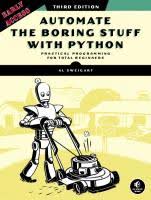
This research white paper presents a comprehensive, modern framework for IT administration that integrates infrastructure management, cybersecurity, DevOps, service management, and Python-based automation inspired by the principles of Automate the Boring Stuff with Python. The paper further explains how KeenComputer.com and IAS-Research.com jointly deliver research-backed, production-ready IT administration solutions for commercial, academic, and public-sector environments.
Research White Paper
Modern IT Administration for E-Commerce, Websites, Universities, and Large Public Organizations
Integrating Infrastructure, Cybersecurity, and Python-Based Automation
Abstract
IT administration has evolved from routine system maintenance into a strategic discipline that directly influences organizational resilience, digital innovation, cybersecurity posture, and service quality. E-commerce platforms, high-traffic websites, universities, and large public organizations share common challenges: complex infrastructures, increasing cyber threats, regulatory compliance, budget constraints, and rising user expectations.
This research white paper presents a comprehensive, modern framework for IT administration that integrates infrastructure management, cybersecurity, DevOps, service management, and Python-based automation inspired by the principles of Automate the Boring Stuff with Python. The paper further explains how KeenComputer.com and IAS-Research.com jointly deliver research-backed, production-ready IT administration solutions for commercial, academic, and public-sector environments.
1. Introduction
Digital systems are now mission-critical across commerce, education, and public services. Downtime in an e-commerce platform results in immediate revenue loss. Failure of university IT systems disrupts teaching, research, and administration. Public sector outages affect citizen trust and essential services.
Traditional system administration—manual configuration, reactive troubleshooting, and siloed tools—is no longer sufficient. Modern IT administration must be:
- Automated and repeatable
- Secure by design
- Scalable and resilient
- Cost-aware and auditable
- Aligned with organizational strategy
This paper proposes a unified IT administration model applicable to:
- E-commerce platforms and SaaS businesses
- CMS-driven and custom websites
- Universities and research institutions
- Large public and government organizations
2. Core Pillars of Modern IT Administration
2.1 Infrastructure Management
Modern infrastructures are inherently hybrid:
- On‑premise data centers
- Private clouds
- Public cloud services
- Campus and edge networks
Administrative responsibilities include:
- Linux and Windows server lifecycle management
- Virtualization platforms (VMware, Proxmox, KVM, Hyper‑V)
- Containerization (Docker, Kubernetes)
- Storage systems (SAN, NAS, object storage)
- Network segmentation, routing, and performance tuning
Contextual priorities:
- E-commerce: high availability, traffic spikes, low latency
- Universities/Public sector: reliability, long lifecycle systems, legacy integration
2.2 Operating Systems and Platform Administration
Enterprise environments depend heavily on:
- Enterprise Linux (Ubuntu LTS, RHEL, Rocky Linux)
- Windows Server ecosystems (Active Directory, Group Policy)
- UNIX-like systems for research computing
Best practices:
- Configuration management and standard builds
- Patch and vulnerability management
- Identity, authentication, and authorization
- Role-based access control (RBAC)
3. Web, CMS, and E-Commerce System Administration
Web platforms represent the primary digital interface for users and customers.
Common platforms:
- WordPress, Joomla, Drupal
- Magento / Adobe Commerce
- WooCommerce and hybrid SaaS integrations
- Custom full-stack applications
Administrative focus areas:
- Application performance monitoring
- Secure deployment and update pipelines
- Database administration (MySQL, PostgreSQL, NoSQL)
- Backup, restore, and disaster recovery testing
4. Cybersecurity and Risk Management
4.1 Threat Landscape
- Ransomware and supply-chain attacks
- Credential theft and phishing
- Data breaches and privacy violations
- Distributed denial-of-service (DDoS) attacks
4.2 Security Controls
Technical controls:
- Firewalls, WAFs, IDS/IPS
- Endpoint detection and response (EDR)
- Encryption in transit and at rest
- Multi-factor authentication and SSO
Administrative controls:
- Security policies and SOPs
- Incident response and disaster recovery planning
- Regular audits and penetration testing
Universities and public organizations must balance openness with strict compliance and data protection.
5. Python-Based Automation for IT Administration
Automation is the cornerstone of modern IT operations. Python has become the preferred language for IT administrators due to its simplicity, readability, and extensive ecosystem.
5.1 Principles of Python Automation
Inspired by Automate the Boring Stuff with Python, effective automation focuses on:
- Eliminating repetitive manual tasks
- Reducing human error
- Creating repeatable and auditable processes
- Enabling administrators to focus on higher-value work
5.2 Common Automation Use Cases
Python automation enables:
- File and directory management (logs, backups, archives)
- Parsing CSV, JSON, XML, and configuration files
- Automated user account provisioning and cleanup
- Scheduled system health checks
- Automated report generation for audits
Examples:
- Daily validation of e-commerce database backups
- Automated generation of university access control reports
- Monitoring disk usage and sending alerts
5.3 Scheduling, Monitoring, and Notifications
Python scripts integrate with schedulers to:
- Run maintenance tasks automatically
- Monitor logs and system metrics
- Send email, SMS, or messaging alerts
This is especially valuable for:
- University lab resets
- Public sector portal uptime monitoring
- E-commerce order pipeline validation
5.4 Web Automation and Integration
Python supports:
- Web scraping for monitoring external dependencies
- API-based system integration
- Automated website content and uptime checks
For e-commerce, this enables inventory synchronization, order validation, and fraud pattern detection.
6. DevOps, Infrastructure as Code, and AIOps
6.1 DevOps Integration
Python complements DevOps by enabling:
- CI/CD pipeline automation
- Infrastructure as Code workflows
- Configuration drift detection
It integrates seamlessly with Ansible, Terraform, Docker, and Kubernetes.
6.2 AIOps and Intelligent Automation
Advanced environments extend automation using analytics and AI:
- Anomaly detection in logs and metrics
- Predictive failure analysis
- Capacity planning using historical data
IAS-Research.com applies research-grade analytics and AI models to transform automation into intelligent, self-improving IT operations.
7. IT Administration for Universities and Large Public Organizations
7.1 Campus-Scale Challenges
- Tens of thousands of users
- BYOD environments
- Research computing clusters
- Long-lived legacy systems
7.2 Governance and Compliance
- Data privacy and sovereignty
- Accessibility standards
- Procurement, audit, and reporting requirements
Python automation significantly reduces compliance overhead by generating repeatable, auditable processes.
8. Service Management and Operations
8.1 ITIL-Aligned Practices
- Incident, problem, and change management
- Service catalogs and SLAs
8.2 End-User Support
- Tiered helpdesk models
- Knowledge bases and self-service portals
Automation reduces ticket volumes and accelerates resolution times.
9. Role of KeenComputer.com
KeenComputer.com delivers hands-on, production-grade IT administration services, including:
- Enterprise Linux and Windows system administration
- Virtualization and container platforms
- Secure CMS and e-commerce deployments
- Network design, monitoring, and optimization
- Backup, disaster recovery, and high-availability solutions
KeenComputer focuses on execution, reliability, and operational excellence.
10. Role of IAS-Research.com
IAS-Research.com provides the research and innovation layer:
- IT architecture research and evaluation
- Cybersecurity risk modeling
- AIOps and advanced analytics
- Policy, governance, and compliance frameworks
IAS-Research ensures IT administration strategies are evidence-based, future-proof, and scalable.
11. Integrated Value Proposition
Together, KeenComputer.com and IAS-Research.com offer:
- Strategy → Architecture → Implementation → Operations
- Research-backed decision-making
- Cost-efficient, scalable solutions
- Long-term capability building for institutions
This integrated model is particularly effective for universities and public organizations requiring both technical depth and academic rigor.
12. Future Directions
- Zero-trust campus networks
- Sovereign and private AI infrastructure
- Automation-first IT teams
- Policy-driven digital governance
13. Conclusion
Modern IT administration is a strategic enabler of commerce, education, and public service delivery. By combining robust infrastructure management, cybersecurity, and Python-based automation, organizations can achieve resilient, secure, and efficient IT ecosystems.
KeenComputer.com and IAS-Research.com together provide the expertise, tools, and research-driven frameworks required to lead this transformation.
References (Indicative)
- ITIL 4 Foundation
- NIST Cybersecurity Framework
- ISO/IEC 27001
- Enterprise Linux Documentation
- Automate the Boring Stuff with Python – Al Sweigart
- DevOps and Site Reliability Engineering literature