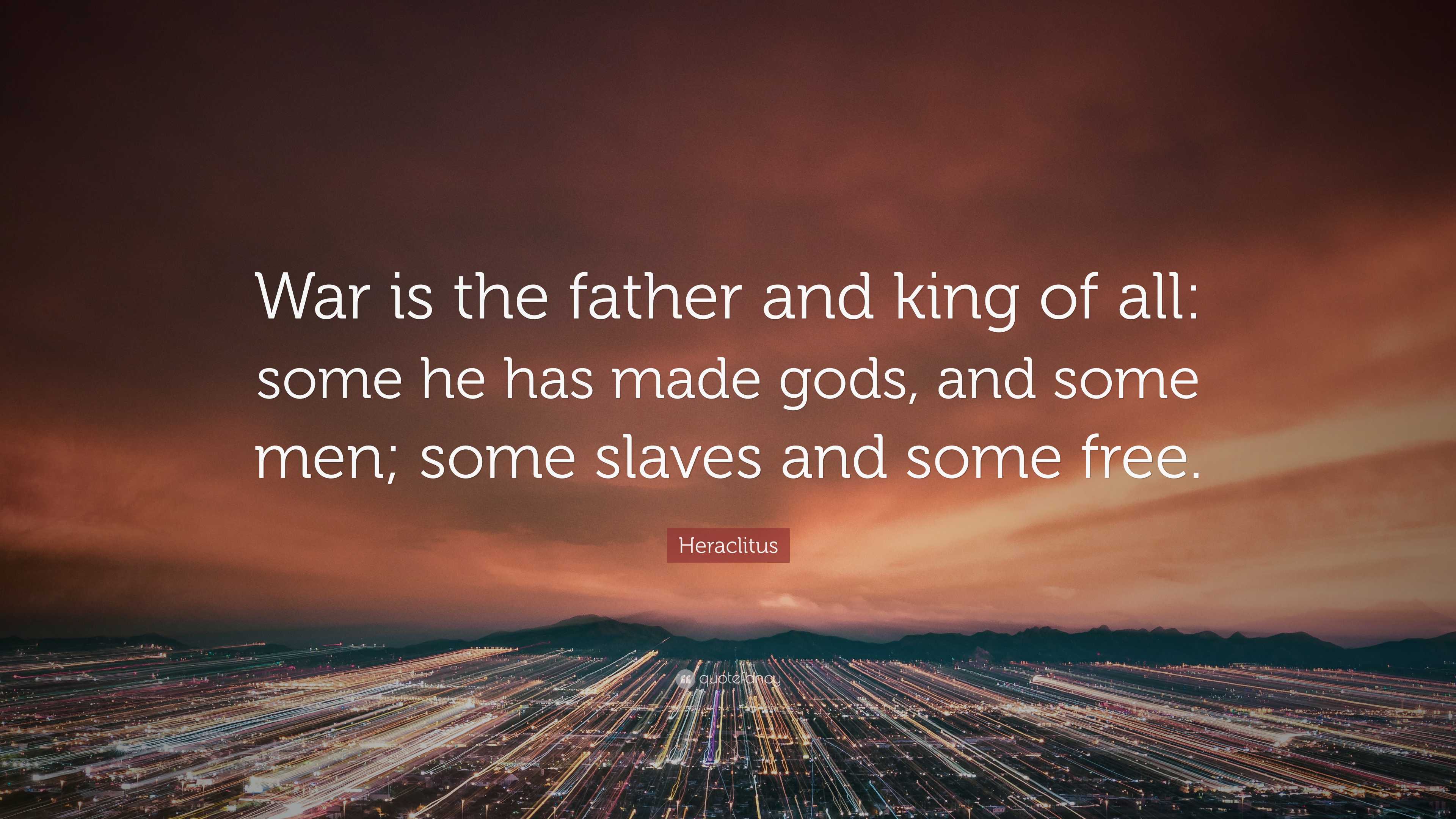
The relationship between conflict, strategy, adaptation, and organizational growth has fascinated philosophers, military leaders, and business executives for centuries. One of the earliest thinkers to explore the nature of change and conflict was Heraclitus. His famous assertion that "everything flows" and that "war is the father of all things" remains relevant to modern strategic management, business development, innovation, and competitive advantage.
This paper examines the strategic philosophy of Heraclitus, explores the military campaigns of Alexander the Great, and connects their lessons to modern strategic management and business development. The paper argues that while physical warfare is destructive and costly, the principles developed through military strategy—including leadership, adaptability, intelligence gathering, logistics, innovation, and resource management—have significantly influenced modern business strategy.
Heraclitus, War, Strategy, Strategic Management, Business Development, and the Lessons of Alexander the Great
A Research White Paper
Author:
Prepared for Business Leaders, Entrepreneurs, Strategic Managers, Researchers, and SME Owners
Abstract
The relationship between conflict, strategy, adaptation, and organizational growth has fascinated philosophers, military leaders, and business executives for centuries. One of the earliest thinkers to explore the nature of change and conflict was Heraclitus. His famous assertion that "everything flows" and that "war is the father of all things" remains relevant to modern strategic management, business development, innovation, and competitive advantage.
This paper examines the strategic philosophy of Heraclitus, explores the military campaigns of Alexander the Great, and connects their lessons to modern strategic management and business development. The paper argues that while physical warfare is destructive and costly, the principles developed through military strategy—including leadership, adaptability, intelligence gathering, logistics, innovation, and resource management—have significantly influenced modern business strategy.
1. Introduction
Organizations today operate in highly competitive environments characterized by:
- Rapid technological change
- Global competition
- Artificial Intelligence disruption
- Supply chain uncertainty
- Regulatory changes
- Economic volatility
In many respects, modern markets resemble battlefields.
Companies compete for:
- Customers
- Talent
- Market share
- Capital
- Technology leadership
- Brand influence
This does not imply physical conflict. Rather, competition creates pressures that force innovation and adaptation.
The foundations of this idea can be traced to Heraclitus.
2. Heraclitus and Strategic Thinking
2.1 Who Was Heraclitus?
Heraclitus lived around 535–475 BCE.
He is famous for several ideas:
Constant Change
No man ever steps in the same river twice.
The river changes.
The person changes.
The environment changes.
This insight is highly relevant to strategic management.
Organizations that fail to adapt eventually decline.
Examples include:
- Kodak
- Blockbuster
- Nokia
Each struggled to adapt to changing market realities.
2.2 Conflict Creates Progress
Heraclitus famously wrote:
War is the father of all things.
This statement is often misunderstood.
He was not celebrating violence.
Instead, he argued that tension and opposition drive development.
Examples include:
- Competition creates innovation.
- Challenges create learning.
- Scarcity creates efficiency.
- Disruption creates new opportunities.
Without conflict or tension, there is little incentive for improvement.
3. War and the Development of Strategy
3.1 Why War Influenced Human Progress
Throughout history, war accelerated development in:
- Engineering
- Communications
- Medicine
- Transportation
- Manufacturing
- Leadership systems
Examples:
Roman Empire
Military logistics created advanced road systems.
Industrial Revolution
Large-scale manufacturing expanded due to military demand.
World War II
Accelerated:
- Radar
- Jet engines
- Computing
- Nuclear energy
Cold War
Produced:
- Satellites
- GPS
- Internet technologies
Many technologies later became commercial innovations.
3.2 Why Strategy Emerged from War
Military leaders faced challenges such as:
- Limited resources
- Uncertain information
- Complex environments
- Rapid change
These same challenges exist in business.
As a result, military strategy became the foundation for modern strategic management.
4. Alexander the Great: A Strategic Case Study
4.1 Overview
Alexander the Great is considered one of history's greatest military strategists.
Between 336 BCE and 323 BCE he created one of the largest empires in history.
His campaigns stretched across:
Greece,
Egypt,
Iran,
and parts of India.
4.2 Strategic Lessons from Alexander
Vision
Alexander had a clear objective.
He sought to unite territories under a common administration.
Business Lesson:
Successful organizations require:
- Vision
- Mission
- Long-term direction
Without strategic vision, execution becomes fragmented.
Speed
Alexander moved faster than opponents.
His armies often reached battlefields before enemies were prepared.
Business Lesson:
Speed can create competitive advantage.
Examples:
- Product launches
- Market entry
- AI adoption
- Digital transformation
Adaptability
Alexander modified tactics based on circumstances.
He did not rely on one approach.
Business Lesson:
Organizations must adapt to:
- Customer needs
- Market conditions
- Technology changes
Leadership
Alexander led from the front.
His soldiers trusted him because he shared risks.
Business Lesson:
Leadership credibility creates organizational commitment.
Intelligence Gathering
Alexander invested heavily in reconnaissance.
Business Lesson:
Modern equivalents include:
- Market research
- Customer analytics
- Competitive intelligence
- Business intelligence systems
5. Strategic Management and Military Principles
5.1 Strategic Management Defined
Strategic management involves:
- Environmental scanning
- Goal setting
- Resource allocation
- Execution
- Performance monitoring
It answers:
- Where are we now?
- Where do we want to go?
- How do we get there?
5.2 Military Concepts Used in Business
Situation Analysis
Military commanders assess:
- Terrain
- Resources
- Threats
Businesses perform:
- SWOT analysis
- PESTLE analysis
- Market analysis
Logistics
Military success depends on logistics.
Business success depends on:
- Supply chains
- IT infrastructure
- Inventory management
- Customer service
Resource Allocation
Both military and business leaders must decide:
- Where to invest
- What to prioritize
- Which opportunities to pursue
6. Business Development Through Strategic Thinking
6.1 What is Business Development?
Business development focuses on:
- Revenue growth
- Partnerships
- Market expansion
- Customer acquisition
Strategic thinking improves each of these activities.
6.2 Competitive Intelligence
Organizations must understand:
- Customer needs
- Competitors
- Market trends
Similar to military intelligence gathering.
Tools include:
- CRM systems
- AI analytics
- Market research
- Customer surveys
6.3 Innovation as Strategic Warfare
Modern competition often centers on innovation.
Examples include:
- Artificial Intelligence
- Cloud Computing
- Automation
- Digital Marketing
Organizations that innovate faster gain advantages.
7. Why Competition Is Important
Competition forces organizations to:
- Improve products
- Reduce costs
- Increase efficiency
- Enhance customer experience
Without competition:
- Innovation slows
- Productivity declines
- Customer value decreases
This is the economic equivalent of Heraclitus' concept of productive tension.
8. Ethical Limits of the War Analogy
Although military strategy provides useful lessons, businesses should not view customers or competitors as enemies.
Modern organizations should emphasize:
- Ethical leadership
- Sustainability
- Collaboration
- Corporate responsibility
The goal is value creation, not destruction.
Healthy competition benefits society.
Actual warfare often causes immense human suffering and economic damage.
Therefore, business leaders should adopt strategic discipline without glorifying violence.
9. Applications for SMEs
Small and Medium Enterprises can apply these lessons through:
Strategic Planning
Develop:
- Vision statements
- Strategic objectives
- KPIs
Market Intelligence
Monitor:
- Competitors
- Industry trends
- Customer behavior
Digital Transformation
Adopt:
- AI tools
- CRM platforms
- Cloud systems
- Data analytics
Agile Execution
Use:
- Continuous improvement
- Rapid experimentation
- Customer feedback loops
10. Implications for Modern Digital Businesses
Companies such as:
can help SMEs apply strategic management principles through:
Technology Consulting
- Digital transformation
- Infrastructure modernization
- Cloud deployment
AI and Analytics
- Business intelligence
- Predictive analytics
- RAG-LLM systems
- Agentic AI
Marketing Strategy
- SEO
- Content marketing
- Lead generation
- Customer analytics
Research and Innovation
- Technology assessments
- Competitive analysis
- Strategic planning support
11. Key Strategic Lessons
From Heraclitus:
- Change is constant.
- Adaptation is essential.
- Tension drives innovation.
From Alexander the Great:
- Vision matters.
- Speed creates advantage.
- Leadership influences outcomes.
- Intelligence improves decisions.
- Logistics determine execution success.
From Strategic Management:
- Plan systematically.
- Allocate resources effectively.
- Measure performance continuously.
- Adapt rapidly to change.
Conclusion
The insights of Heraclitus and the campaigns of Alexander the Great continue to offer valuable lessons for modern organizations. Heraclitus teaches that change and competitive tension are fundamental forces shaping progress. Alexander demonstrates how vision, leadership, intelligence, adaptability, and disciplined execution can transform ambition into achievement.
The most important lesson is not that war itself is desirable. Rather, it is that the strategic capabilities developed in response to competition and uncertainty can be applied constructively in business, innovation, and organizational leadership. Modern strategic management transforms these ancient lessons into practical frameworks for growth, resilience, and long-term competitive advantage.
Selected References
- Heraclitus. Fragments.
- The Art of War.
- On War.
- Competitive Strategy.
- Peter Drucker, Management: Tasks, Responsibilities, Practices.
- Good Strategy Bad Strategy.
- Alexander the Great historical biographies and military studies.
- The Prince.
- Blue Ocean Strategy.
- Modern strategic management and business development literature.