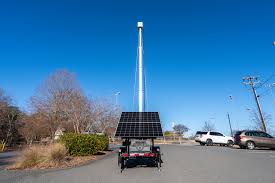
Parking lots remain one of the most vulnerable areas for property crime, vehicle theft, vandalism, and unauthorized access. Small businesses, residential complexes, educational institutions, municipalities, and industrial facilities increasingly seek cost‑effective, rapidly deployable, and scalable security solutions that do not require heavy infrastructure investment. Trail‑style Wi‑Fi and cellular cameras—originally designed for wildlife monitoring—have emerged as a practical security technology for parking lots and remote vehicle storage areas.
This research white paper provides a comprehensive technical and strategic analysis of trail‑style cameras for parking lot and auto theft security. It examines system architectures, connectivity models, power options, deployment strategies, limitations, and integration pathways. The paper also presents real‑world and hypothetical use cases and demonstrates how KeenComputer.com and IAS‑Research.com can jointly deliver end‑to‑end solutions, from hardware selection and deployment to analytics, AI‑driven insights, and long‑term optimization.
Trail‑Style Wi‑Fi and Cellular Cameras for Parking Lot and Auto Theft Security
A Research White Paper with Use Cases and the Role of KeenComputer.com and IAS‑Research.com
Abstract
Parking lots remain one of the most vulnerable areas for property crime, vehicle theft, vandalism, and unauthorized access. Small businesses, residential complexes, educational institutions, municipalities, and industrial facilities increasingly seek cost‑effective, rapidly deployable, and scalable security solutions that do not require heavy infrastructure investment. Trail‑style Wi‑Fi and cellular cameras—originally designed for wildlife monitoring—have emerged as a practical security technology for parking lots and remote vehicle storage areas.
This research white paper provides a comprehensive technical and strategic analysis of trail‑style cameras for parking lot and auto theft security. It examines system architectures, connectivity models, power options, deployment strategies, limitations, and integration pathways. The paper also presents real‑world and hypothetical use cases and demonstrates how KeenComputer.com and IAS‑Research.com can jointly deliver end‑to‑end solutions, from hardware selection and deployment to analytics, AI‑driven insights, and long‑term optimization.
1. Introduction
Vehicle theft and parking lot crime represent a persistent challenge worldwide. Parking areas are often poorly lit, minimally supervised, and physically separated from main buildings, making them attractive targets for criminals. Traditional CCTV systems—while effective—often require trenching, power lines, network cabling, and centralized infrastructure that can be expensive and time‑consuming to deploy.
Trail‑style Wi‑Fi and cellular cameras offer an alternative and complementary approach. These cameras are typically battery‑powered, motion‑activated, weather‑resistant, and capable of operating without fixed network connections. When equipped with cellular connectivity, they can transmit images and video clips directly to cloud platforms or mobile devices in near real time.
This paper explores how such cameras can be repurposed for professional security applications, particularly in parking lots and vehicle storage areas, and how service providers like KeenComputer.com and IAS‑Research.com can elevate them from consumer devices to enterprise‑grade security systems.
2. Parking Lot Security Challenges
2.1 Nature of Parking Lot Crime
Parking lots are exposed environments with limited natural surveillance. Common incidents include:
- Vehicle theft and attempted theft
- Break‑ins and theft of valuables from cars
- Vandalism, graffiti, and property damage
- Unauthorized access to restricted areas
- Hit‑and‑run incidents
Such events not only cause direct financial loss but also increase insurance costs, legal exposure, and reputational damage for property owners.
2.2 Limitations of Traditional Surveillance Systems
Conventional CCTV and IP camera systems often face the following constraints:
- Dependence on continuous power supply
- Requirement for wired or robust wireless networking
- High installation and maintenance costs
- Limited flexibility for temporary or remote sites
These limitations create an opportunity for alternative solutions that are faster to deploy and easier to scale.
3. Overview of Trail‑Style Wi‑Fi and Cellular Cameras
3.1 Technology Overview
Trail cameras are compact imaging devices designed to capture still images or short video clips when motion is detected. Modern versions incorporate:
- Infrared (IR) night vision
- Passive infrared (PIR) motion sensors
- High‑resolution image sensors
- SD card local storage
- Wi‑Fi or cellular (LTE/4G/5G) connectivity
3.2 Connectivity Models
Wi‑Fi Trail Cameras
- Connect to a nearby wireless network
- Suitable for parking lots close to buildings
- Lower recurring costs
- Limited by Wi‑Fi range and reliability
Cellular Trail Cameras
- Use SIM cards and mobile networks
- Ideal for remote or unpowered lots
- Enable real‑time alerts and cloud uploads
- Incur monthly data costs
3.3 Power Options
- Replaceable lithium or alkaline batteries
- Rechargeable battery packs
- Integrated or external solar panels
Power autonomy is a major advantage, allowing months of operation without maintenance.
4. System Architecture for Parking Lot Security
A typical trail‑camera‑based parking lot security system includes:
- Edge devices – trail‑style cameras with motion detection
- Connectivity layer – Wi‑Fi or cellular networks
- Cloud or server backend – image storage, alerts, and management
- User interface – mobile or web applications for monitoring
- Analytics layer (optional) – AI‑based event analysis and reporting
When professionally designed, this architecture can rival traditional systems in effectiveness while remaining significantly more flexible.
5. Use Cases
5.1 Small Business Parking Lots
Retail stores, professional offices, clinics, and service businesses often face repeated incidents of vehicle break-ins and vandalism, especially during nights and weekends. Cellular trail cameras can be installed at parking lot entry and exit points to capture vehicle movement, loitering behavior, and suspicious activity. Motion-triggered alerts notify business owners or security teams immediately, enabling faster response and coordination with local authorities.
5.2 Retail Security (Shopping Centers & Standalone Stores)
Retail environments face unique security challenges, including organized retail crime, employee safety risks, and customer vehicle theft. Trail-style Wi-Fi and cellular cameras can be used to:
- Monitor customer and employee parking areas
- Capture suspicious vehicle behavior near loading docks
- Supplement indoor CCTV systems
- Provide evidence for insurance and law enforcement
For shopping plazas and strip malls, solar-powered cellular cameras enable rapid deployment without disrupting business operations or requiring trenching.
5.3 Residential Complexes and Condominiums
Property managers can deploy multiple cameras across visitor and resident parking areas. The presence of visible cameras acts as a deterrent, while hidden units provide evidentiary footage when incidents occur. Trail cameras are particularly useful for overflow parking zones and secondary lots.
5.4 Municipal and Community Parking Areas
Temporary and permanent municipal parking areas—including parks, libraries, recreation centers, and transit-adjacent lots—benefit from rapidly deployable surveillance. Solar-powered cellular cameras eliminate the need for infrastructure changes and are ideal for seasonal or event-based monitoring.
5.5 Industrial and Fleet Vehicle Storage
Logistics yards, construction equipment depots, and fleet parking areas often span large outdoor spaces with limited power access. Trail cameras supplement perimeter security, monitor high-value vehicles, and reduce theft of fuel, tools, and equipment.
5.6 Educational Institutions
Schools, colleges, and training centers can use trail cameras to monitor remote parking zones, athletic fields, and overflow lots, especially after hours. This approach enhances student and staff safety while controlling security costs.
6. Effectiveness and Limitations
6.1 Strengths
- Low installation cost
- Minimal infrastructure requirements
- Rapid deployment
- Flexible relocation
- Covert or overt monitoring options
6.2 Limitations
- Motion‑only recording (no continuous video)
- Limited field of view compared to PTZ cameras
- Potential false triggers
- Dependence on battery life and network coverage
Understanding these limitations is essential for realistic expectations and proper system design.
7. Integration with Advanced Security Systems
Trail cameras should not be viewed as replacements for professional surveillance but as complementary components. Integration options include:
- Combining trail cameras with fixed IP cameras
- Linking alerts to security operations centers
- Integrating with access control and lighting systems
- Feeding captured data into AI analytics platforms
This hybrid approach maximizes coverage while controlling costs.
8. Role of KeenComputer.com
KeenComputer.com specializes in IT infrastructure, digital transformation, and managed services. In the context of parking lot security, KeenComputer can provide:
- Security needs assessment and system design
- Hardware sourcing and vendor evaluation
- Network and connectivity planning
- Secure cloud storage and access control
- Ongoing monitoring and managed services
By treating trail cameras as part of a broader IT ecosystem, KeenComputer ensures reliability, scalability, and compliance.
9. Role of IAS‑Research.com
IAS‑Research.com focuses on engineering research, applied AI, analytics, and system optimization. Its contributions include:
- Motion and event classification using AI
- Pattern analysis of theft and vandalism incidents
- Optimization of camera placement using data
- Development of custom dashboards and reports
- Research‑driven recommendations for security improvement
IAS‑Research transforms raw camera data into actionable intelligence.
10. Joint Value Proposition
Together, KeenComputer.com and IAS‑Research.com deliver a full‑lifecycle solution:
- Design → Deployment → Integration → Analytics → Optimization
This partnership enables organizations to start with affordable trail cameras and evolve toward intelligent, enterprise‑grade security platforms.
11. Ethical, Legal, and Privacy Considerations
Deploying cameras in parking lots requires compliance with privacy laws and ethical standards. Best practices include:
- Clear signage informing users of surveillance
- Avoiding capture of unnecessary personal data
- Secure storage and controlled access
- Compliance with local data protection regulations
Professional guidance helps mitigate legal and reputational risks.
12. Future Trends
Emerging trends include:
- AI‑powered edge processing
- License plate recognition enhancements
- Integration with smart city platforms
- Improved low‑light and thermal imaging
- Longer‑lasting solar and battery technologies
Trail‑style cameras will continue to evolve from niche tools into mainstream security components.
13. Conclusion
Trail-style Wi-Fi and cellular cameras represent a practical, cost-effective solution for parking lot, business, and retail security—particularly in environments where traditional infrastructure is impractical or cost-prohibitive. For small businesses and retail operators, these systems provide rapid deployment, visible deterrence, and valuable forensic evidence without major capital expenditure.
While trail cameras have inherent limitations, thoughtful design, hybrid deployment, and professional integration significantly enhance their effectiveness. When combined with lighting, access control, and analytics, they form an important layer of a modern security strategy.
By leveraging the implementation expertise of KeenComputer.com and the analytical and research capabilities of IAS-Research.com, organizations can transform simple camera deployments into intelligent, scalable, and data-driven security systems that protect assets, customers, and employees.
14. References
- Studies on parking lot crime, retail theft, and surveillance effectiveness.
- Industry documentation on trail camera technology and cellular IoT connectivity.
- Research on situational crime prevention and visible deterrence in retail environments.
- Best practices in video surveillance privacy, signage, and compliance.
- Smart city, municipal security, and intelligent transportation system literature.