Modern ecommerce systems are distributed business applications connecting product catalogs, pricing, inventory, checkout, payments, shipping, customer relationship management, analytics, and increasingly, artificial intelligence. Engineering these systems successfully requires more than programming skills. It requires explicit architecture, reliable API contracts, systematic verification, secure integration, controlled deployment, and measurable business outcomes.
This white paper develops an integrated framework for applying software engineering and software architecture to Magento-based ecommerce. It combines RESTful Web API design, API testing with Postman, modular monolith and microservice architectures, and retrieval-augmented generation (RAG) using large language models (LLMs).
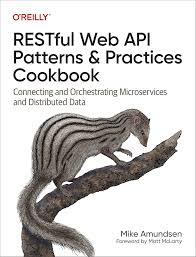
The discussion incorporates the API-design principles and service-integration patterns associated with Mike Amundsen's RESTful Web API Patterns and Practices Cookbook. The book emphasizes hypermedia, resilient clients, adaptable services, distributed data, and workflows across independently operated services. These ideas are applied to Magento integration without reproducing the book's copyrighted text.
oreilly.com
Research White Paper -From Software Engineering to Intelligent Commerce
Software Architecture, RESTful Web APIs, Postman Testing, Magento Ecommerce, Microservices, and RAG-LLM
A practical architecture, implementation, verification, and commercialization framework for small and medium-sized enterprises.
Prepared for: Software engineers, software architects, API developers, QA engineers, DevOps engineers, and SME technology leaders.
Technology focus: Magento Open Source, REST APIs, Postman, microservices, retrieval-augmented generation, and large language models.
Strategic partnership: KeenComputer.com · IAS-Research.com · KeenDirect.com
Research approach: Established software engineering principles, documented technology capabilities, and a proposed architecture requiring implementation-level validation.
Abstract
Modern ecommerce systems are distributed business applications connecting product catalogs, pricing, inventory, checkout, payments, shipping, customer relationship management, analytics, and increasingly, artificial intelligence. Engineering these systems successfully requires more than programming skills. It requires explicit architecture, reliable API contracts, systematic verification, secure integration, controlled deployment, and measurable business outcomes.
This white paper develops an integrated framework for applying software engineering and software architecture to Magento-based ecommerce. It combines RESTful Web API design, API testing with Postman, modular monolith and microservice architectures, and retrieval-augmented generation (RAG) using large language models (LLMs).
The discussion incorporates the API-design principles and service-integration patterns associated with Mike Amundsen's RESTful Web API Patterns and Practices Cookbook. The book emphasizes hypermedia, resilient clients, adaptable services, distributed data, and workflows across independently operated services. These ideas are applied to Magento integration without reproducing the book's copyrighted text.
oreilly.com
+1
Postman is positioned as a lifecycle tool for organizing API requests, testing contracts, verifying authorization, reproducing defects, and automating regression checks in CI/CD. Magento remains the authoritative commerce platform, while a separately governed RAG service provides evidence-grounded product and technical-support assistance. Independent services are introduced only when their benefits justify the additional operational complexity.
The paper further defines a reference architecture, illustrative API contracts, Postman test examples, security controls, testing and DevOps processes, a SWOT analysis, a phased implementation roadmap, and an operating model for KeenComputer.com, IAS-Research.com, and KeenDirect.com.
Central proposition: Engineer the commerce foundation first, design stable and secure APIs, verify their behavior systematically with Postman, introduce microservices selectively, and adopt RAG-LLM through controlled experiments with measurable quality, security, and business objectives.
1. Research objectives and scope
1.1 Research questions
This paper addresses eight questions:
- How should software engineering principles guide the design and evolution of Magento ecommerce?
- How can RESTful API design improve interoperability and reduce integration fragility?
- How can Postman support API design, testing, documentation, and continuous delivery?
- When should an SME choose a modular monolith rather than independently deployed microservices?
- How can RAG-LLM services use product documentation and technical knowledge without becoming the authority for commerce transactions?
- How should API security, testing, observability, and operational recovery be engineered?
- How can the architecture be implemented incrementally on Linux VPS or cloud infrastructure?
- How can KeenComputer.com, IAS-Research.com, and KeenDirect.com collaborate to turn research into implemented and commercially validated solutions?
1.2 Research method
This is an applied engineering synthesis, not a report of a completed controlled experiment.
It combines:
- Software engineering and software architecture principles.
- REST, HTTP semantics, API contracts, and hypermedia concepts.
- Official Magento and Adobe Commerce integration documentation.
- Postman collection testing and command-line automation.
- Distributed systems, microservices, and asynchronous workflows.
- RAG ingestion, retrieval, evaluation, and governance.
- DevSecOps, observability, and operational resilience.
- SME-oriented implementation economics and commercialization.
The architecture and examples are proposed designs. Their performance, security, and financial benefits must be established through testing in the intended deployment environment.
1.3 Scope and assumptions
The primary commerce platform is Magento Open Source 2.4.x or a compatible Adobe Commerce deployment. Exact API availability, extension compatibility, PHP requirements, authentication configuration, and deployment procedures must be verified against the installed release.
The proposed environment includes:
- Linux VPS or cloud infrastructure.
- Nginx and PHP-FPM.
- A compatible MySQL or MariaDB configuration.
- Supported cache and search services.
- Magento REST APIs and custom modules where necessary.
- Postman collections and automated API tests.
- Docker-based development or deployment where appropriate.
- Optional asynchronous workers, a durable queue, and a separate RAG service.
The default architectural assumption is that Magento remains the system of record for commerce transactions. An AI service, external microservice, or vector database must not independently invent authoritative prices, inventory state, order status, or payment outcomes.
2. Software engineering: from programmer to software architect
Software engineering is the disciplined application of requirements analysis, design, implementation, verification, deployment, and maintenance. Architecture connects these activities by establishing system boundaries, dependencies, quality attributes, and long-term design decisions.
2.1 The progression of engineering responsibility
Programmer — implements features
Writes code that satisfies a defined requirement.
Magento example: implement a product attribute or validate an input field.
Software engineer — builds reliable components
Designs modules, manages dependencies, tests behavior, and maintains readable code.
Magento example: implement a module with service contracts, dependency injection, unit tests, and integration tests.
Software architect — designs the system
Defines boundaries, APIs, data ownership, failure behavior, security controls, and deployment topology.
Magento example: determine whether supplier synchronization belongs in a module, an asynchronous worker, or an independent service.
Systems and business architect — aligns technology with value
Connects architecture decisions to customer experience, risk, operational capacity, and financial outcomes.
Magento example: choose the least complex architecture that meets reliability, conversion, support, and growth requirements.
The stages overlap. A capable engineer considers architectural consequences, and an architect remains responsible for designs that can actually be implemented, tested, and maintained.
2.2 Core software engineering principles
|
Principle |
Application |
|---|---|
|
Separation of concerns |
Keep checkout, catalog integration, and AI retrieval responsibilities distinct. |
|
High cohesion |
Group closely related business rules within a module or bounded context. |
|
Low coupling |
Communicate through defined interfaces rather than internal implementation details. |
|
Encapsulation |
Use supported Magento extension points rather than direct manipulation of core tables. |
|
Dependency inversion |
Use interfaces and abstractions where they improve testability and change isolation. |
|
Design for failure |
Handle timeouts, duplicate messages, unavailable providers, and partial failures. |
|
Testability |
Verify critical rules without requiring every external system to be live. |
|
Observability |
Correlate requests, background jobs, logs, metrics, and business transactions. |
|
Evolution |
Preserve API compatibility and document intentional breaking changes. |
|
Security by design |
Enforce authorization, data minimization, secret handling, and secure defaults. |
The goal is not to maximize the number of abstractions. It is to make important changes safer and less expensive over the system's lifetime.
2.3 Translate requirements into measurable outcomes
An architect should convert general statements such as “make the store fast” or “add secure AI” into explicit acceptance criteria.
|
Quality attribute |
Example criterion |
|---|---|
|
Performance |
Establish p95 and p99 latency targets for catalog and checkout based on measured workloads. |
|
Availability |
Define service objectives, maintenance windows, and acceptable downtime. |
|
Transaction integrity |
Verify that duplicate payment callbacks do not create duplicate financial effects. |
|
API security |
Test resource-level authorization, token handling, input limits, and rate limits. |
|
Recoverability |
Restore backups and validate the restored application's consistency. |
|
API maintainability |
Detect contract-breaking changes before release. |
|
RAG quality |
Measure retrieval relevance, source correctness, grounding, and abstention behavior. |
|
Cost control |
Track infrastructure expense and cost per AI query or completed order. |
These are proposed criteria. Actual targets should follow the business requirements and observed baseline.
3. Software architecture for Magento ecommerce
3.1 Four complementary architectural styles
A. Modular monolith
A single deployable application with well-defined internal module boundaries.
Typical use: Magento's core transactional functionality and tightly coupled business rules.
B. API-oriented architecture
Independent applications communicate through explicit interfaces and documented contracts.
Typical use: mobile clients, CRM/ERP integration, supplier feeds, and headless storefronts.
C. Microservice architecture
Independently deployable services own distinct capabilities and communicate through network or messaging contracts.
Typical use: services needing independent scaling, deployment, technology choices, or operational ownership.
D. RAG-enabled architecture
A controlled knowledge pipeline retrieves evidence and supplies it to an LLM for grounded responses.
Typical use: product assistance, technical support, compatibility guidance, and internal knowledge discovery.
These styles can coexist. A Magento modular monolith can expose REST APIs, publish events, and invoke a separate RAG service without decomposing every business capability into a microservice.
3.2 Magento as the transactional commerce core
Magento provides a substantial commerce domain model, including:
- Products, categories, and catalog attributes.
- Customer accounts and customer groups.
- Shopping carts, quotes, and checkout.
- Orders, invoices, shipments, and credit memos.
- Promotions, sales rules, and pricing behavior.
- Extension mechanisms, service contracts, and dependency injection.
- REST and GraphQL integration interfaces.
The official Adobe documentation describes the REST framework and API reference for Adobe Commerce and Magento Open Source. Available operations and permissions depend on the version, edition, configuration, and installed modules.
developer.adobe.com
+2
The architectural rule is straightforward: preserve existing commerce capabilities unless there is a compelling, documented reason to replace them.
Do not let an AI model or external service directly modify Magento's core database tables to perform business actions. Use supported APIs and domain workflows.
3.3 Bounded contexts
A bounded context defines a business domain with explicit rules and ownership.
Customer experiences
Storefront · Admin · Mobile · Partner systems · AI assistant
API and integration boundary
REST / GraphQL · Authentication · Authorization · Validation · Versioning
Commerce core
Catalog, cart, checkout, orders, pricing
Integration services
ERP, CRM, shipping, synchronization
Knowledge service
Ingestion, retrieval, citations, LLM
Operations
Monitoring, security, backups, analytics
Infrastructure
Database · Cache · Search · Queue · Object storage · Vector index
Figure 1. Logical architecture. The boxes represent responsibilities, not a requirement to operate every component on a separate server.
The initial mapping should generally be:
- Catalog: product data, attributes, categories, and publication.
- Commerce transactions: carts, orders, payment workflows, and fulfillment state.
- Customer identity: authentication, customer groups, consent, and permissions.
- Integration: provider adapters, synchronization, retries, and event handling.
- Knowledge: document versions, embeddings, retrieval, citations, and AI policies.
- Operations: logging, monitoring, deployment, backup, and incident response.
Separate a capability only when its data ownership, failure isolation, scaling, deployment, or organizational needs justify the additional boundary.
4. RESTful Web APIs and Mike Amundsen's design principles
4.1 Why the API is an architectural contract
Mike Amundsen's RESTful Web API Patterns and Practices Cookbook (O'Reilly Media, 2022) addresses the challenge of integrating and maintaining applications that depend on services developed and operated by different organizations. Its coverage includes RESTful hypermedia, adaptable clients, stable and modifiable services, distributed data, extensibility, and multiservice workflows.
oreilly.com
+1
For Magento ecommerce, the lesson is that an API is not simply a URL collection. It is a long-lived contract between components that may evolve independently.
A reliable API should define:
- Resource identity and semantics.
- HTTP methods and permitted operations.
- Request and response representations.
- Authentication and authorization.
- Validation and error behavior.
- Discoverability and documentation.
- Compatibility and deprecation.
- Timeouts, retries, and idempotency.
- Monitoring and diagnostic information.
4.2 Resource-oriented design
REST commonly identifies resources through URIs and uses HTTP semantics to communicate operations.
Illustrative custom API resources could include:
|
Method |
Resource |
Intended behavior |
|---|---|---|
|
GET |
/api/v1/products/{sku} |
Retrieve an authorized product representation. |
|
GET |
/api/v1/orders/{id} |
Retrieve an authorized order representation. |
|
POST |
/api/v1/knowledge/queries |
Submit a knowledge question. |
|
POST |
/api/v1/fulfillment-requests |
Create a fulfillment request. |
|
GET |
/api/v1/fulfillment-requests/{id} |
Retrieve processing status. |
|
DELETE |
/api/v1/saved-searches/{id} |
Delete an authorized saved search. |
These are proposed custom resource paths, not claims that Magento exposes those exact routes by default.
Prefer nouns for resources and standard HTTP methods for ordinary operations. For workflows that do not map naturally to CRUD, define an explicit command or process resource with documented state transitions.
4.3 HTTP semantics, idempotency, and retries
HTTP semantics are standardized in RFC 9110. The API contract must distinguish safe operations, idempotent operations, and operations that may create additional effects when repeated.
developer.adobe.com
|
Method |
General semantic |
Retry considerations |
|---|---|---|
|
GET |
Retrieve a representation |
Safe to retry when implemented according to HTTP semantics. |
|
PUT |
Replace or establish a resource representation |
Idempotent when implemented according to its contract. |
|
PATCH |
Apply a partial modification |
Depends on the patch semantics and implementation. |
|
POST |
Submit a request or create a resource |
May duplicate effects without appropriate controls. |
|
DELETE |
Remove a resource or association |
Define the behavior when the resource is already absent. |
A timeout does not prove that a request failed. The server may have completed the operation while the response was lost.
For order creation, payment operations, and other consequential actions, use a documented idempotency strategy. Store the key and outcome durably, scope it appropriately, and prevent the same key from being reused with conflicting request data.
4.4 Hypermedia and workflow discoverability
Hypermedia allows a server to provide links or action descriptions that help clients understand the next available steps. This can reduce dependence on hardcoded workflow assumptions.
An illustrative response might be:
{ "id": "fulfillment-1842", "status": "ready_for_dispatch", "_links": { "self": { "href": "/api/v1/fulfillment-requests/1842" }, "shipment": { "href": "/api/v1/fulfillment-requests/1842/shipment" }, "cancel": { "href": "/api/v1/fulfillment-requests/1842/cancellation" } } }
The routes and values are illustrative. Production responses must contain only valid actions that are available in the current resource state and authorized for the caller.
Not every internal API needs a full hypermedia implementation. OpenAPI specifications, documented state machines, and consistent contracts can also provide discoverability. The essential requirement is that clients should not need to guess business rules.
4.5 API evolution and compatibility
An API contract should specify:
- Resource identifiers and representation schemas.
- Required and optional fields.
- Types, constraints, and validation rules.
- Authentication and resource permissions.
- Error formats and remediation guidance.
- Pagination, filtering, and sorting.
- Rate limits and timeout expectations.
- Versioning and deprecation policy.
- Concurrency and idempotency behavior.
- Correlation IDs and audit requirements.
Adding an optional field is generally less disruptive than changing the meaning of an existing field or removing a required one.
Use compatibility tests and consumer-driven contract tests to detect breaking changes before deployment. Version only when necessary, and establish a clear policy for retiring old contracts.
4.6 Practical patterns for ecommerce integration
The following are applied engineering patterns inspired by the book's focus on service integration; they are not verbatim recipes.
|
Pattern |
Application |
Benefit |
|---|---|---|
|
Discover and bind |
Resolve the configured endpoint and capabilities of an external provider. |
Reduces hardcoded assumptions. |
|
Adapter |
Translate Magento's order representation into an ERP schema. |
Isolates vendor-specific formats. |
|
Workflow orchestration |
Coordinate order export and fulfillment status updates. |
Makes multi-step behavior explicit. |
|
State tracking |
Record job status, retries, and final outcomes. |
Supports recovery and diagnosis. |
|
Capability discovery |
Document available operations and supported versions. |
Helps clients adapt. |
|
Fault isolation |
Keep a slow recommendation service out of the critical checkout path. |
Protects commerce operations. |
|
Contract validation |
Validate requests and responses against defined schemas. |
Detects integration drift. |
The objective is to make dependencies explicit, observable, and recoverable—not to pretend that dependencies can be eliminated.
5. Magento REST API engineering
Magento's web API framework supports REST, GraphQL, and SOAP. Developers can expose supported service contracts with explicit permissions and configuration. Adobe's official documentation describes the API framework, request construction, authentication, and access control.
developer.adobe.com
+2
5.1 Use supported extension points
A custom Magento module commonly separates responsibilities across:
- etc/webapi.xml: routes, methods, service interfaces, and API resource permissions.
- Api/: public service contracts.
- Api/Data/: data interfaces when appropriate.
- Model/ or service implementations: business logic.
- etc/di.xml: dependency injection.
- etc/acl.xml: administrative resource definitions where required.
- Test/: unit, integration, API, and regression tests.
The exact structure depends on the feature and Magento release.
Avoid changing vendor or framework code for business-specific functionality. Use supported extension mechanisms to reduce upgrade conflicts and simplify security maintenance.
5.2 Example custom API route
A simplified etc/webapi.xml route might look like this:
<?xml version="1.0"?> <routes xmlns:xsi="http://www.w3.org/2001/XMLSchema-instance" xsi:noNamespaceSchemaLocation= "urn:magento:module:Magento_Webapi:etc/webapi.xsd"> <route url="/V1/ias/knowledge/query" method="POST"> <service class="IAS\Knowledge\Api\QueryManagementInterface" method="execute"/> <resources> <resource ref="IAS_Knowledge::query"/> </resources> </route> </routes>
This is an illustrative design fragment, not a complete installable module. Production implementation requires the corresponding interface, service implementation, dependency injection configuration, ACL definition, validation, and tests. Anonymous access should not be enabled unless explicitly justified and secured.
The route delegates to a service contract. It should not contain the entire retrieval pipeline or business logic.
5.3 Product API representation
An ecommerce assistant may need a limited product representation:
{ "sku": "LAPTOP-001", "name": "Business Laptop", "product_url": "/business-laptop.html", "availability": { "status": "in_stock", "checked_at": "2026-10-09T15:00:00Z" } }
The data is illustrative. Actual inventory information must come from the authoritative commerce inventory mechanisms, with appropriate interpretation of the store's configuration.
Expose only the fields required by the caller. Internal supplier costs, confidential commercial data, administrative fields, and unnecessary personal information should not be returned simply because they exist in the underlying model.
5.4 Error contracts
A useful API error response provides actionable information without exposing stack traces, secrets, or internal implementation details.
{ "type": "https://example.com/problems/invalid-query", "title": "Invalid request", "status": 400, "detail": "The query must contain a non-empty question.", "correlation_id": "req-7f31a2" }
This is illustrative and follows the general problem-details approach in RFC 9457. The example domain and identifier must be replaced with real values in production.
Common response codes include:
- 400 — invalid or malformed request.
- 401 — authentication required or invalid.
- 403 — caller lacks permission.
- 404 — resource not found, or intentionally concealed.
- 409 — conflict with current resource state.
- 422 — semantically invalid request, if used by the contract.
- 429 — rate limit exceeded.
- 500 — unexpected server error.
- 502, 503, or 504 — appropriate upstream or availability failures.
Choose a consistent error model and document the recovery behavior expected of clients.
6. Postman: API design, testing, and verification
Postman is a central part of the proposed engineering lifecycle. Adobe's REST API tutorials specifically recommend using a REST client such as Postman to construct requests and inspect responses. Postman also supports collection execution from the command line and CI/CD pipelines.
developer.adobe.com
+1
6.1 The API verification lifecycle
Requirements and API design
Resources · Schemas · Permissions · Error handling
OpenAPI specification and Postman collections
Requests · Examples · Variables · Assertions · Documentation
Repeatable verification
Functional · Contract · Security · Negative · Regression tests
CI/CD and staging
Automated runs · Reports · Release gates
Production monitoring and improvement
Correlated defects · Contract updates · Regression prevention
Figure 2. Postman-centered API engineering lifecycle.
Postman helps teams reproduce requests and verify expected behavior. It does not replace the design decisions that determine what behavior is correct.
6.2 Organizing Postman collections
Collections should reflect business capabilities and integration boundaries.
|
Collection |
Representative requests |
Primary purpose |
|---|---|---|
|
Magento Catalog API |
Retrieve product, search catalog, inspect attributes |
Verify product representations |
|
Customer API |
Retrieve permitted customer resources |
Validate identity and authorization |
|
Cart and Checkout |
Add item, retrieve cart, execute supported checkout operations |
Verify transactional workflows |
|
Order API |
Retrieve order, inspect status, test unauthorized access |
Protect customer and order data |
|
Shipping and ERP |
Submit export, inspect job, simulate provider failures |
Verify integration and recovery |
|
RAG Knowledge API |
Submit question, inspect citations, test unsupported queries |
Verify evidence-grounded responses |
|
API Security |
Missing token, invalid token, prohibited fields, rate limits |
Test defensive controls |
|
Regression and Smoke Tests |
Repeat critical catalog and checkout requests |
Detect deployment regressions |
Use synthetic customer accounts and test orders in development and staging. Avoid sharing real payment credentials or unnecessary personal information in collections and exported environments.
6.3 Environment variables and secrets
A Postman environment can hold configuration such as:
base_url access_token test_customer_id test_product_sku test_order_id request_correlation_id
The values should be supplied through the appropriate environment rather than hardcoded into every request.
For example, base_url might point to a local development installation or a staging deployment.
Security controls should include:
- Separate development, staging, and production environments.
- Restricted access to shared workspaces and collections.
- No production secrets in Git or ordinary exported JSON files.
- Scoped integration credentials and rotation where supported.
- Sanitized logs and test reports.
- Explicit approval before running destructive requests against production.
A hidden variable is not, by itself, a complete secret-management strategy.
6.4 Example Postman test script
Suppose an endpoint returns a JSON product representation with sku and name fields. A Postman post-response script could verify the documented contract.
pm.test("HTTP status is successful", function () { pm.expect(pm.response.code).to.eql(200); }); pm.test("Response is JSON", function () { pm.expect( pm.response.headers.get("Content-Type") || "" ).to.include("application/json"); }); pm.test("Product fields meet the contract", function () { const body = pm.response.json(); pm.expect(body).to.have.property("sku"); pm.expect(body).to.have.property("name"); pm.expect(body.sku).to.be.a("string").and.not.empty; pm.expect(body.name).to.be.a("string").and.not.empty; });
This is an illustrative script. Adapt it to the actual response structure, content type, and API contract.
6.5 Security and negative testing
For a protected order endpoint, a proper Postman test suite should cover:
- Missing credentials.
- Invalid or expired credentials.
- An authenticated user requesting another customer's order.
- Malformed identifiers.
- Unexpected or prohibited fields.
- Repeated submission of a consequential operation.
- Excessive request volume and rate limiting.
- Upstream timeouts and error handling.
Acceptance criterion: a customer must not gain access to another customer's order by changing an identifier in the request.
For a transaction, also verify the resulting state through an authoritative read or controlled test fixture. A successful HTTP response does not necessarily prove that the intended business outcome occurred.
6.6 Automated execution with Postman CLI
The Postman CLI can run HTTP collections locally and in CI/CD pipelines. Current documentation describes collection execution, command-line options, environment selection, and test reporting.
Postman Docs
+2
A representative local command is:
postman collection run ./postman/magento-api-tests.json
The filename is illustrative; use the path and collection format supported by the installed Postman CLI version. Postman v12 documentation describes a newer collection format as well as migration support for earlier v2.1 collections, so existing projects should verify format compatibility before adopting newer workflows.
Postman Docs
+1
A proposed CI/CD flow is:
Code change | v Static analysis and unit tests | v Build and deploy to isolated test environment | v Run Postman API regression collection | +---- Failure ---> Block release and report defects | v Security and integration acceptance | v Approved release
The pipeline should use securely managed credentials and fail when mandatory assertions fail.
Postman acceptance gates
|
Gate |
Acceptance condition |
|---|---|
|
Functional |
Required endpoints behave as documented. |
|
Schema |
Responses match the published contract. |
|
Authorization |
Prohibited requests do not expose protected resources. |
|
Regression |
Existing supported operations continue to work. |
|
Idempotency |
Retries do not cause unintended duplicate effects. |
|
Resilience |
Defined timeout and failure cases behave correctly. |
|
RAG quality |
Representative answers satisfy grounding and citation criteria. |
|
Release readiness |
Mandatory tests pass and critical security findings are addressed. |
Postman complements unit tests, Magento integration tests, performance testing, and specialist security testing. It is not a replacement for them.
6.7 Postman and Amundsen: complementary roles
|
Design concern |
Amundsen-inspired architectural practice |
Postman application |
|---|---|---|
|
Discoverability |
Define understandable resources and service capabilities |
Publish specifications, examples, and collection documentation |
|
Consistency |
Standardize HTTP behavior and representations |
Test common request and response conventions |
|
Evolution |
Make changes without unnecessarily breaking clients |
Execute regression tests against existing contracts |
|
Interoperability |
Support independent clients and services |
Share collections with integration partners |
|
Resilience |
Define behavior during failures |
Test timeouts, error responses, and retry scenarios |
|
Security |
Enforce authorization at service boundaries |
Test missing credentials and prohibited resource access |
|
Observability |
Make failures diagnosable |
Correlate sanitized test failures with application logs |
Postman is the verification tool; the API contract and architecture define what the tool should verify.
7. Microservice architecture and distributed workflows
7.1 Microservices introduce trade-offs
A microservice is more than a class deployed in a separate container. It is an independently deployable capability with an explicit contract, ownership model, and operational requirements.
Separating services introduces:
- Network latency and communication failures.
- More deployment pipelines and configuration.
- Service-to-service authentication.
- Distributed tracing and monitoring requirements.
- Retry and timeout design.
- Eventual consistency.
- Data ownership and reconciliation.
- More complex testing and incident response.
For an SME, these costs may outweigh the benefits of splitting a modest application into many services.
7.2 Recommended service boundaries
Keep in Magento initially
Core transactional commerce
Cart calculations, checkout validation, order creation, pricing rules, and commerce state transitions.
Candidate for separation
Integration and synchronization
ERP/CRM adapters, supplier feeds, shipping integrations, and retryable background processing.
Strong candidate for isolation
RAG-LLM knowledge service
Document ingestion, embeddings, retrieval, prompt management, model inference, and AI-specific monitoring.
Separate when justified
Search, recommendations, analytics, and pricing support
Consider separate deployment when scaling needs, ownership, failure isolation, or technology constraints support the decision.
7.3 Synchronous and asynchronous communication
Use synchronous REST when the caller requires an immediate response and the dependency is necessary to complete the operation.
Examples include:
- Retrieving an authorized order.
- Reading a product representation.
- Submitting a question to an interactive knowledge service.
- Requesting an immediate shipping estimate.
Use asynchronous messaging when processing can continue after the initial request.
Examples include:
- Exporting an order to an ERP.
- Updating a knowledge index after product changes.
- Generating large product feeds.
- Sending shipment notifications.
- Processing bulk documents.
A long-running asynchronous operation can return a job resource or identifier, allowing the caller to retrieve progress without keeping an HTTP connection open indefinitely.
7.4 Reliable event processing
An illustrative integration flow is:
#chatgpt-mermaid-_r_149_{font-family:-apple-system-body,ui-sans-serif,-apple-system,system-ui,"Segoe UI",Helvetica,"Apple Color Emoji",Arial,sans-serif,"Segoe UI Emoji","Segoe UI Symbol";font-size:16px;fill:rgb(13, 13, 13);}@keyframes edge-animation-frame{from{stroke-dashoffset:0;}}@keyframes dash{to{stroke-dashoffset:0;}}#chatgpt-mermaid-_r_149_ .edge-animation-slow{stroke-dasharray:9,5!important;stroke-dashoffset:900;animation:dash 50s linear infinite;stroke-linecap:round;}#chatgpt-mermaid-_r_149_ .edge-animation-fast{stroke-dasharray:9,5!important;stroke-dashoffset:900;animation:dash 20s linear infinite;stroke-linecap:round;}#chatgpt-mermaid-_r_149_ .error-icon{fill:rgb(243, 243, 243);}#chatgpt-mermaid-_r_149_ .error-text{fill:rgb(13, 13, 13);stroke:rgb(13, 13, 13);}#chatgpt-mermaid-_r_149_ .edge-thickness-normal{stroke-width:1px;}#chatgpt-mermaid-_r_149_ .edge-thickness-thick{stroke-width:3.5px;}#chatgpt-mermaid-_r_149_ .edge-pattern-solid{stroke-dasharray:0;}#chatgpt-mermaid-_r_149_ .edge-thickness-invisible{stroke-width:0;fill:none;}#chatgpt-mermaid-_r_149_ .edge-pattern-dashed{stroke-dasharray:3;}#chatgpt-mermaid-_r_149_ .edge-pattern-dotted{stroke-dasharray:2;}#chatgpt-mermaid-_r_149_ .marker{fill:rgb(143, 143, 143);stroke:rgb(143, 143, 143);}#chatgpt-mermaid-_r_149_ .marker.cross{stroke:rgb(143, 143, 143);}#chatgpt-mermaid-_r_149_ svg{font-family:-apple-system-body,ui-sans-serif,-apple-system,system-ui,"Segoe UI",Helvetica,"Apple Color Emoji",Arial,sans-serif,"Segoe UI Emoji","Segoe UI Symbol";font-size:16px;}#chatgpt-mermaid-_r_149_ p{margin:0;}#chatgpt-mermaid-_r_149_ .label{font-family:-apple-system-body,ui-sans-serif,-apple-system,system-ui,"Segoe UI",Helvetica,"Apple Color Emoji",Arial,sans-serif,"Segoe UI Emoji","Segoe UI Symbol";color:rgb(13, 13, 13);}#chatgpt-mermaid-_r_149_ .cluster-label text{fill:rgb(13, 13, 13);}#chatgpt-mermaid-_r_149_ .cluster-label span{color:rgb(13, 13, 13);}#chatgpt-mermaid-_r_149_ .cluster-label span p{background-color:transparent;}#chatgpt-mermaid-_r_149_ .label text,#chatgpt-mermaid-_r_149_ span{fill:rgb(13, 13, 13);color:rgb(13, 13, 13);}#chatgpt-mermaid-_r_149_ .node rect,#chatgpt-mermaid-_r_149_ .node circle,#chatgpt-mermaid-_r_149_ .node ellipse,#chatgpt-mermaid-_r_149_ .node polygon,#chatgpt-mermaid-_r_149_ .node path{fill:rgb(222, 234, 251);stroke:rgb(83, 154, 248);stroke-width:1px;}#chatgpt-mermaid-_r_149_ .rough-node .label text,#chatgpt-mermaid-_r_149_ .node .label text,#chatgpt-mermaid-_r_149_ .image-shape .label,#chatgpt-mermaid-_r_149_ .icon-shape .label{text-anchor:middle;}#chatgpt-mermaid-_r_149_ .node .katex path{fill:#000;stroke:#000;stroke-width:1px;}#chatgpt-mermaid-_r_149_ .rough-node .label,#chatgpt-mermaid-_r_149_ .node .label,#chatgpt-mermaid-_r_149_ .image-shape .label,#chatgpt-mermaid-_r_149_ .icon-shape .label{text-align:center;}#chatgpt-mermaid-_r_149_ .node.clickable{cursor:pointer;}#chatgpt-mermaid-_r_149_ .root .anchor path{fill:rgb(143, 143, 143)!important;stroke-width:0;stroke:rgb(143, 143, 143);}#chatgpt-mermaid-_r_149_ .arrowheadPath{fill:rgb(143, 143, 143);}#chatgpt-mermaid-_r_149_ .edgePath .path{stroke:rgb(143, 143, 143);stroke-width:1px;}#chatgpt-mermaid-_r_149_ .flowchart-link{stroke:rgb(143, 143, 143);fill:none;}#chatgpt-mermaid-_r_149_ .edgeLabel{background-color:rgb(252, 252, 252);text-align:center;}#chatgpt-mermaid-_r_149_ .edgeLabel p{background-color:rgb(252, 252, 252);}#chatgpt-mermaid-_r_149_ .edgeLabel rect{opacity:0.5;background-color:rgb(252, 252, 252);fill:rgb(252, 252, 252);}#chatgpt-mermaid-_r_149_ .labelBkg{background-color:rgba(252, 252, 252, 0.5);}#chatgpt-mermaid-_r_149_ .cluster rect{fill:rgb(243, 243, 243);stroke:rgba(0, 0, 0, 0.1);stroke-width:1px;}#chatgpt-mermaid-_r_149_ .cluster text{fill:rgb(13, 13, 13);}#chatgpt-mermaid-_r_149_ .cluster span{color:rgb(13, 13, 13);}#chatgpt-mermaid-_r_149_ div.mermaidTooltip{position:absolute;text-align:center;max-width:200px;padding:2px;font-family:-apple-system-body,ui-sans-serif,-apple-system,system-ui,"Segoe UI",Helvetica,"Apple Color Emoji",Arial,sans-serif,"Segoe UI Emoji","Segoe UI Symbol";font-size:12px;background:rgb(243, 243, 243);border:1px solid rgba(0, 0, 0, 0.1);border-radius:2px;pointer-events:none;z-index:100;}#chatgpt-mermaid-_r_149_ .flowchartTitleText{text-anchor:middle;font-size:18px;fill:rgb(13, 13, 13);}#chatgpt-mermaid-_r_149_ rect.text{fill:none;stroke-width:0;}#chatgpt-mermaid-_r_149_ .icon-shape,#chatgpt-mermaid-_r_149_ .image-shape{background-color:rgb(252, 252, 252);text-align:center;}#chatgpt-mermaid-_r_149_ .icon-shape p,#chatgpt-mermaid-_r_149_ .image-shape p{background-color:rgb(252, 252, 252);padding:2px;}#chatgpt-mermaid-_r_149_ .icon-shape .label rect,#chatgpt-mermaid-_r_149_ .image-shape .label rect{opacity:0.5;background-color:rgb(252, 252, 252);fill:rgb(252, 252, 252);}#chatgpt-mermaid-_r_149_ .label-icon{display:inline-block;height:1em;overflow:visible;vertical-align:-0.125em;}#chatgpt-mermaid-_r_149_ .node .label-icon path{fill:currentColor;stroke:revert;stroke-width:revert;}#chatgpt-mermaid-_r_149_ .node .neo-node{stroke:rgb(83, 154, 248);}#chatgpt-mermaid-_r_149_ [data-look="neo"].node rect,#chatgpt-mermaid-_r_149_ [data-look="neo"].cluster rect,#chatgpt-mermaid-_r_149_ [data-look="neo"].node polygon{stroke:url(#chatgpt-mermaid-_r_149_-gradient);filter:drop-shadow( 1px 2px 2px rgba(185,185,185,1));}#chatgpt-mermaid-_r_149_ [data-look="neo"].swimlane.cluster rect{filter:none;}#chatgpt-mermaid-_r_149_ [data-look="neo"].node path{stroke:url(#chatgpt-mermaid-_r_149_-gradient);stroke-width:1px;}#chatgpt-mermaid-_r_149_ [data-look="neo"].node .outer-path{filter:drop-shadow( 1px 2px 2px rgba(185,185,185,1));}#chatgpt-mermaid-_r_149_ [data-look="neo"].node .neo-line path{stroke:rgb(83, 154, 248);filter:none;}#chatgpt-mermaid-_r_149_ [data-look="neo"].node circle{stroke:url(#chatgpt-mermaid-_r_149_-gradient);filter:drop-shadow( 1px 2px 2px rgba(185,185,185,1));}#chatgpt-mermaid-_r_149_ [data-look="neo"].node circle .state-start{fill:#000000;}#chatgpt-mermaid-_r_149_ [data-look="neo"].icon-shape .icon{fill:url(#chatgpt-mermaid-_r_149_-gradient);filter:drop-shadow( 1px 2px 2px rgba(185,185,185,1));}#chatgpt-mermaid-_r_149_ [data-look="neo"].icon-shape .icon-neo path{stroke:url(#chatgpt-mermaid-_r_149_-gradient);filter:drop-shadow( 1px 2px 2px rgba(185,185,185,1));}#chatgpt-mermaid-_r_149_ .node text{font-size:14px;font-weight:600;letter-spacing:normal;fill:rgb(0, 79, 153);}#chatgpt-mermaid-_r_149_ .edgeLabels text{font-size:13px;font-weight:600;letter-spacing:-0.08px;fill:rgb(0, 79, 153);}#chatgpt-mermaid-_r_149_ .node tspan[font-weight="normal"],#chatgpt-mermaid-_r_149_ .edgeLabels tspan[font-weight="normal"]{font-weight:600;}#chatgpt-mermaid-_r_149_ .edgeLabel .label rect{opacity:1;rx:13px;ry:13px;fill:rgb(245, 250, 255);stroke:rgb(206, 219, 229);stroke-width:1px;}#chatgpt-mermaid-_r_149_ .node rect,#chatgpt-mermaid-_r_149_ .node circle,#chatgpt-mermaid-_r_149_ .node ellipse,#chatgpt-mermaid-_r_149_ .node polygon,#chatgpt-mermaid-_r_149_ .node path{fill:rgb(229, 243, 255);stroke:rgba(0, 0, 0, 0.1);stroke-width:1px;}#chatgpt-mermaid-_r_149_ .node rect{rx:16px;ry:16px;}#chatgpt-mermaid-_r_149_ .node.mermaid-decision .label-container{fill:rgb(245, 250, 255);stroke:rgb(206, 219, 229);stroke-dasharray:2,2;}#chatgpt-mermaid-_r_149_ .edgePaths .flowchart-link{stroke:rgb(143, 143, 143);stroke-width:1px;stroke-linecap:round;stroke-linejoin:round;}#chatgpt-mermaid-_r_149_ .marker{fill:rgb(143, 143, 143);stroke:rgb(143, 143, 143);}#chatgpt-mermaid-_r_149_ :root{--mermaid-font-family:-apple-system-body,ui-sans-serif,-apple-system,system-ui,"Segoe UI",Helvetica,"Apple Color Emoji",Arial,sans-serif,"Segoe UI Emoji","Segoe UI Symbol";}Magento transactioncommittedDurable event or outboxrecordQueue or message brokerERP synchronization workerFulfillment workerAnalytics and notificationworkersRecord result and retry ifneededMonitoring andreconciliation
The event mechanism must be compatible with the installed Magento release and infrastructure.
A transactional outbox can reduce the risk that a database transaction commits while its corresponding event is not published. Consumers should tolerate duplicate delivery, and the system should track processing status and failed messages.
Do not assume that distributed operations across Magento, a payment provider, and an ERP can be covered by one ordinary database transaction.
7.5 Distributed transaction safety
For payment and fulfillment workflows:
- Use Magento's supported transaction flow.
- Follow the payment provider's documented authorization or capture process.
- Store provider references and operation outcomes.
- Process callbacks idempotently.
- Reconcile unresolved operations.
- Apply explicit compensating actions where appropriate.
Never directly manipulate core order tables to simulate payment or fulfillment completion.
8. RAG-LLM architecture for intelligent ecommerce
8.1 Purpose and use cases
Retrieval-augmented generation combines retrieval from an approved knowledge collection with language-model generation. It can help customers and staff use technical documents more effectively, but it does not guarantee factual correctness.
Potential Magento use cases include:
- Product specifications and comparisons.
- Laptop and component compatibility.
- Installation manuals and technical troubleshooting.
- Warranty and return-policy explanations.
- Shipping and fulfillment guidance.
- Internal support knowledge discovery.
- Product selection and after-sales assistance.
The system should be evaluated against representative questions, not judged solely by whether its answers sound convincing.
8.2 Reference architecture
Approved knowledge sources
Product descriptions · Manuals · FAQs · Policies · Technical documents
Ingestion pipeline
Parsing · Cleaning · Metadata · Access classification · Chunking · Versioning
Embedding model
Text to vectors
Search index
Vector and keyword search
Retrieval and policy layer
Identity · Authorization · Hybrid retrieval · Reranking · Evidence selection
LLM inference and output validation
Constrained instructions · Evidence context · Safety checks
Response and evaluation
Answer · Citations · Abstention · Feedback · Audit events
Figure 3. RAG architecture. Knowledge ingestion, retrieval, authorization, and generation are separate responsibilities.
8.3 Separate knowledge from transactional truth
|
Customer question |
Authoritative source |
|---|---|
|
What are the product's technical specifications? |
Approved catalog attributes and product documentation |
|
Is the product available now? |
Authoritative inventory capability |
|
What is the current selling price? |
Magento pricing logic |
|
Where is my order? |
Authenticated order and fulfillment APIs |
|
What does a diagnostic or error code mean? |
Approved technical manuals and support documentation |
|
Am I eligible for a refund? |
Current policy, order facts, and explicit business rules |
A vector index is not an inventory database. A document with an old price is not authoritative pricing. An LLM should not transform an informational answer into a financial or transactional action without the required authorization and business workflow.
8.4 Document ingestion and indexing
A production pipeline should:
- Identify approved documents and accountable owners.
- Extract text from HTML, PDF, Markdown, and other supported formats.
- Preserve document IDs, source URLs, revisions, dates, and access classifications.
- Normalize text without losing product identifiers, tables, or troubleshooting steps.
- Split content into semantically appropriate chunks.
- Generate embeddings with a versioned embedding model.
- Store vectors, metadata, text, and provenance.
- Validate index completeness and retrieval quality.
- Re-index changed documents and remove obsolete material.
- Preserve enough evidence to investigate incorrect responses.
Chunking should be evaluated against the actual documents. Product tables, part numbers, and compatibility matrices may require different treatment from ordinary narrative text.
8.5 Retrieval and answer generation
A robust query pipeline can combine:
- Keyword search for exact SKUs, part numbers, and diagnostic codes.
- Vector search for semantically similar questions.
- Metadata filtering for product, language, revision, and authorization.
- Reranking of candidate passages.
- Evidence selection and source attribution.
- Constrained LLM instructions.
- Output validation and refusal when evidence is inadequate.
Hybrid retrieval is particularly useful for computer ecommerce. An exact identifier such as SSD-990-2TB requires reliable term matching, while “Which drive is suitable for video editing?” requires broader semantic interpretation.
8.6 Example customer interaction
Customer:
Will this SSD work in my laptop, and what should I check before buying it?
The assistant should:
- Identify the precise laptop model and SSD SKU.
- Retrieve manufacturer specifications and approved compatibility documentation.
- Check the relevant catalog fields through an authoritative interface.
- Ask for missing information when the model is unknown.
- Distinguish verified compatibility from uncertain compatibility.
- Cite the source material supporting its answer.
- Provide a product link without claiming that a purchase has been made.
If reliable evidence is missing, the system should say so rather than invent a compatibility conclusion.
8.7 RAG API contract
A custom knowledge API might accept:
POST /api/v1/knowledge/queries Content-Type: application/json Authorization: Bearer <access-token> { "question": "What should I check before installing this SSD?", "product_sku": "SSD-EXAMPLE", "language": "en-CA" }
An illustrative response could be:
{ "answer": "Check the supported form factor, interface, physical clearance, and manufacturer compatibility guidance.", "sources": [ { "title": "Product installation guide", "document_id": "doc-102", "revision": "3" } ], "grounding_status": "supported", "request_id": "rag-83c2" }
These payloads are examples, not production data. The contract must define authorization, source filtering, request limits, and how unsupported answers are represented.
8.8 RAG security and governance
RAG introduces risks beyond ordinary API security:
- Prompt injection embedded in documents or user queries.
- Unauthorized retrieval of confidential material.
- Poisoned or untrustworthy source documents.
- Stale product information or policies.
- Unauthorized AI-triggered actions.
- Sensitive prompts and customer information in logs.
Required controls include source validation, per-user retrieval authorization, constrained tool permissions, output validation, retention rules, sanitized logging, and adversarial testing.
Treat retrieved text as untrusted data. A document may provide evidence about a product, but it must not be allowed to rewrite the system's authorization rules.
9. Integrating Magento, REST APIs, Postman, and RAG-LLM
9.1 End-to-end reference architecture
Storefront
Customer UI
Admin
Operations
AI assistant
Guided support
Nginx / TLS / access controls
Routing · Rate limits · Request filtering · Logging
Magento
Commerce APIs and business rules
RAG-LLM service
Retrieval, inference, citations
Commerce database
Orders, catalog, customers
Knowledge stores
Documents, metadata, vectors
Integration workers and messaging
ERP / CRM · Shipping · Notifications · Index refresh · Analytics
Shared operational controls
Postman tests · CI/CD · Logs · Metrics · Tracing · Backups
Figure 4. Integrated commerce architecture. Postman operates across the development and verification lifecycle rather than serving as a production traffic gateway.
9.2 Customer journey
Consider a customer purchasing a laptop and a compatible SSD.
- Product discovery: Magento serves the catalog through the appropriate storefront interface.
- AI-assisted selection: the RAG service retrieves approved compatibility information and explains product differences.
- Current facts: the assistant obtains price and availability from authorized commerce interfaces when required.
- Cart and checkout: Magento validates pricing, product selection, promotions, and checkout rules.
- Payment: the configured payment integration follows its supported authorization or capture workflow.
- Fulfillment: durable background processing sends order information to approved external systems.
- Post-purchase support: authenticated customers retrieve their order status, while RAG explains approved installation and warranty information.
Postman verifies the API contracts and representative workflow behaviors during development, staging, and release testing.
9.3 API responsibility matrix
|
Request |
Responsible component |
Verification and safeguards |
|---|---|---|
|
Explain SSD compatibility |
RAG service |
Evidence and citation tests |
|
Check current stock |
Magento inventory capability |
Authoritative data and freshness |
|
Retrieve an order |
Commerce API |
Customer-level authorization |
|
Create a cart |
Magento |
Validated product and customer context |
|
Submit payment |
Authorized payment/checkout workflow |
Idempotency and reconciliation |
|
Initiate a return |
Explicit return workflow |
Eligibility rules and confirmation |
|
Refresh knowledge index |
Authorized worker |
Durable job tracking and audit |
An LLM may propose an action, but deterministic application code must validate identity, permissions, arguments, and business rules before execution.
10. API security and DevSecOps
API security must be part of the architecture and testing strategy from the beginning.
The OWASP API Security Top 10 identifies risks including broken object-level authorization, broken authentication, excessive exposure or modification of object properties, unrestricted resource consumption, abuse of sensitive business flows, SSRF, misconfiguration, inadequate API inventory management, and unsafe consumption of external APIs.
OWASP API Security Top 10
+1
10.1 Security control matrix
|
Risk |
Required control |
Example |
|---|---|---|
|
Unauthorized data access |
Object-level and function-level authorization |
Customer A cannot retrieve Customer B's order. |
|
Excessive exposure |
Explicit response fields and data contracts |
Do not expose supplier cost or internal administrative fields. |
|
Credential compromise |
Secret rotation and secure storage |
Keep integration secrets out of source control. |
|
Resource exhaustion |
Rate limits, quotas, bounded inputs, and timeouts |
Restrict expensive RAG queries and bulk exports. |
|
SSRF |
Destination allowlists and network egress controls |
Prevent user-provided document URLs from reaching internal services. |
|
Prompt injection |
Treat retrieved content as untrusted |
A document cannot authorize a refund. |
|
API sprawl |
Endpoint inventory and retirement policy |
Remove obsolete and debug routes. |
|
Dependency compromise |
Dependency scanning and patching |
Review Composer dependencies and container images. |
|
Sensitive logging |
Redaction and restricted log access |
Avoid unnecessary customer prompts and secrets in logs. |
|
Supply-chain attack |
Verified artifacts and protected pipelines |
Deploy reviewed and approved releases. |
10.2 Authentication and authorization
Use Magento's supported authentication and authorization mechanisms for commerce operations. Create separate integration identities where appropriate and assign the minimum required permissions.
For independent services, establish explicit service-to-service authentication. Depending on the deployment, this may involve scoped tokens, workload identities, or mutually authenticated TLS.
Authorization must be checked where protected data or actions are accessed. Hiding a resource ID in a frontend does not provide authorization.
RAG authorization must apply to document retrieval as well. A prompt that instructs an LLM not to disclose confidential information is not a substitute for enforceable access controls.
10.3 Payment, privacy, and compliance
- Keep payment processing within the approved payment integration and applicable PCI DSS scope.
- Do not send payment-card data to an LLM unless a separately assessed and justified design explicitly requires it.
- Do not assume that a third-party payment provider removes all PCI obligations.
- Define retention, deletion, and consent rules for customer queries and support transcripts.
- Assess data-processing arrangements before sending personal or confidential information to an external model provider.
- Review applicable Canadian, US, UK, and Indian privacy and consumer-protection requirements before launching cross-border services.
10.4 Secure delivery pipeline
A practical CI/CD pipeline should include:
- Protected branches and code review.
- Static analysis and coding-standard checks.
- Dependency and vulnerability scanning.
- Unit, integration, and API contract tests.
- Secret scanning.
- Container and infrastructure configuration checks.
- Authenticated and unauthenticated API testing.
- Postman regression execution in staging.
- Backup verification and rollback planning.
- Production health checks and monitoring.
Security tools are effective only when findings are triaged, fixed, and retested.
11. Testing and verification strategy
An architecture is a set of hypotheses about system behavior. Testing establishes whether the implementation supports those hypotheses.
11.1 Test pyramid
End-to-end tests
Complete customer journeys
Integration and API contract tests
Magento · Providers · Queues · Postman
Unit tests
Business rules · Validators · Adapters
Use many focused tests and fewer expensive full-system tests.
11.2 Magento and integration tests
Important cases include:
- Product and pricing rules remain correct after a module change.
- Unauthorized integrations cannot retrieve protected customer or order data.
- Duplicate payment notifications do not duplicate financial effects.
- External shipping failures do not corrupt order state.
- Failed indexing jobs can resume without unintended duplication or data loss.
- Magento upgrades do not silently break custom service contracts.
- An unavailable RAG service does not prevent ordinary checkout.
11.3 Postman contract and regression tests
For each important API, test:
- Valid and invalid requests.
- Required and optional fields.
- Authentication and authorization.
- Pagination and maximum page sizes.
- Concurrent updates and stale data.
- Timeouts and retry behavior.
- Error payload structure.
- Backward compatibility.
- Rate limits.
- Duplicate submission and idempotency.
Postman supports repeatable request testing; Magento integration tests and other automated test frameworks remain necessary for internal business logic and database behavior.
11.4 RAG evaluation
|
Metric |
Purpose |
|---|---|
|
Measures whether relevant evidence appears in retrieved results. |
|
|
Measures the relevance of retrieved passages. |
|
|
Mean Reciprocal Rank |
Measures the ranking of the first relevant result. |
|
Citation correctness |
Checks whether cited sources support the answer. |
|
Groundedness |
Assesses whether claims follow from retrieved evidence. |
|
Answer relevance |
Checks whether the response addresses the question. |
|
Abstention quality |
Evaluates whether insufficient evidence leads to appropriate uncertainty. |
|
Access-control testing |
Verifies that unauthorized documents are excluded. |
|
Prompt-injection testing |
Checks whether malicious content can trigger prohibited behavior. |
|
Regression evaluation |
Detects degradation after model, prompt, or index changes. |
Build a representative question set from real product and technical-support scenarios. Human review is especially important for compatibility claims, safety-sensitive instructions, and consequential business policies.
11.5 Performance and resilience
Measure the entire request path rather than only PHP execution time.
Recommended measurements include:
- API p50, p95, and p99 latency.
- Error and timeout rates.
- Database query time and connection saturation.
- Cache hit ratio and search latency.
- Queue depth and oldest-message age.
- External provider response times.
- RAG retrieval and LLM inference latency.
- Cost per AI query.
- Checkout completion and abandonment.
- Mean time to recovery.
Establish service-level objectives from actual business requirements and baseline measurements.
12. DevOps, deployment, and operational management
12.1 Development-to-production workflow
#chatgpt-mermaid-_r_179_{font-family:-apple-system-body,ui-sans-serif,-apple-system,system-ui,"Segoe UI",Helvetica,"Apple Color Emoji",Arial,sans-serif,"Segoe UI Emoji","Segoe UI Symbol";font-size:16px;fill:rgb(13, 13, 13);}@keyframes edge-animation-frame{from{stroke-dashoffset:0;}}@keyframes dash{to{stroke-dashoffset:0;}}#chatgpt-mermaid-_r_179_ .edge-animation-slow{stroke-dasharray:9,5!important;stroke-dashoffset:900;animation:dash 50s linear infinite;stroke-linecap:round;}#chatgpt-mermaid-_r_179_ .edge-animation-fast{stroke-dasharray:9,5!important;stroke-dashoffset:900;animation:dash 20s linear infinite;stroke-linecap:round;}#chatgpt-mermaid-_r_179_ .error-icon{fill:rgb(243, 243, 243);}#chatgpt-mermaid-_r_179_ .error-text{fill:rgb(13, 13, 13);stroke:rgb(13, 13, 13);}#chatgpt-mermaid-_r_179_ .edge-thickness-normal{stroke-width:1px;}#chatgpt-mermaid-_r_179_ .edge-thickness-thick{stroke-width:3.5px;}#chatgpt-mermaid-_r_179_ .edge-pattern-solid{stroke-dasharray:0;}#chatgpt-mermaid-_r_179_ .edge-thickness-invisible{stroke-width:0;fill:none;}#chatgpt-mermaid-_r_179_ .edge-pattern-dashed{stroke-dasharray:3;}#chatgpt-mermaid-_r_179_ .edge-pattern-dotted{stroke-dasharray:2;}#chatgpt-mermaid-_r_179_ .marker{fill:rgb(143, 143, 143);stroke:rgb(143, 143, 143);}#chatgpt-mermaid-_r_179_ .marker.cross{stroke:rgb(143, 143, 143);}#chatgpt-mermaid-_r_179_ svg{font-family:-apple-system-body,ui-sans-serif,-apple-system,system-ui,"Segoe UI",Helvetica,"Apple Color Emoji",Arial,sans-serif,"Segoe UI Emoji","Segoe UI Symbol";font-size:16px;}#chatgpt-mermaid-_r_179_ p{margin:0;}#chatgpt-mermaid-_r_179_ .label{font-family:-apple-system-body,ui-sans-serif,-apple-system,system-ui,"Segoe UI",Helvetica,"Apple Color Emoji",Arial,sans-serif,"Segoe UI Emoji","Segoe UI Symbol";color:rgb(13, 13, 13);}#chatgpt-mermaid-_r_179_ .cluster-label text{fill:rgb(13, 13, 13);}#chatgpt-mermaid-_r_179_ .cluster-label span{color:rgb(13, 13, 13);}#chatgpt-mermaid-_r_179_ .cluster-label span p{background-color:transparent;}#chatgpt-mermaid-_r_179_ .label text,#chatgpt-mermaid-_r_179_ span{fill:rgb(13, 13, 13);color:rgb(13, 13, 13);}#chatgpt-mermaid-_r_179_ .node rect,#chatgpt-mermaid-_r_179_ .node circle,#chatgpt-mermaid-_r_179_ .node ellipse,#chatgpt-mermaid-_r_179_ .node polygon,#chatgpt-mermaid-_r_179_ .node path{fill:rgb(222, 234, 251);stroke:rgb(83, 154, 248);stroke-width:1px;}#chatgpt-mermaid-_r_179_ .rough-node .label text,#chatgpt-mermaid-_r_179_ .node .label text,#chatgpt-mermaid-_r_179_ .image-shape .label,#chatgpt-mermaid-_r_179_ .icon-shape .label{text-anchor:middle;}#chatgpt-mermaid-_r_179_ .node .katex path{fill:#000;stroke:#000;stroke-width:1px;}#chatgpt-mermaid-_r_179_ .rough-node .label,#chatgpt-mermaid-_r_179_ .node .label,#chatgpt-mermaid-_r_179_ .image-shape .label,#chatgpt-mermaid-_r_179_ .icon-shape .label{text-align:center;}#chatgpt-mermaid-_r_179_ .node.clickable{cursor:pointer;}#chatgpt-mermaid-_r_179_ .root .anchor path{fill:rgb(143, 143, 143)!important;stroke-width:0;stroke:rgb(143, 143, 143);}#chatgpt-mermaid-_r_179_ .arrowheadPath{fill:rgb(143, 143, 143);}#chatgpt-mermaid-_r_179_ .edgePath .path{stroke:rgb(143, 143, 143);stroke-width:1px;}#chatgpt-mermaid-_r_179_ .flowchart-link{stroke:rgb(143, 143, 143);fill:none;}#chatgpt-mermaid-_r_179_ .edgeLabel{background-color:rgb(252, 252, 252);text-align:center;}#chatgpt-mermaid-_r_179_ .edgeLabel p{background-color:rgb(252, 252, 252);}#chatgpt-mermaid-_r_179_ .edgeLabel rect{opacity:0.5;background-color:rgb(252, 252, 252);fill:rgb(252, 252, 252);}#chatgpt-mermaid-_r_179_ .labelBkg{background-color:rgba(252, 252, 252, 0.5);}#chatgpt-mermaid-_r_179_ .cluster rect{fill:rgb(243, 243, 243);stroke:rgba(0, 0, 0, 0.1);stroke-width:1px;}#chatgpt-mermaid-_r_179_ .cluster text{fill:rgb(13, 13, 13);}#chatgpt-mermaid-_r_179_ .cluster span{color:rgb(13, 13, 13);}#chatgpt-mermaid-_r_179_ div.mermaidTooltip{position:absolute;text-align:center;max-width:200px;padding:2px;font-family:-apple-system-body,ui-sans-serif,-apple-system,system-ui,"Segoe UI",Helvetica,"Apple Color Emoji",Arial,sans-serif,"Segoe UI Emoji","Segoe UI Symbol";font-size:12px;background:rgb(243, 243, 243);border:1px solid rgba(0, 0, 0, 0.1);border-radius:2px;pointer-events:none;z-index:100;}#chatgpt-mermaid-_r_179_ .flowchartTitleText{text-anchor:middle;font-size:18px;fill:rgb(13, 13, 13);}#chatgpt-mermaid-_r_179_ rect.text{fill:none;stroke-width:0;}#chatgpt-mermaid-_r_179_ .icon-shape,#chatgpt-mermaid-_r_179_ .image-shape{background-color:rgb(252, 252, 252);text-align:center;}#chatgpt-mermaid-_r_179_ .icon-shape p,#chatgpt-mermaid-_r_179_ .image-shape p{background-color:rgb(252, 252, 252);padding:2px;}#chatgpt-mermaid-_r_179_ .icon-shape .label rect,#chatgpt-mermaid-_r_179_ .image-shape .label rect{opacity:0.5;background-color:rgb(252, 252, 252);fill:rgb(252, 252, 252);}#chatgpt-mermaid-_r_179_ .label-icon{display:inline-block;height:1em;overflow:visible;vertical-align:-0.125em;}#chatgpt-mermaid-_r_179_ .node .label-icon path{fill:currentColor;stroke:revert;stroke-width:revert;}#chatgpt-mermaid-_r_179_ .node .neo-node{stroke:rgb(83, 154, 248);}#chatgpt-mermaid-_r_179_ [data-look="neo"].node rect,#chatgpt-mermaid-_r_179_ [data-look="neo"].cluster rect,#chatgpt-mermaid-_r_179_ [data-look="neo"].node polygon{stroke:url(#chatgpt-mermaid-_r_179_-gradient);filter:drop-shadow( 1px 2px 2px rgba(185,185,185,1));}#chatgpt-mermaid-_r_179_ [data-look="neo"].swimlane.cluster rect{filter:none;}#chatgpt-mermaid-_r_179_ [data-look="neo"].node path{stroke:url(#chatgpt-mermaid-_r_179_-gradient);stroke-width:1px;}#chatgpt-mermaid-_r_179_ [data-look="neo"].node .outer-path{filter:drop-shadow( 1px 2px 2px rgba(185,185,185,1));}#chatgpt-mermaid-_r_179_ [data-look="neo"].node .neo-line path{stroke:rgb(83, 154, 248);filter:none;}#chatgpt-mermaid-_r_179_ [data-look="neo"].node circle{stroke:url(#chatgpt-mermaid-_r_179_-gradient);filter:drop-shadow( 1px 2px 2px rgba(185,185,185,1));}#chatgpt-mermaid-_r_179_ [data-look="neo"].node circle .state-start{fill:#000000;}#chatgpt-mermaid-_r_179_ [data-look="neo"].icon-shape .icon{fill:url(#chatgpt-mermaid-_r_179_-gradient);filter:drop-shadow( 1px 2px 2px rgba(185,185,185,1));}#chatgpt-mermaid-_r_179_ [data-look="neo"].icon-shape .icon-neo path{stroke:url(#chatgpt-mermaid-_r_179_-gradient);filter:drop-shadow( 1px 2px 2px rgba(185,185,185,1));}#chatgpt-mermaid-_r_179_ .node text{font-size:14px;font-weight:600;letter-spacing:normal;fill:rgb(0, 79, 153);}#chatgpt-mermaid-_r_179_ .edgeLabels text{font-size:13px;font-weight:600;letter-spacing:-0.08px;fill:rgb(0, 79, 153);}#chatgpt-mermaid-_r_179_ .node tspan[font-weight="normal"],#chatgpt-mermaid-_r_179_ .edgeLabels tspan[font-weight="normal"]{font-weight:600;}#chatgpt-mermaid-_r_179_ .edgeLabel .label rect{opacity:1;rx:13px;ry:13px;fill:rgb(245, 250, 255);stroke:rgb(206, 219, 229);stroke-width:1px;}#chatgpt-mermaid-_r_179_ .node rect,#chatgpt-mermaid-_r_179_ .node circle,#chatgpt-mermaid-_r_179_ .node ellipse,#chatgpt-mermaid-_r_179_ .node polygon,#chatgpt-mermaid-_r_179_ .node path{fill:rgb(229, 243, 255);stroke:rgba(0, 0, 0, 0.1);stroke-width:1px;}#chatgpt-mermaid-_r_179_ .node rect{rx:16px;ry:16px;}#chatgpt-mermaid-_r_179_ .node.mermaid-decision .label-container{fill:rgb(245, 250, 255);stroke:rgb(206, 219, 229);stroke-dasharray:2,2;}#chatgpt-mermaid-_r_179_ .edgePaths .flowchart-link{stroke:rgb(143, 143, 143);stroke-width:1px;stroke-linecap:round;stroke-linejoin:round;}#chatgpt-mermaid-_r_179_ .marker{fill:rgb(143, 143, 143);stroke:rgb(143, 143, 143);}#chatgpt-mermaid-_r_179_ :root{--mermaid-font-family:-apple-system-body,ui-sans-serif,-apple-system,system-ui,"Segoe UI",Helvetica,"Apple Color Emoji",Arial,sans-serif,"Segoe UI Emoji","Segoe UI Symbol";}Requirements andarchitectureGit branch andimplementationStatic analysis and unittestsIntegration and APIcontract testsPostman regression suiteSecurity and performancechecksBuild versioned artifactDeploy to stagingAcceptance and smoke testsApproved?Backup and productiondeploymentHealth checks andmonitoringRollback or forward fix ifneededNoYes
The pipeline is a proposed workflow. Actual migration commands, maintenance windows, cache handling, and rollback steps must follow the requirements of the installed Magento version and deployment topology.
12.2 Infrastructure and resource management
Docker Compose or Warden can provide reproducible Magento development environments. A local development setup should not be assumed to be production-ready without further assessment.
For a modest VPS, allocate and monitor resources for:
- PHP-FPM workers.
- MySQL or MariaDB.
- Cache and search services.
- Web server processes.
- Queue consumers and scheduled jobs.
- Document parsing and embedding.
- LLM inference where hosted locally.
Local inference can compete with PHP, database, and search workloads for memory and CPU. Heavy inference or bulk embedding may be better isolated on another host or a managed service, depending on cost and privacy requirements.
12.3 Observability
Use structured logs, metrics, and distributed tracing where practical.
An important workflow should have a correlation ID linking:
- Incoming API request.
- Magento operation.
- Integration job.
- Downstream provider request.
- Queue message.
- Final business outcome.
Avoid using customer email addresses or other personal identifiers as metric labels.
12.4 Recovery and operational readiness
A production readiness checklist should include:
- Automated database and media backups.
- Isolated or off-site backup copies.
- Tested restoration procedures.
- Defined recovery time and recovery point objectives.
- Security patch and dependency-update schedules.
- Monitoring and actionable alerts.
- Incident-response procedures.
- API and integration inventories.
- Credential rotation.
- Deployment and rollback runbooks.
- Capacity and storage planning.
A backup is not proven until a restoration has been tested.
13. Architecture Decision Records
An Architecture Decision Record (ADR) captures the context, options, decision, consequences, and evidence behind a technical choice.
ADR-001: Where should RAG live?
Context: Magento needs an AI-assisted product and technical-support capability. The solution requires document ingestion, embeddings, retrieval, and LLM inference.
Options:
- A. Implement the entire RAG pipeline inside Magento.
- B. Deploy a separate RAG service.
- C. Use an external managed RAG/LLM platform.
Proposed decision: Prefer option B when the organization can operate the service securely. Choose option C when managed-service benefits justify the cost and data-processing conditions are acceptable.
Consequences:
- AI dependencies can evolve independently of Magento core.
- The knowledge service requires authentication, monitoring, and independent tests.
- Customer experiences must handle AI timeouts gracefully.
- Commerce transactions must continue to work if the AI service is unavailable.
Validation: Measure answer quality, latency, cost, authorization effectiveness, and ongoing maintenance burden.
13.1 Additional ADRs
|
ADR |
Decision |
|---|---|
|
ADR-002 |
Magento module versus independent service |
|
ADR-003 |
REST versus GraphQL for each consumer |
|
ADR-004 |
Synchronous API versus asynchronous messaging |
|
ADR-005 |
Vector-only versus hybrid knowledge retrieval |
|
ADR-006 |
Local versus managed LLM inference |
|
ADR-007 |
Authentication and authorization model |
|
ADR-008 |
API versioning and deprecation |
|
ADR-009 |
Database and search ownership |
|
ADR-010 |
Deployment, recovery, and rollback strategy |
|
ADR-011 |
Postman collection ownership and release gates |
|
ADR-012 |
RAG evaluation thresholds and model-change approval |
An ADR makes the rationale reviewable; it does not replace implementation tests or operational evidence.
14. Technology stack and tool selection
The recommended stack is deliberately modular. An SME should adopt components according to its requirements, budget, and ability to maintain them.
|
Layer |
Candidate technology |
Purpose |
|---|---|---|
|
Commerce |
Magento Open Source |
Catalog, cart, checkout, orders |
|
Web server |
Nginx and PHP-FPM |
HTTP delivery and PHP execution |
|
Database |
Compatible MySQL or MariaDB release |
Transactional persistence |
|
Cache |
Redis, where supported |
Application caching and appropriate session/cache use |
|
Search |
Supported OpenSearch configuration |
Catalog search and indexing |
|
API design |
Magento service contracts and OpenAPI |
Defined interfaces and documentation |
|
API verification |
Postman |
Repeatable HTTP tests and regression suites |
|
Unit/integration tests |
PHPUnit and Magento testing facilities |
Business logic and integration behavior |
|
Messaging |
Compatible durable queue or broker |
Asynchronous processing |
|
RAG orchestration |
Python, Haystack, or LlamaIndex |
Retrieval and model orchestration |
|
Embeddings |
Versioned embedding model, such as BGE-M3 |
Semantic search |
|
Vector search |
Suitable vector database or supported search capabilities |
Retrieval of relevant passages |
|
Local inference |
Ollama or another compatible runtime |
Local model hosting where resources permit |
|
Security monitoring |
Wazuh and host/application monitoring |
Security detection and investigation |
|
Availability monitoring |
Nagios or a suitable monitoring platform |
Availability and capacity alerts |
|
Deployment |
Git, Docker Compose/Warden, CI/CD |
Reproducible builds and releases |
These are candidates, not a requirement to install everything. Compatibility, maintenance status, licensing, resource requirements, and security support must be checked before selection.
For a small ecommerce deployment, a reliable Magento installation with tested backups and automated API regression testing is generally a better starting point than an elaborate microservice environment without sufficient operational capacity.
15. SWOT analysis
Strengths
- Magento already provides substantial commerce functionality.
- REST APIs enable integration with external systems.
- Postman makes API behavior repeatable and easier to verify.
- Modular architecture supports incremental modernization.
- RAG can make approved technical documentation more accessible.
- Open-source components can reduce licensing expenditure.
Weaknesses
- Magento has significant deployment, indexing, and upgrade requirements.
- Microservices add operational and distributed-systems complexity.
- API tests cannot replace every type of software test.
- RAG quality depends on document freshness and retrieval effectiveness.
- Local inference can compete with commerce workloads for resources.
Opportunities
- AI-assisted product discovery and technical support.
- Automated CRM, ERP, supplier, and shipping integration.
- Reusable API contracts and integration services.
- Postman-driven API quality assurance as a repeatable service.
- Managed security, performance, and DevOps offerings.
Threats
- Vulnerable extensions and compromised credentials.
- Breaking changes in third-party APIs.
- LLM hallucinations, prompt injection, and data leakage.
- Unexpected infrastructure or inference costs.
- Overengineering beyond the SME's maintenance capacity.
15.1 Strategic implications
Three conclusions follow.
- Protect the transactional core. Keep checkout, authoritative pricing, inventory, and order state within established commerce controls.
- Isolate volatile capabilities. AI models, external-provider adapters, and expensive background tasks are candidates for separate deployment when justified.
- Make verification a differentiator. Documented contracts, Postman collections, automated regression tests, and tested recovery procedures can distinguish a professionally operated platform from one that merely appears to work.
16. Phased implementation roadmap
Phase 1 — Establish a reliable commerce foundation
- Audit Magento version, extensions, infrastructure, and security.
- Establish source control, staging, backups, and restoration tests.
- Measure database, caching, indexing, and PHP-FPM performance.
- Document existing APIs and external dependencies.
Exit criterion: reproducible deployment and verified recovery.
Phase 2 — Standardize APIs and Postman verification
- Define custom service contracts and API specifications where needed.
- Build Postman collections for critical business operations.
- Test authentication, authorization, invalid requests, and error behavior.
- Introduce automated regression runs in staging.
- Document versioning, deprecation, and ownership.
Exit criterion: critical API behavior is documented and repeatably tested.
Phase 3 — Build a read-only RAG pilot
- Index approved product manuals, FAQs, and technical documents.
- Implement retrieval, source citations, and refusal behavior.
- Add Postman tests for valid questions, missing evidence, malformed inputs, and unauthorized requests.
- Evaluate retrieval quality, groundedness, latency, and cost.
- Test prompt injection and confidential-data boundaries.
Exit criterion: measured answer quality and no unresolved critical security findings.
Phase 4 — Introduce asynchronous integration
- Add durable queues and retryable workers.
- Implement duplicate-message handling and reconciliation.
- Synchronize product or order information with one external system.
- Monitor queue depth, processing failures, and recovery.
Exit criterion: external failures do not corrupt commerce transactions and can be recovered safely.
Phase 5 — Expand based on evidence
- Separate additional services only where business needs justify it.
- Consider controlled AI-assisted actions after read-only behavior is validated.
- Introduce cost attribution, capacity planning, and recovery exercises.
- Expand to additional product categories and integration partners.
Exit criterion: demonstrated value and sustainable operational ownership.
16.1 Illustrative 30-day pilot
|
Period |
Activity |
Deliverable |
|---|---|---|
|
Week 1 |
Architecture and security assessment |
System inventory and baseline metrics |
|
Week 2 |
API and Postman design |
Contracts, collections, access model |
|
Week 3 |
Working integration or RAG proof of concept |
Testable vertical slice |
|
Week 4 |
Evaluation and operational review |
Results, cost estimate, remediation plan |
This is a suggested pilot schedule, not a guarantee that a production-ready implementation can be completed within four weeks.
17. Business value and return on investment
Technical improvement must be connected to measurable business outcomes.
17.1 Recommended KPIs
|
Category |
KPI |
Business relevance |
|---|---|---|
|
Commerce |
Checkout success rate |
Reliability of the buying journey |
|
Performance |
p95 catalog and checkout latency |
Customer experience under load |
|
API quality |
Contract-test pass rate |
Consistency of integration behavior |
|
Integration |
Successful jobs / total jobs |
Reliability of external workflows |
|
Operations |
Mean time to recovery |
Ability to restore service |
|
Support |
Average time to resolve product questions |
Support efficiency |
|
RAG quality |
Correct, grounded answers / evaluated answers |
AI usefulness and risk |
|
Security |
Critical findings and remediation time |
Exposure and response discipline |
|
Finance |
Cost per order and AI query |
Unit economics |
|
Growth |
Conversion, gross profit, repeat purchase rate |
Commercial outcomes |
Collect baseline data before claiming improvements. Faster API responses do not automatically improve conversion, and AI usage does not automatically reduce support costs.
17.2 Illustrative ROI calculation
\[ \text{Net benefit} = \text{Verified savings} +\text{Incremental gross profit} -\text{Incremental costs} \]
\[ \text{ROI} = \frac{\text{Net benefit}}{\text{Total incremental cost}} \times 100\% \]
Suppose a pilot costs CAD 3,000 and produces CAD 4,500 in verified savings and incremental gross profit over the evaluation period.
- Net benefit: CAD 1,500.
- Illustrative ROI: 50%.
This is a hypothetical calculation, not a forecast. Include engineering, hosting, inference, monitoring, and maintenance costs. Use incremental gross profit rather than gross revenue alone.
18. Strategic partnership: KeenComputer.com, IAS-Research.com, and KeenDirect.com
The three organizations can form a coordinated research-to-engineering-to-commerce model.
18.1 IAS-Research.com — Research and architecture
IAS-Research.com should lead:
- Architecture assessment and technical feasibility.
- API design principles, contract governance, and ADRs.
- Microservice readiness and distributed-systems analysis.
- RAG evaluation, retrieval quality, and AI risk assessment.
- Research papers, reference architectures, and proof-of-concept methodology.
- Performance benchmarking and security evaluation.
Primary deliverable: an evidence-based technical direction with measurable acceptance criteria.
18.2 KeenComputer.com — Engineering and implementation
KeenComputer.com should lead:
- Magento development and maintenance.
- REST API implementation and external integration.
- Postman collection design and automated regression testing.
- Docker-based development, CI/CD, and deployment.
- VPS, LEMP, caching, performance optimization, and monitoring.
- Security hardening, backup, restoration, and incident response.
- Implementation and operation of RAG services.
Primary deliverable: a secure, testable, deployed, and maintainable system.
18.3 KeenDirect.com — Commerce and commercialization
KeenDirect.com should provide the commercial validation environment through:
- Product catalog and ecommerce operations.
- Computer hardware and component sales workflows.
- Product compatibility and selection use cases.
- Supplier, inventory, shipping, and CRM requirements.
- Realistic customer questions and user-acceptance scenarios.
- Measurement of support efficiency, customer experience, and commercial outcomes.
Primary deliverable: validated customer workflows and evidence of practical business value.
18.4 Joint operating model
#chatgpt-mermaid-_r_17r_{font-family:-apple-system-body,ui-sans-serif,-apple-system,system-ui,"Segoe UI",Helvetica,"Apple Color Emoji",Arial,sans-serif,"Segoe UI Emoji","Segoe UI Symbol";font-size:16px;fill:rgb(13, 13, 13);}@keyframes edge-animation-frame{from{stroke-dashoffset:0;}}@keyframes dash{to{stroke-dashoffset:0;}}#chatgpt-mermaid-_r_17r_ .edge-animation-slow{stroke-dasharray:9,5!important;stroke-dashoffset:900;animation:dash 50s linear infinite;stroke-linecap:round;}#chatgpt-mermaid-_r_17r_ .edge-animation-fast{stroke-dasharray:9,5!important;stroke-dashoffset:900;animation:dash 20s linear infinite;stroke-linecap:round;}#chatgpt-mermaid-_r_17r_ .error-icon{fill:rgb(243, 243, 243);}#chatgpt-mermaid-_r_17r_ .error-text{fill:rgb(13, 13, 13);stroke:rgb(13, 13, 13);}#chatgpt-mermaid-_r_17r_ .edge-thickness-normal{stroke-width:1px;}#chatgpt-mermaid-_r_17r_ .edge-thickness-thick{stroke-width:3.5px;}#chatgpt-mermaid-_r_17r_ .edge-pattern-solid{stroke-dasharray:0;}#chatgpt-mermaid-_r_17r_ .edge-thickness-invisible{stroke-width:0;fill:none;}#chatgpt-mermaid-_r_17r_ .edge-pattern-dashed{stroke-dasharray:3;}#chatgpt-mermaid-_r_17r_ .edge-pattern-dotted{stroke-dasharray:2;}#chatgpt-mermaid-_r_17r_ .marker{fill:rgb(143, 143, 143);stroke:rgb(143, 143, 143);}#chatgpt-mermaid-_r_17r_ .marker.cross{stroke:rgb(143, 143, 143);}#chatgpt-mermaid-_r_17r_ svg{font-family:-apple-system-body,ui-sans-serif,-apple-system,system-ui,"Segoe UI",Helvetica,"Apple Color Emoji",Arial,sans-serif,"Segoe UI Emoji","Segoe UI Symbol";font-size:16px;}#chatgpt-mermaid-_r_17r_ p{margin:0;}#chatgpt-mermaid-_r_17r_ .label{font-family:-apple-system-body,ui-sans-serif,-apple-system,system-ui,"Segoe UI",Helvetica,"Apple Color Emoji",Arial,sans-serif,"Segoe UI Emoji","Segoe UI Symbol";color:rgb(13, 13, 13);}#chatgpt-mermaid-_r_17r_ .cluster-label text{fill:rgb(13, 13, 13);}#chatgpt-mermaid-_r_17r_ .cluster-label span{color:rgb(13, 13, 13);}#chatgpt-mermaid-_r_17r_ .cluster-label span p{background-color:transparent;}#chatgpt-mermaid-_r_17r_ .label text,#chatgpt-mermaid-_r_17r_ span{fill:rgb(13, 13, 13);color:rgb(13, 13, 13);}#chatgpt-mermaid-_r_17r_ .node rect,#chatgpt-mermaid-_r_17r_ .node circle,#chatgpt-mermaid-_r_17r_ .node ellipse,#chatgpt-mermaid-_r_17r_ .node polygon,#chatgpt-mermaid-_r_17r_ .node path{fill:rgb(222, 234, 251);stroke:rgb(83, 154, 248);stroke-width:1px;}#chatgpt-mermaid-_r_17r_ .rough-node .label text,#chatgpt-mermaid-_r_17r_ .node .label text,#chatgpt-mermaid-_r_17r_ .image-shape .label,#chatgpt-mermaid-_r_17r_ .icon-shape .label{text-anchor:middle;}#chatgpt-mermaid-_r_17r_ .node .katex path{fill:#000;stroke:#000;stroke-width:1px;}#chatgpt-mermaid-_r_17r_ .rough-node .label,#chatgpt-mermaid-_r_17r_ .node .label,#chatgpt-mermaid-_r_17r_ .image-shape .label,#chatgpt-mermaid-_r_17r_ .icon-shape .label{text-align:center;}#chatgpt-mermaid-_r_17r_ .node.clickable{cursor:pointer;}#chatgpt-mermaid-_r_17r_ .root .anchor path{fill:rgb(143, 143, 143)!important;stroke-width:0;stroke:rgb(143, 143, 143);}#chatgpt-mermaid-_r_17r_ .arrowheadPath{fill:rgb(143, 143, 143);}#chatgpt-mermaid-_r_17r_ .edgePath .path{stroke:rgb(143, 143, 143);stroke-width:1px;}#chatgpt-mermaid-_r_17r_ .flowchart-link{stroke:rgb(143, 143, 143);fill:none;}#chatgpt-mermaid-_r_17r_ .edgeLabel{background-color:rgb(252, 252, 252);text-align:center;}#chatgpt-mermaid-_r_17r_ .edgeLabel p{background-color:rgb(252, 252, 252);}#chatgpt-mermaid-_r_17r_ .edgeLabel rect{opacity:0.5;background-color:rgb(252, 252, 252);fill:rgb(252, 252, 252);}#chatgpt-mermaid-_r_17r_ .labelBkg{background-color:rgba(252, 252, 252, 0.5);}#chatgpt-mermaid-_r_17r_ .cluster rect{fill:rgb(243, 243, 243);stroke:rgba(0, 0, 0, 0.1);stroke-width:1px;}#chatgpt-mermaid-_r_17r_ .cluster text{fill:rgb(13, 13, 13);}#chatgpt-mermaid-_r_17r_ .cluster span{color:rgb(13, 13, 13);}#chatgpt-mermaid-_r_17r_ div.mermaidTooltip{position:absolute;text-align:center;max-width:200px;padding:2px;font-family:-apple-system-body,ui-sans-serif,-apple-system,system-ui,"Segoe UI",Helvetica,"Apple Color Emoji",Arial,sans-serif,"Segoe UI Emoji","Segoe UI Symbol";font-size:12px;background:rgb(243, 243, 243);border:1px solid rgba(0, 0, 0, 0.1);border-radius:2px;pointer-events:none;z-index:100;}#chatgpt-mermaid-_r_17r_ .flowchartTitleText{text-anchor:middle;font-size:18px;fill:rgb(13, 13, 13);}#chatgpt-mermaid-_r_17r_ rect.text{fill:none;stroke-width:0;}#chatgpt-mermaid-_r_17r_ .icon-shape,#chatgpt-mermaid-_r_17r_ .image-shape{background-color:rgb(252, 252, 252);text-align:center;}#chatgpt-mermaid-_r_17r_ .icon-shape p,#chatgpt-mermaid-_r_17r_ .image-shape p{background-color:rgb(252, 252, 252);padding:2px;}#chatgpt-mermaid-_r_17r_ .icon-shape .label rect,#chatgpt-mermaid-_r_17r_ .image-shape .label rect{opacity:0.5;background-color:rgb(252, 252, 252);fill:rgb(252, 252, 252);}#chatgpt-mermaid-_r_17r_ .label-icon{display:inline-block;height:1em;overflow:visible;vertical-align:-0.125em;}#chatgpt-mermaid-_r_17r_ .node .label-icon path{fill:currentColor;stroke:revert;stroke-width:revert;}#chatgpt-mermaid-_r_17r_ .node .neo-node{stroke:rgb(83, 154, 248);}#chatgpt-mermaid-_r_17r_ [data-look="neo"].node rect,#chatgpt-mermaid-_r_17r_ [data-look="neo"].cluster rect,#chatgpt-mermaid-_r_17r_ [data-look="neo"].node polygon{stroke:url(#chatgpt-mermaid-_r_17r_-gradient);filter:drop-shadow( 1px 2px 2px rgba(185,185,185,1));}#chatgpt-mermaid-_r_17r_ [data-look="neo"].swimlane.cluster rect{filter:none;}#chatgpt-mermaid-_r_17r_ [data-look="neo"].node path{stroke:url(#chatgpt-mermaid-_r_17r_-gradient);stroke-width:1px;}#chatgpt-mermaid-_r_17r_ [data-look="neo"].node .outer-path{filter:drop-shadow( 1px 2px 2px rgba(185,185,185,1));}#chatgpt-mermaid-_r_17r_ [data-look="neo"].node .neo-line path{stroke:rgb(83, 154, 248);filter:none;}#chatgpt-mermaid-_r_17r_ [data-look="neo"].node circle{stroke:url(#chatgpt-mermaid-_r_17r_-gradient);filter:drop-shadow( 1px 2px 2px rgba(185,185,185,1));}#chatgpt-mermaid-_r_17r_ [data-look="neo"].node circle .state-start{fill:#000000;}#chatgpt-mermaid-_r_17r_ [data-look="neo"].icon-shape .icon{fill:url(#chatgpt-mermaid-_r_17r_-gradient);filter:drop-shadow( 1px 2px 2px rgba(185,185,185,1));}#chatgpt-mermaid-_r_17r_ [data-look="neo"].icon-shape .icon-neo path{stroke:url(#chatgpt-mermaid-_r_17r_-gradient);filter:drop-shadow( 1px 2px 2px rgba(185,185,185,1));}#chatgpt-mermaid-_r_17r_ .node text{font-size:14px;font-weight:600;letter-spacing:normal;fill:rgb(0, 79, 153);}#chatgpt-mermaid-_r_17r_ .edgeLabels text{font-size:13px;font-weight:600;letter-spacing:-0.08px;fill:rgb(0, 79, 153);}#chatgpt-mermaid-_r_17r_ .node tspan[font-weight="normal"],#chatgpt-mermaid-_r_17r_ .edgeLabels tspan[font-weight="normal"]{font-weight:600;}#chatgpt-mermaid-_r_17r_ .edgeLabel .label rect{opacity:1;rx:13px;ry:13px;fill:rgb(245, 250, 255);stroke:rgb(206, 219, 229);stroke-width:1px;}#chatgpt-mermaid-_r_17r_ .node rect,#chatgpt-mermaid-_r_17r_ .node circle,#chatgpt-mermaid-_r_17r_ .node ellipse,#chatgpt-mermaid-_r_17r_ .node polygon,#chatgpt-mermaid-_r_17r_ .node path{fill:rgb(229, 243, 255);stroke:rgba(0, 0, 0, 0.1);stroke-width:1px;}#chatgpt-mermaid-_r_17r_ .node rect{rx:16px;ry:16px;}#chatgpt-mermaid-_r_17r_ .node.mermaid-decision .label-container{fill:rgb(245, 250, 255);stroke:rgb(206, 219, 229);stroke-dasharray:2,2;}#chatgpt-mermaid-_r_17r_ .edgePaths .flowchart-link{stroke:rgb(143, 143, 143);stroke-width:1px;stroke-linecap:round;stroke-linejoin:round;}#chatgpt-mermaid-_r_17r_ .marker{fill:rgb(143, 143, 143);stroke:rgb(143, 143, 143);}#chatgpt-mermaid-_r_17r_ :root{--mermaid-font-family:-apple-system-body,ui-sans-serif,-apple-system,system-ui,"Segoe UI",Helvetica,"Apple Color Emoji",Arial,sans-serif,"Segoe UI Emoji","Segoe UI Symbol";}IAS-Research: research andarchitectureKeenComputer: engineeringand deploymentPostman: API verificationand regressionKeenDirect: commercevalidationMeasured customer andoperational outcomesResearch findings andimproved requirements
Figure 5. The partnership's continuous improvement loop.
The roles should be governed through explicit agreements defining deliverables, budgets, ownership of code and research, customer data, intellectual property, support obligations, and service levels.
18.5 Joint delivery responsibilities
|
Lifecycle stage |
IAS-Research.com |
KeenComputer.com |
KeenDirect.com |
|---|---|---|---|
|
Discovery |
Research questions and feasibility |
Platform assessment |
Customer and operational requirements |
|
Architecture |
Reference design and quality attributes |
Implementation design |
Validate against commerce workflows |
|
API engineering |
Contract principles and governance |
Implement APIs and integrations |
Identify required customer journeys |
|
Postman verification |
Evaluation strategy and acceptance criteria |
Build collections, assertions, CI/CD runs |
Validate customer-facing workflows |
|
RAG-LLM |
Retrieval design and safety evaluation |
Implement ingestion, APIs, and deployment |
Supply approved product knowledge and realistic questions |
|
Security |
Threat modelling and assessment |
Hardening, access control, patching, monitoring |
Secure handling of customer and commerce data |
|
Performance |
Benchmark methodology |
Profile and optimize |
Measure customer and operational effects |
|
Commercialization |
Research findings |
Deliver implementation and managed services |
Validate commercial value |
18.6 Shared project deliverables
Each joint engagement should produce:
- Architecture package: context and component diagrams, data flows, threat model, and ADRs.
- API package: OpenAPI specification where appropriate, Magento service-contract documentation, error model, and versioning policy.
- Postman package: collections, safe environment templates, example payloads, assertions, negative tests, and execution instructions.
- Implementation package: source code, configuration, automated tests, deployment instructions, and maintenance guidance.
- RAG evaluation package: approved source inventory, question set, retrieval metrics, citation checks, safety tests, and cost measurements.
- Operations package: monitoring, backup and restore procedures, incident runbooks, patching schedules, and support boundaries.
- Business validation package: baseline measurements, pilot results, total-cost estimate, risks, and recommended next steps.
These artifacts reduce reliance on undocumented individual knowledge and make the solution easier to maintain, audit, and extend.
18.7 Proposed service offerings
|
Service |
Deliverable |
Intended buyer |
|---|---|---|
|
Magento architecture assessment |
Architecture diagram, risk register, prioritized recommendations |
Ecommerce owner or CTO |
|
REST API engineering |
Documented interfaces, implementation, contract tests |
SME needing CRM, ERP, or supplier integration |
|
Postman API assurance |
Collections, automated regression, security test cases, CI/CD integration |
Ecommerce team or software vendor |
|
Ecommerce performance review |
Baseline metrics, bottleneck analysis, remediation plan |
Store operator |
|
Secure RAG pilot |
Knowledge assistant, citations, evaluation, security review |
Technical retailer or product-support team |
|
Microservice readiness assessment |
Boundary analysis, ADRs, deployment and cost comparison |
SME planning modernization |
|
Managed ecommerce operations |
Monitoring, patching, backups, API testing, reporting |
Organization without a full-time platform team |
A strong initial commercial offer is a narrowly scoped assessment or pilot with measurable outcomes, followed by implementation and managed operations when the results justify the investment.
19. Limitations and further research
This paper proposes an engineering framework; it does not claim that the proposed architecture has already achieved specific performance, security, or financial results.
Further research should investigate:
- Architecture comparison: benchmark a Magento modular monolith against a design with separate RAG and integration services, then against a more extensively decomposed microservice architecture.
- API maintainability: measure whether contract testing, consistent error handling, and hypermedia-oriented design reduce integration defects.
- Postman effectiveness: measure defect detection, regression coverage, and release reliability before and after automated collection testing.
- RAG retrieval quality: compare keyword, vector, and hybrid retrieval using real product and technical-support questions.
- Resource efficiency: compare local and hosted inference, including infrastructure cost, latency, privacy, and maintenance.
- Security: test object-level authorization, prompt injection, malicious documents, and confidential-data leakage.
- SME economics: measure implementation cost and ongoing operational effort against verified support savings and commercial improvements.
- Resilience: test recovery from unavailable payment, shipping, search, database, and inference services.
A useful follow-up study would implement three variants using the same representative workload, test data, and predefined metrics. Results should include latency distributions, error rates, resource consumption, API regression coverage, RAG quality, recovery behavior, and total operating cost.
20. Conclusion
Software engineering, software architecture, RESTful APIs, Postman, microservices, and RAG-LLM are complementary disciplines.
Software engineering establishes disciplined implementation and verification. Architecture defines boundaries, dependencies, quality attributes, and trade-offs. RESTful APIs establish explicit contracts between independently evolving applications. Postman helps engineers test those contracts repeatedly and integrate verification into CI/CD. Microservices provide independent deployment and scaling where justified. RAG-LLM makes approved knowledge easier to use but introduces additional requirements for evidence quality, security, and evaluation.
Amundsen's RESTful Web API Patterns and Practices Cookbook provides a particularly relevant foundation for understanding service integration, hypermedia, adaptability, distributed data, and multi-service workflows. Its practical lesson is to treat API interoperability as a design discipline rather than an afterthought.
oreilly.com
+1
For Magento ecommerce, the recommended path is incremental:
- Stabilize and secure the commerce platform.
- Establish supported extension points and well-defined REST API contracts.
- Use Postman collections to verify functional behavior, security, and compatibility.
- Automate API regression tests in the delivery pipeline.
- Introduce durable asynchronous integration where necessary.
- Add a separately governed RAG service for approved knowledge.
- Measure quality, performance, security, and business outcomes.
- Introduce additional microservices only when the evidence supports the investment.
For the proposed partnership, the roles are complementary:
- IAS-Research.com: research, architecture, technical evaluation, and reusable engineering methods.
- KeenComputer.com: implementation, API integration, Postman automation, deployment, security, and managed operations.
- KeenDirect.com: commerce workflows, product knowledge, customer validation, and commercial measurement.
The objective is not to maximize the number of technologies or services. It is to build a system that is correct, secure, testable, adaptable, observable, recoverable, and economically sustainable.
References and further reading
A. RESTful API design and architecture
1. Amundsen, M. (2022). RESTful Web API Patterns and Practices Cookbook: Connecting and Orchestrating Microservices and Distributed Data. O'Reilly Media. The publisher describes its focus on hypermedia, resilient clients, service adaptability, distributed data, and workflows. Official book page.
oreilly.com
+1
2. Richardson, L., Amundsen, M., & Ruby, S. (2013). RESTful Web APIs. O'Reilly Media.
3. Fielding, R. T. (2000). Architectural Styles and the Design of Network-based Software Architectures. Doctoral dissertation, University of California, Irvine. REST architectural foundations.
4. Fielding, R., Nottingham, M., & Reschke, J., Eds. (2022). HTTP Semantics, RFC 9110. IETF specification.
5. Nottingham, M., Wilde, E., & Dalal, S., Eds. (2023). Problem Details for HTTP APIs, RFC 9457. IETF specification.
6. OpenAPI Initiative. OpenAPI Specification. Official specification.
B. Magento and Postman
7. Adobe. Adobe Commerce and Magento Open Source REST API Reference. Official API reference.
developer.adobe.com
8. Adobe. Getting Started with Adobe Commerce Web APIs. Official documentation.
developer.adobe.com
9. Adobe. REST API Tutorials. Covers constructing and testing REST requests and recommends a REST client such as Postman. Official tutorials.
developer.adobe.com
10. Postman. Run a Collection Using the Postman CLI. Covers local execution and CI/CD automation. Official documentation.
Postman Docs
11. Postman. Postman CLI Collection Commands. Covers collection execution, iteration data, and command options. Official documentation.
Postman Docs
12. Postman. Postman CLI Overview. Official documentation.
Postman Docs
C. Software architecture and microservices
13. Fowler, M. Microservices. martinfowler.com.
14. Newman, S. (2021). Building Microservices: Designing Fine-Grained Systems (2nd ed.). O'Reilly Media.
15. Richards, M., & Ford, N. (2020). Fundamentals of Software Architecture: An Engineering Approach. O'Reilly Media.
D. Security and governance
16. OWASP Foundation. OWASP API Security Top 10 — 2023. Official project.
OWASP API Security Top 10
+1
17. OWASP Foundation. Application Security Verification Standard. Official project.
18. PCI Security Standards Council. Payment Card Industry Data Security Standard. Official standards portal.
19. NIST. (2023). Artificial Intelligence Risk Management Framework (AI RMF 1.0), NIST AI 100-1. Official publication.
E. RAG, AI, and DevOps
20. Lewis, P., et al. (2020). “Retrieval-Augmented Generation for Knowledge-Intensive NLP Tasks.” Advances in Neural Information Processing Systems, 33. Research paper.
21. OWASP Foundation. OWASP Top 10 for Large Language Model Applications. Official project.
22. Humble, J., & Farley, D. (2010). Continuous Delivery: Reliable Software Releases through Build, Test, and Deployment Automation. Addison-Wesley.
23. Beyer, B., Jones, C., Petoff, J., & Murphy, N. R., Eds. (2016). Site Reliability Engineering: How Google Runs Production Systems. O'Reilly Media. Online edition.
24. Kim, G., Humble, J., Debois, P., & Willis, J. (2021). The DevOps Handbook (2nd ed.). IT Revolution Press.
Recommended implementation deliverables
The next practical step is to turn the research paper into a working engineering reference with four deliverables:
- Magento module: a secured custom REST endpoint with service contracts, validation, authorization, and tests.
- Postman package: documented collections, safe environment templates, assertions, negative tests, and automated regression execution.
- RAG service: Docker-based ingestion, retrieval, citations, evaluation, and controlled Magento integration.
- Operations package: CI/CD workflow, security checklist, deployment guide, monitoring, and backup/restore procedures.
These deliverables would give IAS-Research.com a reusable research and evaluation framework, KeenComputer.com an implementation and managed-services foundation, and KeenDirect.com a practical environment for validating customer and commercial outcomes.